
A Ukrainian soldier wounded and surrounded for five days behind Russian lines was rescued using an electric bicycle dropped by drone, in an operation documented in a 16-minute video published by Ukraine’s National Guard brigade Rubizh.
The soldier, identified by the call sign Tankist, belonged to the 4th Rapid Reaction Battalion Syla Svobody (Power of Freedom). According to the brigade, he was the only survivor of a four-man team operating near Siversk, a frontline town in Donetsk Oblast where fighting remains ongoing.
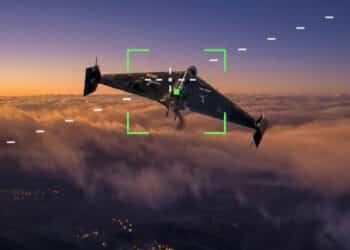
Published on the brigade’s YouTube channel on Wednesday, the video shows real-time coordination between drone operators and Tankist, surveillance footage of enemy-controlled terrain, and the three-stage attempt to deliver a 42-kilogram (about 88-pound) electric bike by heavy drone. The brigade said the mission was a last-resort effort to reach the wounded soldier, who was unable to leave his position on foot.
“The Siversk direction is known for incredibly difficult logistics. Almost none exists there. Guys have to walk six to seven kilometers on foot to reach a position,” said Junior Lt. Mykola Hrytsenko, the brigade’s chief of staff. “The enemy was in front, behind, and on both flanks. Completely surrounded.”
The first two drone drops failed. One drone carrying the bike was shot down. A second attempt ended when the drone’s motors overheated and crashed. On the third try, a modified drone using a winch system successfully lowered the bike to Tankist.
The video captures the moment as he receives the bike and begins his escape. Moments later, a surveillance drone records him striking a landmine only a few hundred meters from the drop site. Despite the blast, Tankist was able to continue on foot to a nearby shelter. The brigade then flew in a second e-bike to complete the evacuation.
“Everyone in HQ was shouting and crying like we’d just launched the first plane in the sky,” Hrytsenko said in the footage.
The rescue highlights a growing trend: the increasing use of robotic systems, including both aerial drones and uncrewed ground vehicles (UGVs), for evacuating wounded soldiers. As battlefield mobility decreases due to the near-constant threat of FPV drones and loitering munitions, both Russian and Ukrainian forces have turned to automated solutions.
Though drones have been used for delivering supplies or surveillance, this mission marks one of the first documented instances of a drone delivering a full-sized vehicle—an electric bike—during live combat.
Hrytsenko noted that the bikes were funded through volunteer donations, with the entire operation costing approximately 100,000 hryvnias (about $2,340) in lost bikes and an additional $30,000 in lost Heavy Shot drones.
While the use of e-bikes in such operations remains rare and experimental, Hrytsenko suggested it may become more common. “If you see a strange fundraiser for an e-bike or a unicycle, don’t be surprised. Maybe it will save a life,” he said.