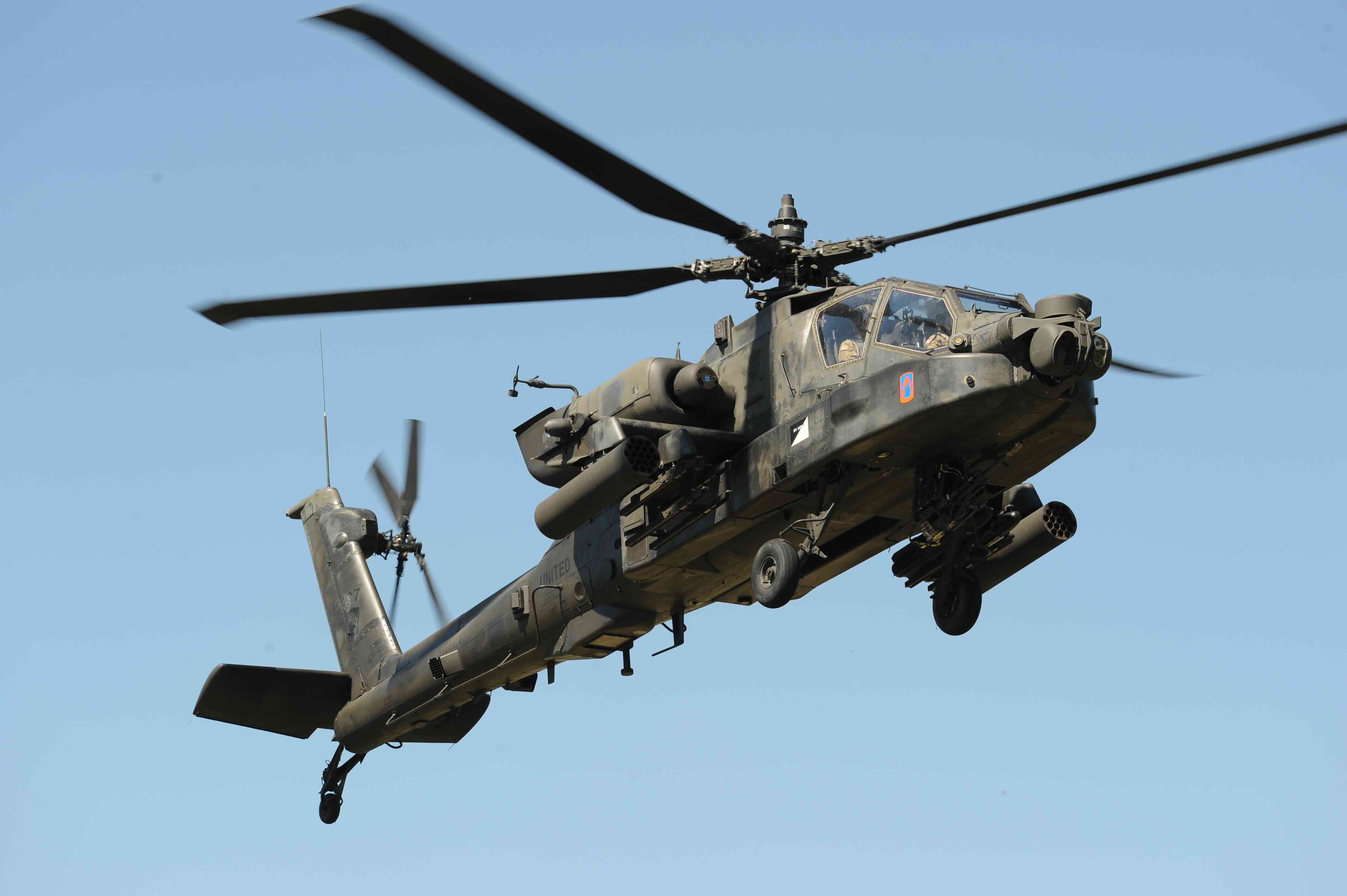
A U.S. Navy drone boat rescued the crew of a U.S. Army Apache helicopter that went down in the Gulf of Oman, in what is believed to be the first known military search-and-rescue operation conducted by an unmanned surface vessel (USV).
The U.S. Central Command (CENTCOM) said the two crew members were aboard an AH-64 Apache helicopter patrolling the Gulf of Oman, when the aircraft went down Monday. Both were reported in stable condition.
President Donald Trump later said Iran had shot down the helicopter. “Iranians shot down one of our highly sophisticated Apache helicopters while patrolling over the Strait of Hormuz,” Trump said. “Nevertheless, the United States must, of necessity, respond to this attack.”
The incident marks the first reported loss of an Apache helicopter since the conflict with Iran began. Apache helicopters are primarily used for precision strikes, close air support and reconnaissance missions.
Since the war with Iran began in late February, the U.S. military has lost dozens of aircraft, including at least five fighter jets, seven Stratotanker refueling aircraft, a search-and-rescue helicopter and more than two dozen drones, according to a Congressional Research Service report released in May.
CENTCOM spokesman Capt. Tim Hawkins told DefenseScoop that the rescue was carried out with a U.S. Navy Corsair unmanned surface vessel operated by the U.S. 5th Fleet’s Task Force 59.
300 Corsairs complete – from prototype to serial production in less than a year, we’re proud of what the @Saronic team has accomplished and excited for what’s to come! pic.twitter.com/5N46CEKa4j
— Saronic (@Saronic) May 6, 2026
According to Hawkins, the drone vessel picked up the two soldiers and transferred them to another location at sea, where a helicopter lifted them to safety.
The Corsair is a 24-foot autonomous surface vessel developed by Saronic. The drone boat can travel more than 1,000 nautical miles, carry up to 1,000 pounds of payload and operate at speeds exceeding 35 knots. It was first deployed in the CENTCOM area of responsibility in March this year.
Thousands of miles in the harshest conditions with unprecedented reliability. The Saronic team runs our Corsair fleet hard so you can trust it when it counts. pic.twitter.com/wIzrvN6Dxd
— Saronic (@Saronic) April 10, 2026
Saronic is also developing larger USVs beyond the Corsair, including the Marauder, the first example of its largest class currently in development. The 55-meter vessel is designed to travel up to 4,100 nautical miles and carry up to 150 metric tons of containerized payload.
Last week, our first Marauder hit the water.
This milestone represents more than a successful launch. It’s a reflection of the tireless work of our dedicated engineers, shipbuilders, welders, and teammates across Saronic. It’s a demonstration of our ability to deliver… pic.twitter.com/dQ9Ro47Od4
— Saronic (@Saronic) June 3, 2026
The Navy is expected to evaluate the Marauder, along with designs from six other companies, as part of the first phase of prototyping under its Medium Unmanned Surface Vessel program.
Meanwhile, CENTCOM said Tuesday it launched “self-defense strikes” against Iran in response to the downing of a U.S. Army Apache helicopter. Details of the strikes were not disclosed.
U.S. Central Command (CENTCOM) forces began launching self-defense strikes against Iran at 5 p.m. ET today at the Commander in Chief’s direction, in response to yesterday’s downing of a U.S. Army Apache helicopter. The mission is a proportional response to unjustified Iranian…
— U.S. Central Command (@CENTCOM) June 9, 2026
“The mission is a proportional response to unjustified Iranian aggression,” CENTCOM said.




You are so full of sh!t.
What