
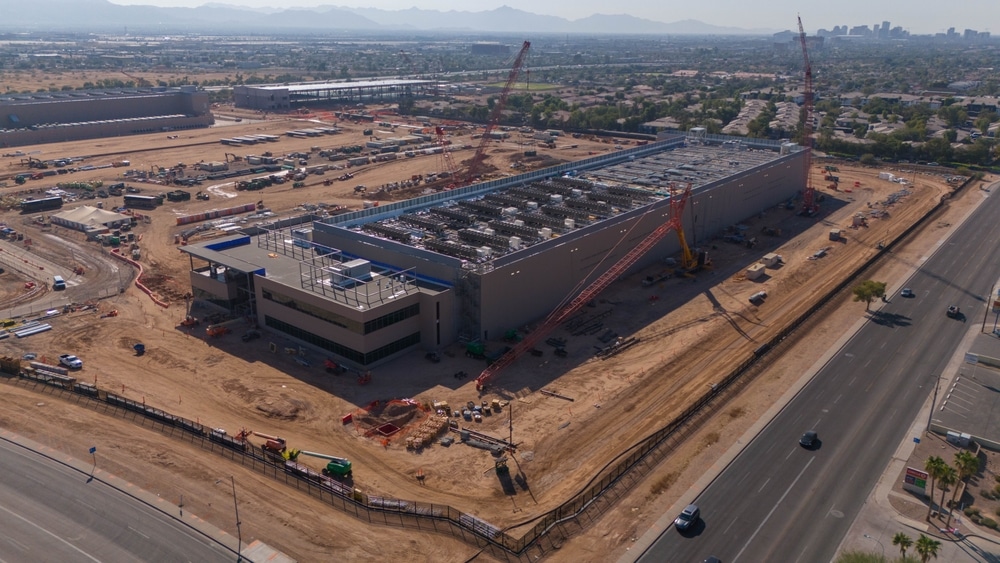
Most of the new artificial intelligence (AI) data centers planned across the United States (U.S.) are set to be built in areas already experiencing drought, according to The Guardian’s analysis of federal drought data.
According to the news outlet, data from Cleanview found that 517 of 809 planned data centers, about two-thirds of the total, are located in areas that have experienced drought conditions over the past year.
A similar share of existing data centers are already operating in drought-affected regions.
The findings come as more than 60% of the contiguous U.S. remains under some level of drought, the largest springtime drought footprint recorded in modern records.
The Guardian reported that technology giants including Google, Meta, Microsoft and Amazon often favor dry, sparsely populated regions for new data centers because of lower land costs and attractive tax incentives. Dry climates are also believed to reduce corrosion and extend the lifespan of data center equipment.
Last month, officials approved a massive data center complex in Utah, despite the county being in drought conditions since last summer.
In Washington state, Amazon is planning a new data center in Walla Walla County, which has also experienced persistent drought since July 2025.
Texas is also seeing significant data center expansion, with major projects planned in Pecos and Carson counties, both of which have recently faced drought conditions. Researchers estimate that data centers could account for as much as 9% of Texas’ total water consumption by 2040.
The rapid growth of AI infrastructure has drawn increasing scrutiny because data centers require substantial amounts of electricity and water.
A January report by water technology company Xylem and Global Water Intelligence estimated that cooling systems would account for roughly 4% of AI-related water demand by 2050. Power generation would make up about 54% of AI-related water consumption, while semiconductor manufacturing would account for approximately 42%.
Chip fabrication facilities, which produce the advanced processors used in AI systems, are among the most water-intensive industrial operations. Modern semiconductor plants can consume between 2 million and 10 million gallons of water per day, much of it converted into ultrapure water needed for manufacturing.
Overall, U.S. data centers are projected to consume up to 73 billion gallons of water annually by 2028, up sharply from about 17 billion gallons in 2023, researchers have warned.








As the WEF said, water should be monetized like a food product.” Or Nestle’s, “We do not view water as a human right.” They are taking the water and thus, your freedom at the least and your life at the worst.