Russia’s Rassvet low Earth orbit (LEO) broadband constellation lost its first satellite on June 6 when Object 4 reentered Earth’s atmosphere 75 days after launch, having never performed a single orbital maneuver, according to orbital tracking data compiled by space journalist Anatoly Zak at RussianSpaceWeb.
The reentry came one day after IKS Holding CEO Alexei Shelobkov announced at the St. Petersburg Economic Forum that Rassvet would enter commercial service in 2027. “Satellites are already being launched,” Shelobkov said. “In the coming weeks, we will begin testing, and as promised, it will start operating commercially in 2027.”
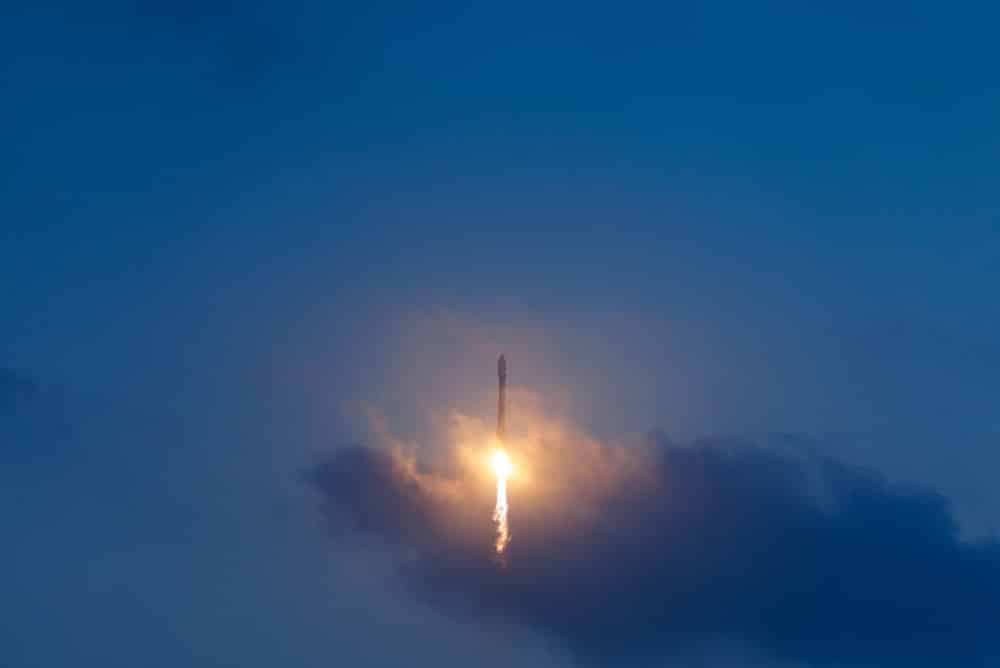
Object 4, tracked by the North American Aerospace Defense Command (NORAD) under identifier 68363, was one of 16 Rassvet satellites launched March 23 from the Plesetsk Cosmodrome. At altitudes roughly 186 miles, unpowered satellites face orbital lifetimes measured in weeks before atmospheric drag forces reentry.
Visualization for the altitude over time for the first 16-satellite cluster of the “Russian Starlink”, including one reentered object: https://t.co/2Td5TWN0wc
— Anatoly Zak (@RussianSpaceWeb) June 6, 2026
Bureau 1440, the Moscow-based IKS Holding subsidiary developing Rassvet, confirmed the launch by releasing video of satellite deployment hours after liftoff. Neither Roscosmos nor the Russian Ministry of Defense issued a public announcement, a departure from standard practice established during the post-Soviet era.
SpaceX cut Starlink access for Russian forces in February 2026, a move a Ukrainian drone operator described to the BBC as eliminating roughly half of Russia’s offensive capacity.
Of the 15 remaining satellites, six are climbing to higher orbits and eight are maintaining position through station-keeping maneuvers, according to Zak’s NORAD data analysis.
Bureau 1440 targets approximately 250 satellites for an initial operational phase and around 900 by 2035, backed by roughly $1.26 billion in state funding, against SpaceX’s active fleet of more than 10,000.
Unconfirmed reports suggest a second batch of 16 Rassvet satellites may be scheduled for launch around June 18, 2026, a timeline that has not been independently verified.