U.S. and Iranian negotiators have agreed on a 60-day memorandum of understanding (MOU) to extend the current ceasefire and open formal negotiations on Iran’s nuclear program, two U.S. officials and a regional source involved in the mediation confirmed. Neither President Donald Trump nor Iranian leadership has given final approval.
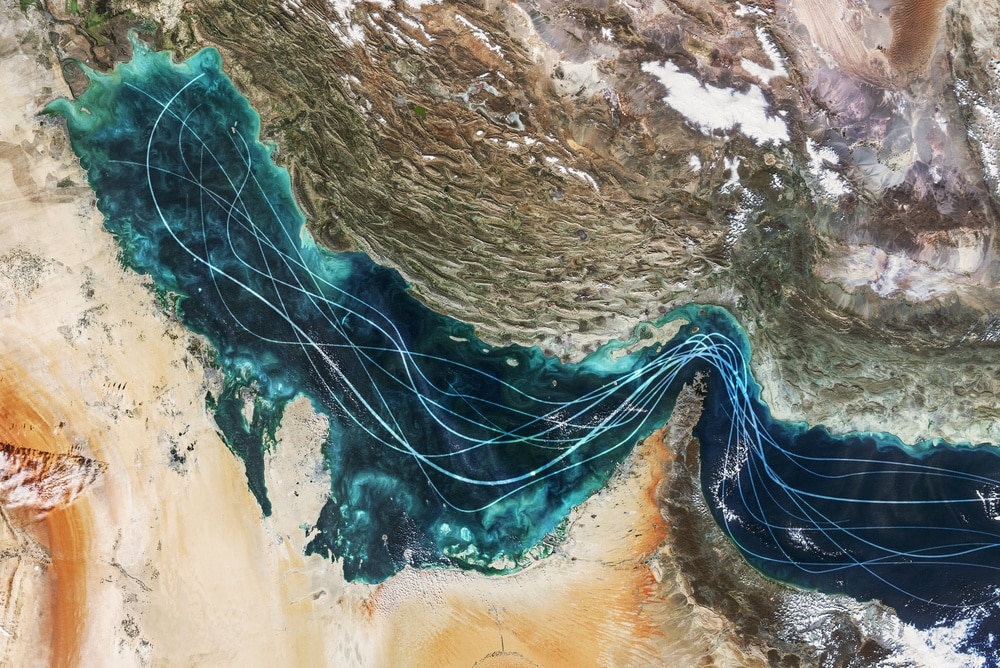
The proposed MOU requires unrestricted commercial shipping through the Strait of Hormuz, with no tolls, and obligates Iran to remove all mines from the waterway within 30 days.
In exchange, the U.S. naval blockade would be lifted proportionally as commercial traffic resumes, and Washington would issue sanctions waivers to allow Iran to sell oil freely. Iran would commit not to pursue a nuclear weapon, and the first 60 days of negotiations would focus on disposing of Iran’s highly enriched uranium stockpile, addressing enrichment levels, and establishing International Atomic Energy Agency (IAEA) supervision.
The U.S. would discuss further sanctions relief and the release of frozen Iranian funds, which one source put at up to $12 billion, as part of those talks.
The deal faces structural complications before any signatures are exchanged. The Islamic Revolutionary Guard Corps (IRGC) Navy issued a statement asserting that seeking passage permission through the strait “is mandatory,” saying 26 commercial ships had been authorized in the past 24 hours and that four vessels attempting to transit with their transponders off had been stopped or turned back.
That assertion directly contradicts the MOU’s “unrestricted” navigation language, and it remains unresolved in the current draft.
Treasury Secretary Scott Bessent said at a May 28 press briefing that the negotiating teams “have been going back and forth” and that “we perhaps have the makings of a deal here.”
Vice President JD Vance told reporters the same day that “we’ve made a lot of progress here,” adding negotiators were still working through “a couple of language points.”
Trump said that Iran was “negotiating on fumes” and warned: “Either that or we’ll have to just finish the job.”
Iran’s Tasnim news agency, citing a source close to the negotiating team, reported the MOU text had not been finalized. Pakistan’s Foreign Minister Mohammad Ishaq Dar traveled to Washington on May 29 to meet Secretary of State Marco Rubio, accelerating mediation efforts.
The diplomatic activity has run alongside renewed military exchanges. U.S. Central Command (CENTCOM) struck Iranian boats it said were laying mines and targeted a surface-to-air missile (SAM) site in Bandar Abbas on May 25.
On May 27, Iran launched a ballistic missile toward a U.S.-allied base in Kuwait, which Kuwaiti forces intercepted. CENTCOM called the launch an “egregious ceasefire violation.”
Iran head of parliament’s national security committee Ebrahim Azizi wrote on X that Iran’s red lines include the right to enrich uranium, maintain enriched uranium stockpiles, and control the Strait of Hormuz.
Israeli Prime Minister Benjamin Netanyahu posted on X that Trump had assured him any final agreement “must eliminate the nuclear danger,” a condition the current MOU framework defers to a subsequent negotiating window. Iran’s Supreme Leader Mojtaba Khamenei, addressing officials, said the U.S. and Israel were seeking to “bring the country to its knees” and warned against internal divisions.
Roughly 20% of global oil flows through the Strait of Hormuz. While a fresh round of military strikes initially drove oil prices up 3% early on May 28, prices completely reversed course and dipped later in the day as details of the tentative peace deal leaked, ultimately keeping international benchmark Brent well below $100 per barrel.