
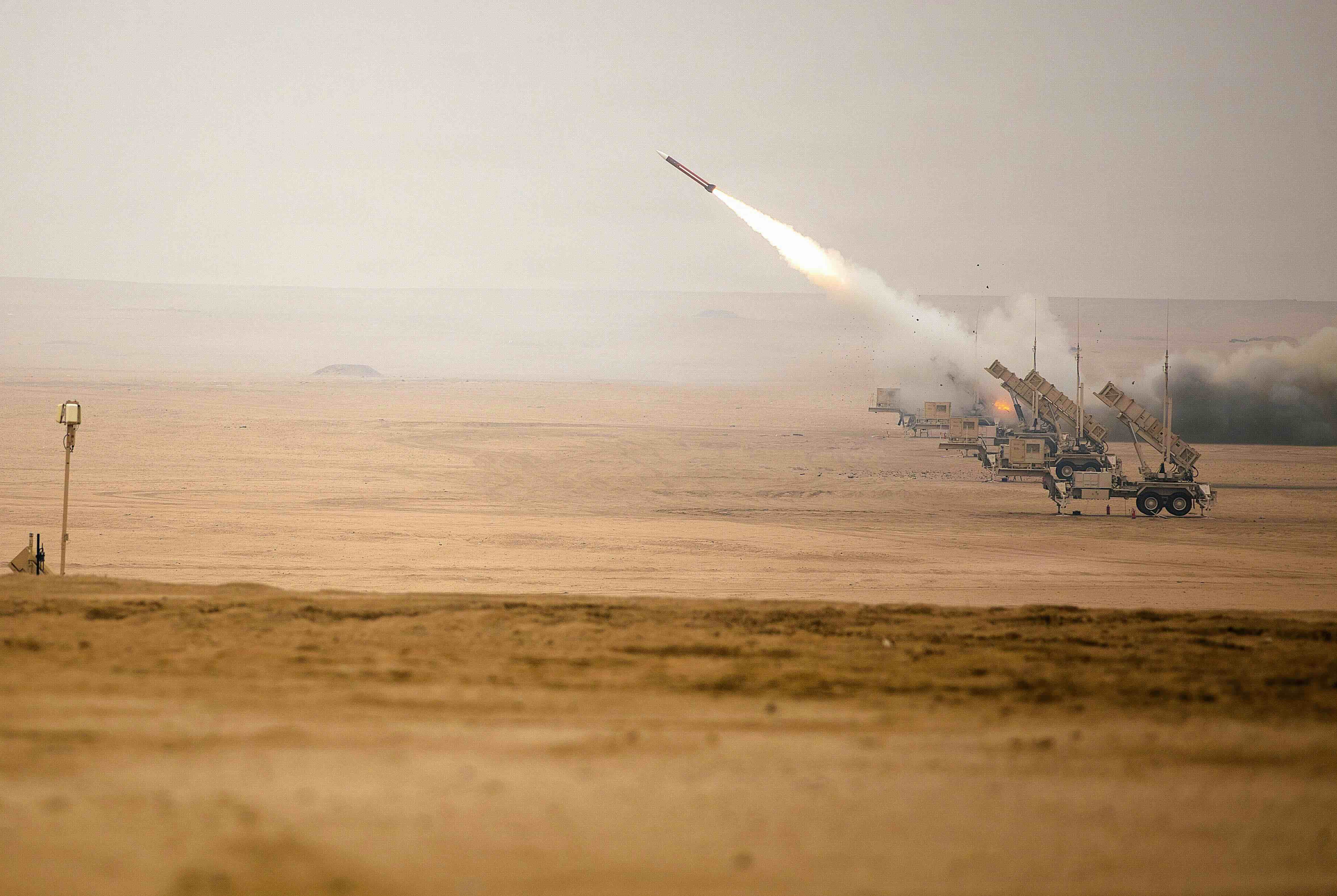
Iran launched a ballistic missile toward Kuwait late May 27 in what U.S. Central Command (CENTCOM) declared an “egregious ceasefire violation.” Hours later, American and Iranian negotiators reached a tentative deal to extend the ceasefire by 60 days, pending President Donald Trump’s approval.
“At 10:17 p.m. ET on May 27, Iran launched a ballistic missile toward Kuwait that was successfully intercepted by Kuwaiti forces,” CENTCOM stated on X. “This egregious ceasefire violation by the Iranian regime occurred hours after Iranian forces launched five one-way attack drones that posed a clear threat in and near the Strait of Hormuz.”
U.S. forces intercepted all five drones and struck an Iranian drone ground control station in Bandar Abbas, preventing a sixth launch, CENTCOM said.
Iran’s Islamic Revolutionary Guard Corps (IRGC) acknowledged launching a retaliatory strike on the air base it said launched the Bandar Abbas attacks, without naming Kuwait, state-run IRNA reported.
Kuwait’s Ministry of Foreign Affairs condemned the strikes as “criminal Iranian attacks” and “a flagrant violation of the sovereignty of the State of Kuwait,” calling for their immediate cessation.
Qatar, Saudi Arabia, and the United Arab Emirates (UAE) each condemned the attack, with the UAE calling it a “terrorist attack.” Gulf Cooperation Council (GCC) Secretary-General Jasem Mohamed Al-Budaiwi said the strikes were “a flagrant violation of the principles of international law.”
The May 27 strike was the first confirmed ballistic missile attack on a GCC state since the April 8 ceasefire. Kuwait, which has come under repeated Iranian fire throughout the conflict, hosts U.S. Army Central’s forward headquarters, multiple air bases, and a naval base.
Brent crude peaked at nearly $96 per barrel in overnight trading, still 33% above pre-war levels.
Iran has not confirmed the tentative ceasefire extension, and Trump has not yet signed off, a U.S. official said.