
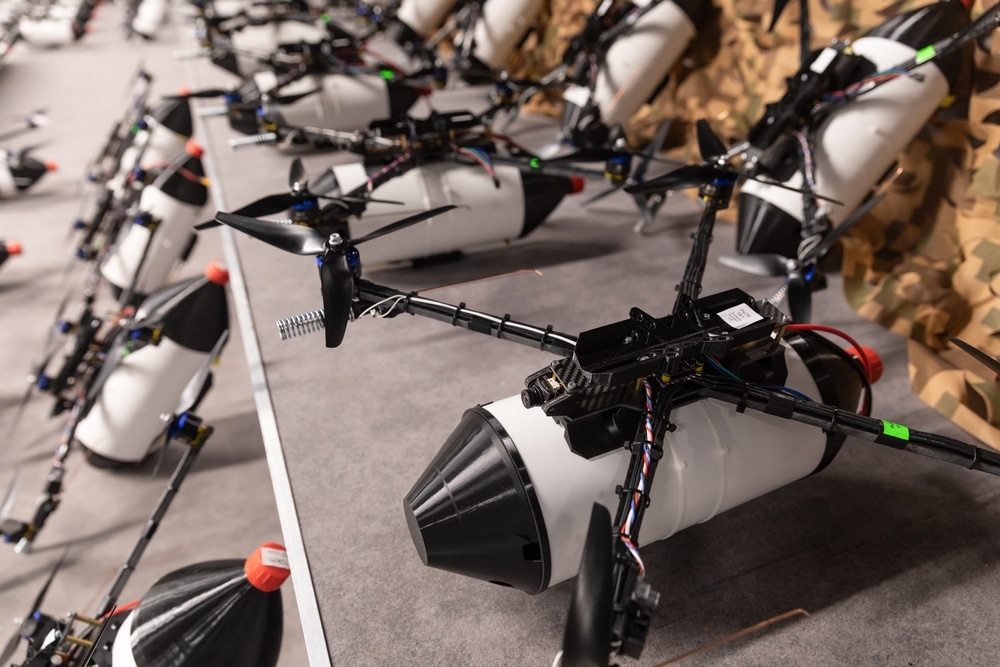
The Israel Defense Forces (IDF) is establishing a domestic first-person view (FPV) suicide drone production facility inside its Technology and Logistics Directorate, Galei Tzahal (Israeli Army Radio) reported Tuesday, aiming to scale its munitions supply while giving haredi conscripts a defined industrial role within the military.
פרסמנו אצל @efitriger
התשובה לרחפני הנפץ של חזבאללה? בצה”ל הוחלט: יוקם מפעל צה”לי לייצור אלפי רחפנים מתאבדים מדי חודש – שישרתו בו חיילים חרדים
צה”ל מקים בימים אלה מפעל שעתיד לייצר רחפני נפץ מתאבדים (רחפני FPV) – לשימוש בכל זירות המלחמה. מטרת הקמת המפעל היא לתעש ולהרחיב… pic.twitter.com/784Jikz1Mk
— דורון קדוש | Doron Kadosh (@Doron_Kadosh) May 12, 2026
About 200 haredi (ultra-Orthodox) soldiers will staff the facility as drone assemblers after completing a dedicated technician training course, Army Radio reported. The first cohort is set to arrive in June. The IDF projects the factory will supply thousands of FPV drones per month within two months, scaling eventually to tens of thousands monthly.
The move to in-house production is driven by cost and supply chain risk. The IDF has sourced FPV drones from Israeli manufacturers whose components are partly Chinese-made, at a cost of thousands of shekels per unit, Army Radio reported. The new facility is intended to make production fully domestically sourced within the IDF’s own directorate.
Beyond offensive strikes, the factory is also designed to supply drones for interception roles. FPV systems can be guided into enemy drones mid-flight to destroy them. The IDF has already demonstrated this drone-on-drone capability on the battlefield but has not deployed it at the scale required to blunt Hezbollah’s FPV campaign.
The announcement follows months of sustained pressure from Hezbollah’s fiber-optic FPV drone campaign in southern Lebanon. Unlike conventional FPV drones guided by radio signals, fiber-optic variants use a physical cable tether, rendering radio-frequency jamming ineffective.
The Jerusalem Post’s Defense and Tech desk reported that Israeli companies had previously contacted the IDF and the Defense Research and Development Directorate (MAFAT) to field counter-drone systems, but the threat was not addressed before Hezbollah began deploying fiber-optic FPV drones at scale against Israeli forces.