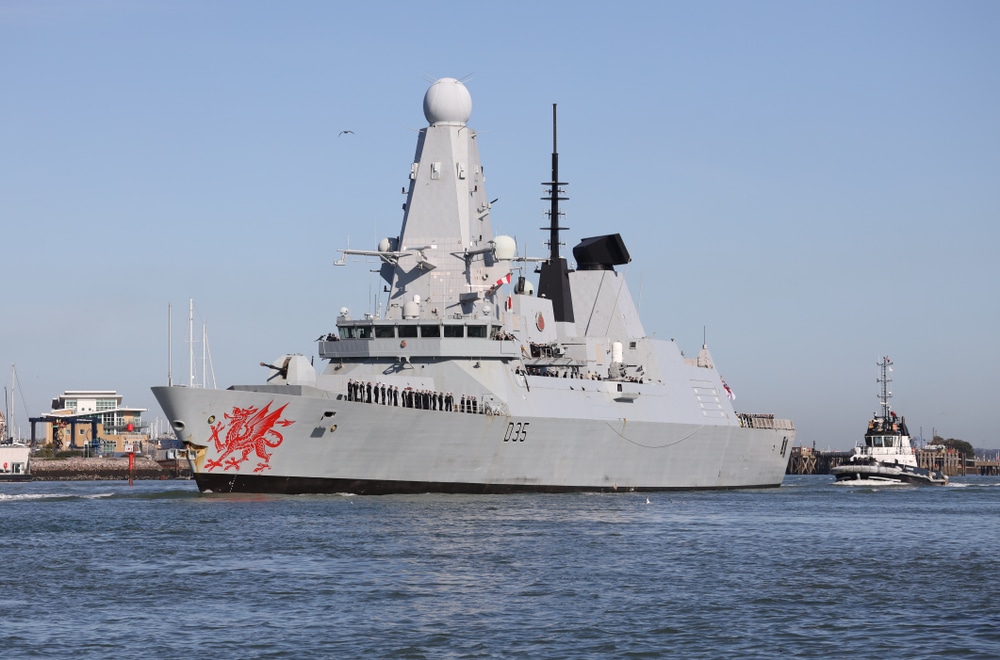
Britain announced Tuesday it will contribute autonomous mine-hunting systems, Typhoon fighter jets, and the destroyer HMS Dragon to a multinational defensive mission to restore commercial shipping through the Strait of Hormuz, marking the Royal Navy’s first acknowledged operational deployment of uncrewed surface vessels (USVs).
Defence Secretary John Healey confirmed the commitment at a virtual summit of more than 40 defence ministers, stating the mission “will be defensive, independent, and credible.” The Ministry of Defence said the package is backed by £115 million in new funding for mine-hunting drones and counter-drone systems.
🗣️ U.K. Defence Secretary John Healey in a virtual multinational summit of Defence Ministers: @JohnHealey_MP
– The U.K. will contribute autonomous mine-hunting systems, Typhoon fighter jets, and the destroyer HMS Dragon to a future multinational mission securing freedom of… pic.twitter.com/iCOQeDxodQ
— This Is Beirut (@ThisIsBeirut_) May 12, 2026
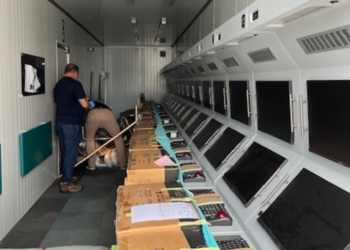
Central to Britain’s contribution is Project BEEHIVE, which involves Kraken K3 Scout USVs capable of 55 knots and a range of 650 nautical miles. Delivered to the Royal Navy’s Surface Flotilla from March 2026, the boats carry modular payload bays that accommodate different sensor fits depending on the mission. They would operate from RFA Lyme Bay, a Bay-class auxiliary ship being upgraded as a dedicated USV mothership, in what would mark the Royal Navy’s first confirmed operational USV deployment.
HMS Dragon, a Type 45 air defence destroyer, has left its station in the Eastern Mediterranean and is forward-deploying to the Middle East ahead of potential operations. More than 1,000 British personnel are already deployed in the region, including counter-drone teams and fast jet squadrons, the Ministry of Defence said.
The mission, co-led by Britain and France, will not become operational until conditions allow. A ceasefire between the United States and Iran has been in place since April, but diplomatic progress has stalled. Trump rejected Iran’s latest peace proposal on Sunday, calling it “a piece of garbage,” after Tehran demanded reparations, the lifting of sanctions, and recognition of its sovereignty over the strait.
A Downing Street spokesperson said ministers “agreed that number one priority remains getting the Strait of Hormuz open again, so that international shipping can resume.”