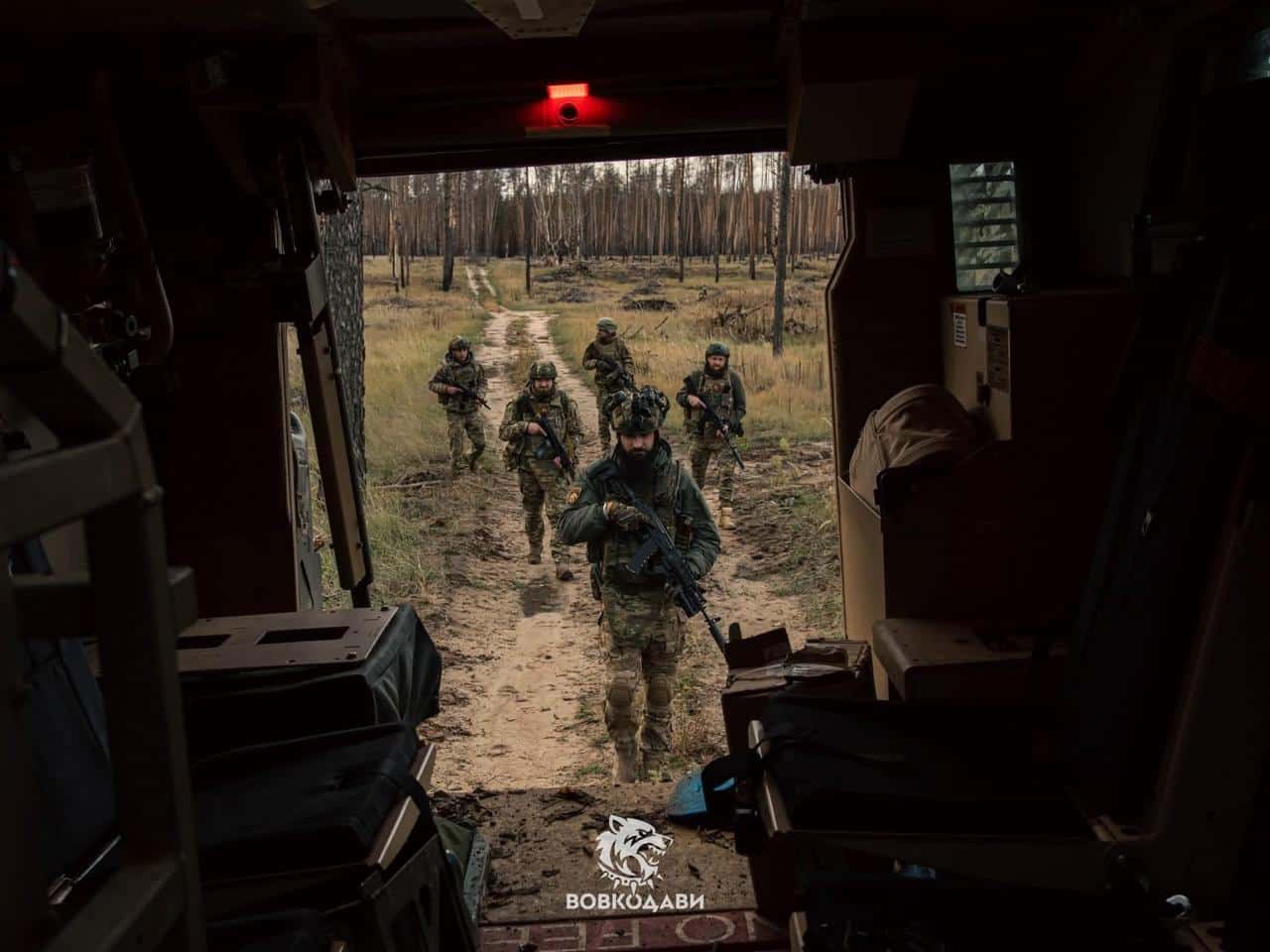
Ukraine will let private companies recruit, screen, and deliver foreign fighters to its army, and it wants those foreigners to fill as much as half of its assault and infantry positions.
Defense Minister Mykhailo Fedorov set the target on June 12, saying the goal is to fill “up to 30 to 50 percent of assault and infantry positions with foreigners.” Commander-in-Chief Gen. Oleksandr Syrskyi posted nearly identical language and called the move “the first stage of a large-scale transformation.” Both framed it the same way, as a means to strengthen combat units and keep Ukrainian soldiers alive.
Under the new model, private recruiting firms will run the search, screening, selection, and logistics of bringing foreign volunteers to Ukraine, and they will be paid for each recruit who signs and reaches a unit.
The reliance on paid commercial intermediaries to source frontline infantry is the part that breaks from past practice, and foreign fighters are to receive the same contracts, pay, and conditions as Ukrainian service members, with no separate legion structure to slot them into.
“We are opening the market for recruiting foreigners to strengthen combat units and save the lives of Ukrainian military personnel,” Fedorov said.
The recruitment drive is the centerpiece of a broader service overhaul that President Volodymyr Zelenskyy announced the same day, after meeting with Prime Minister Yulia Svyrydenko, Fedorov, and Finance Minister Serhii Marchenko. Rear-area pay rises to a minimum of 30,000 hryvnias (Hr 30,000) a month, about $670, double the previous floor. A month on the front line will pay Hr 300,000, roughly $6,700, which Fedorov called the highest infantry rate in the world.
With combat bonuses, the top rate for a full month of assault work climbs above $10,000, around Hr 460,000. New contracts run 10 to 14 months for infantry and assault troops and 24 months for drone, artillery, and electronic-warfare crews, each followed by a window that exempts the soldier from further mobilization.
Fedorov said the army will begin discharging the soldiers who have served longest and spent the most time in combat before the end of the year, pairing the influx of foreigners with an outflow of exhausted Ukrainians.
Ukraine’s long-serving troops are exhausted and have no fixed end date to their service, while many of the freshly mobilized, the infantry above all, show little appetite for the fight. When the government tried in 2025 to draw 18-to-24-year-olds into the ranks with strong pay and brief contracts, few signed up for infantry, and the offer caught on only after it was opened to the high-demand drone units.
Foreigners already carry a heavy share of the worst infantry work, with Latin Americans and Colombians most of all forming the largest foreign contingent, some of them sent into the line after as little as 15 days of training. The Atlantic Council estimates 300 to 550 Colombians have been killed in Ukraine, the highest toll of any foreign nationality, most of them recently lost to first-person view (FPV) and kamikaze drones hunting infantry positions.
The shift to paid, professionally screened recruits marks a fundamental change in how Ukraine thinks about foreign fighters. When Zelenskyy first called for volunteers in February 2022, roughly 16,000 people responded within the opening weeks of the war.
Four years later, the numbers had thinned considerably. Bureaucratic obstacles, language barriers, limited logistical support, and Western governments formally discouraging their citizens from traveling to Ukraine all ate into the pool of organic volunteers.
The mechanics are familiar from private military and security contractor models used across conflict zones in Africa and the Middle East, but the scale of what Ukraine is proposing (half its assault infantry) has no obvious modern precedent for a conventional military engaged in a peer-on-peer land war. How many foreigners the market can actually produce is the open question.