
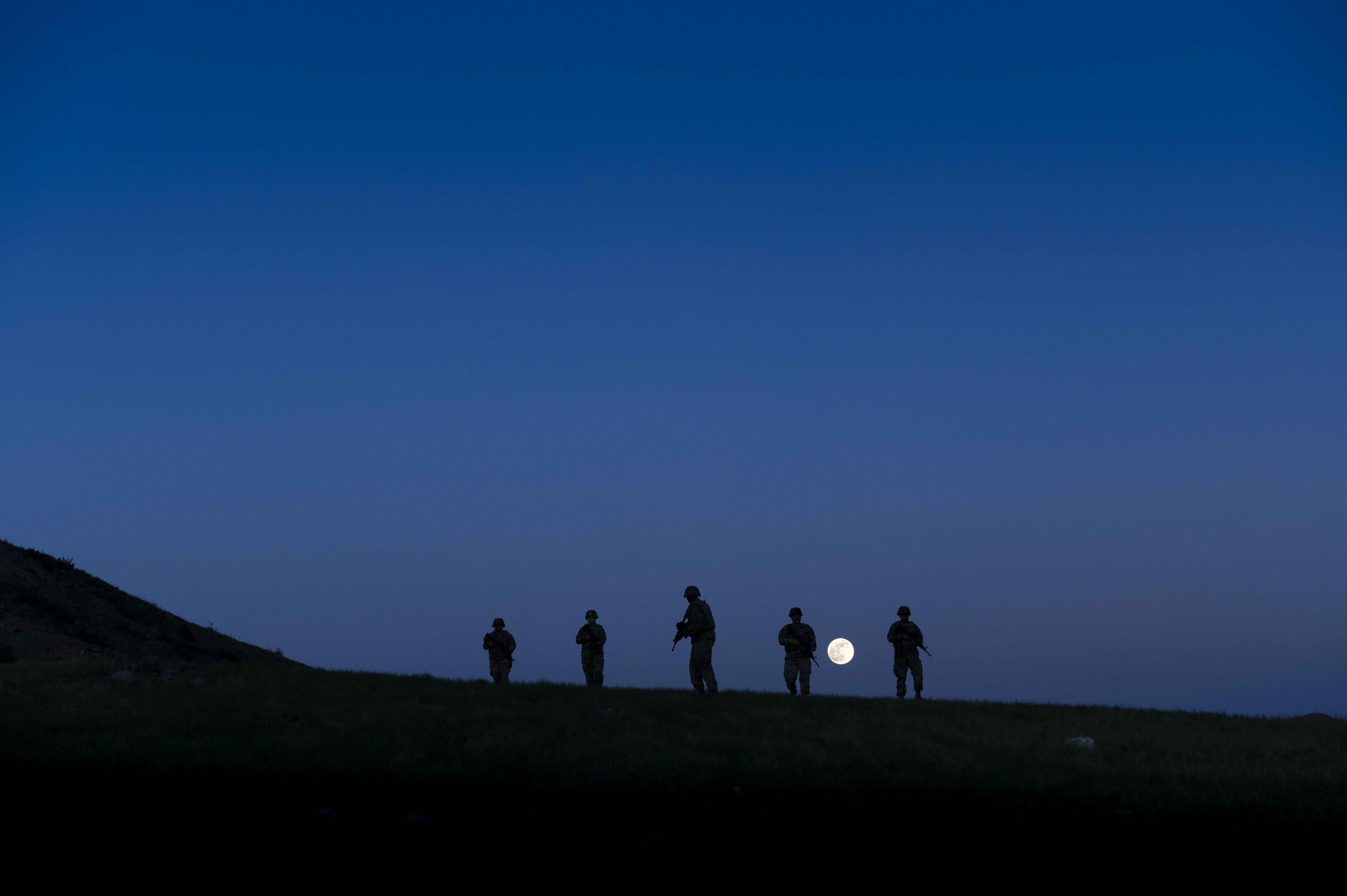
The U.S. Army has established a new Space Operations Branch for soldiers specializing in space operations as the service adapts to the demands of multidomain warfare.
Announced last week, the new branch consolidates the Army’s space professionals, including Army Space Operations Officers and enlisted Tactical Space Operations Specialists under Military Occupational Specialty 40D, which was established in 2025.
“The Army is the largest user of space capabilities in the joint force, and space integration is absolutely critical to multidomain operations at every echelon,” Lt. Gen. John Rafferty, commanding general of the U.S. Army Space and Missile Defense Command, said in a statement.
“Establishing the Space Operations Branch is an important step in the Army’s continuous transformation. It provides the Army with the professional structure to deliver space-based effects directly to our Soldiers and units at the tactical edge, enabling commanders to fight and win in a contested, multidomain environment,” he added.
The service said the branch will provide trained soldiers and units capable of supporting satellite communications, navigation, targeting, missile warning and other space-enabled capabilities used by ground forces.
“Land power requires warfighting expertise in all domains. What makes me proud is that our Army is not just building a capability, we’re growing professionals at every echelon,” Gen. Christopher LaNeve, the Army’s vice chief of staff, said in a statement. “That’s what the 40D MOS is about—Soldiers delivering the foundational excellence our Joint Force depends on.”
The Army began recruiting enlisted Tactical Space Operations Specialists earlier this year after creating the 40D specialty in 2025. Previously, soldiers with space-related expertise typically rotated back to their original branches after completing temporary assignments.
“For too long, enlisted soldiers with specialized space training and experience rotated through critical space assignments, eventually returning to their basic branches,” Rafferty said.
“The rotational system served the US Army well in the past but will not meet the demands of the future, which requires a professional and sustainable approach to training, career progression and leader development for Army Space Soldiers.”
The new branch will initially include about 1,000 enlisted 40D specialists alongside Army Space Operations Officers, with the force expected to grow to about 1,500 soldiers by 2032.







Why isn’t that Space Command’s area of responsibility?