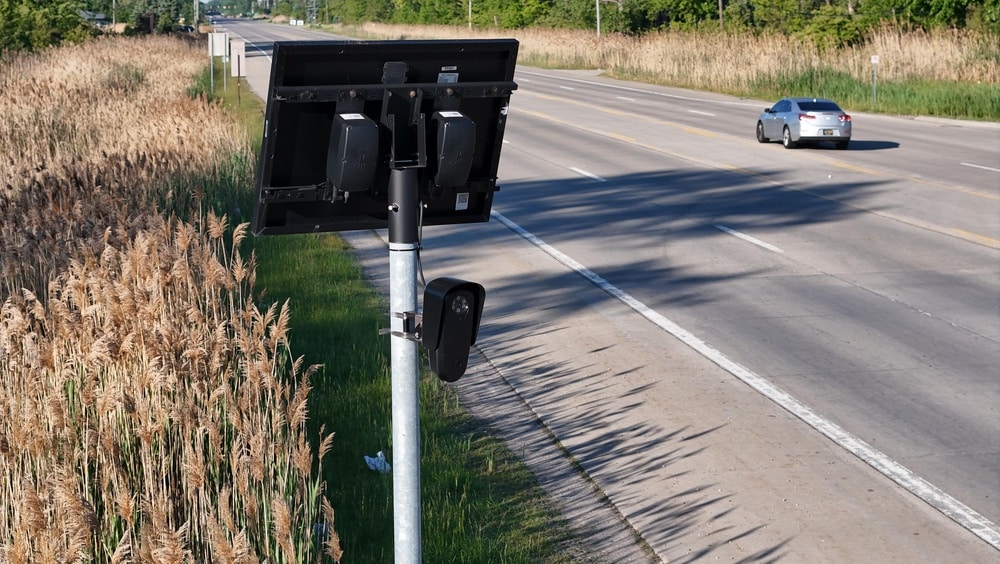
A free open-source website called DeFlock now lets drivers route around automated license plate reader (ALPR) cameras as a surveillance company prepares to add Bluetooth device-tracking to the same roadside hardware.
📍 Use the DeFlock Map
We’re building a public map of ALPRs, AI surveillance cameras, drones, and connected surveillance infrastructure so communities can see what’s being installed around them.
The DeFlock App works great, too!https://t.co/5fwipJBsqX
— DeFlock (@therealDeFlock) May 17, 2026
DeFlock, built by developer Will Freeman and backed by the Electronic Frontier Foundation (EFF), crowdsources ALPR camera locations nationwide and maps roughly half of Flock Safety’s roughly 100,000-camera network.
Users enter a start and destination, select an avoidance buffer between 50 and 500 feet, and receive a privacy-optimized route.
Heading out this weekend?
Keep an eye out for ALPRs and AI cameras. Spot one? Check the DeFlock app and add it if it’s missing.
Congratulations, your relaxing drive just became unpaid surveillance research.
Download the app or visit https://t.co/4wBNqbBbih.#Flock #Privacy pic.twitter.com/d8Ea1lYpe2
— DeFlock (@therealDeFlock) June 20, 2026
A companion tool called “Have I Been Flocked,” available through StopFlock, lets users check whether their plate has appeared in Freedom of Information Act (FOIA)-obtained Flock query logs.
Flock Safety sent DeFlock a cease-and-desist order over alleged trademark dilution. Freeman declined to comply, with the EFF providing legal backing.
DeFlock’s growth coincides with plans by ELSAG, a subsidiary of Italian defense company Leonardo, to add device-tracking sensors to existing ALPR hardware.
The system, called SignalTrace, scans passing vehicles for Bluetooth and wireless signals from phones, smartwatches, earbuds, and fitness trackers, then correlates devices that travel together to a specific plate and timestamp. ELSAG describes the method as “non-intrusive intelligence gathering.” 404 Media reported the SignalTrace system on June 8, 2026.
An EFF analysis published in May 2026 found agencies had used Flock data for school residency checks, background searches, and noise complaints. More than 50 agencies ran hundreds of protest-related Flock searches over a 10-month period.
Washington State’s Driver Privacy Act, signed by Gov. Bob Ferguson on March 30, 2026, bans ALPR collection near health-care facilities, schools, and places of worship, and sets a 21-day default data retention limit. NPR reported in February 2026 that several cities terminated Flock contracts over concerns about federal immigration agencies accessing locally collected plate data.