
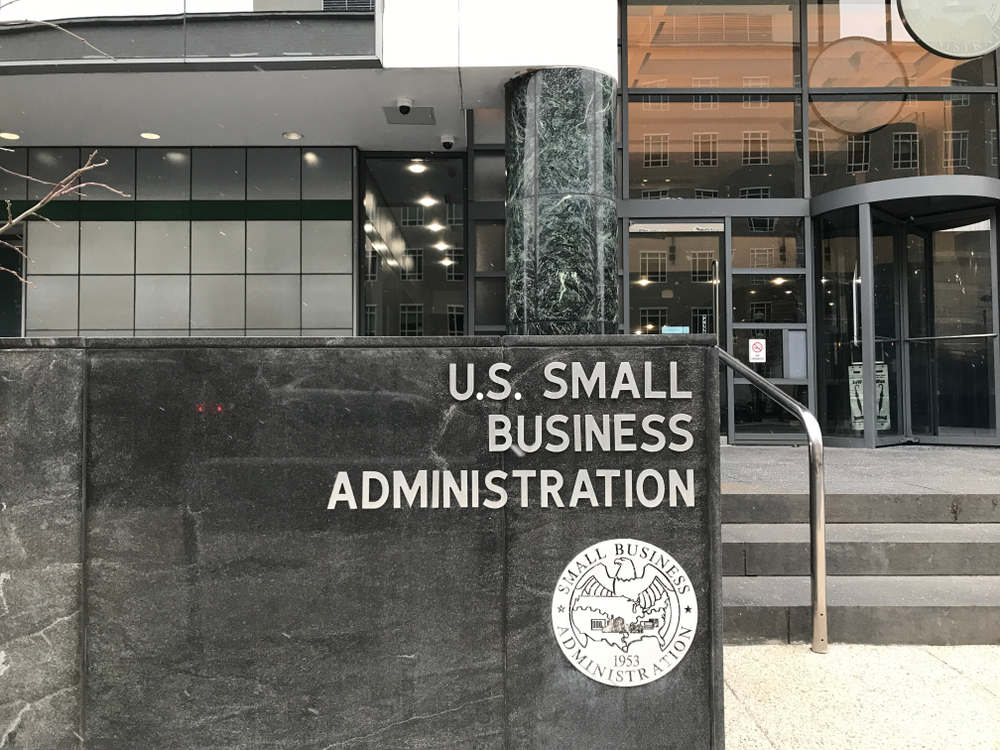
Federal small business program under simultaneous challenges from Congress, courts, and executive branch
The Small Business Administration has ordered all 4,300 participants in its flagship minority contracting program to turn over three years of financial records by early January, the latest salvo in a sweeping crackdown that experts say threatens the 47-year-old program’s survival.
The Dec. 5 directive requires 8(a) Business Development Program contractors to submit 13 categories of documentation within 30 days. Firms that fail to comply by Jan. 5, 2026, risk losing program eligibility and face potential investigation.
The audit request arrives as the program simultaneously confronts a legal challenge in federal court and legislation from Sen. Joni Ernst (R-Iowa) that would freeze all sole-source contract awards until the SBA completes its review.
Administrator Kelly Loeffler framed the audit as essential to protecting taxpayers and legitimate small businesses from bad actors.
“There is mounting evidence that the 8(a) Program designed for ‘socially and economically disadvantaged’ businesses went from being a targeted program to a pass-through vehicle for rampant abuse and fraud,” Loeffler said in a statement.
What Contractors Must Provide
The SBA’s document request is notably comprehensive, requiring detailed financial records that will allow auditors to trace money flows and verify legitimate business operations. By Jan. 5, 8(a) vendors must submit:
- General ledger for the last three full fiscal years
- Trial balance as of the last day for each of the last three fiscal year-ends
- IRS Form 4506 covering the last three full fiscal years
- Bank statements as of the last day for each of the last three fiscal year-ends
- Bank reconciliations as of the last day for each of the last three fiscal year-ends
- Payroll register and reconciliation, including any distributions to owners, monthly for the last three full fiscal years
- List of all employees, broken out by contracts those employees are servicing
- List of all vendors and joint ventures
- Copies of all 8(a) contracts on which the firm is currently working
- Subcontracting agreements related to those contracts
- Financial statements including year-end balance sheet, profit and loss statement, cash flow statement, and statement of equity for each of the last three fiscal years
- Financial statement reconciliation to the year-end trial balance
- Sub-ledger schedules tying to year-end trial balance accounts for all accounts receivable, accounts payable, and P&L accounts
SBA General Counsel Wendell Davis noted in the letter that firms need not resubmit information already provided through routine annual reporting.
However, the scope of the request far exceeds standard compliance requirements, and the 30-day deadline leaves contractors scrambling to compile years of records.
What Sparked the Review
The audit traces its origins to a June settlement in which a U.S. Agency for International Development contracting officer and three company owners pleaded guilty for their roles in a decade-long bribery scheme. The conspiracy involved at least 14 prime contracts under the 8(a) program worth more than $550 million.
That case prompted Loeffler to order what she has described as “an audit of the program to review every 8(a) contract for the last 15 years.” Last month, the SBA suspended multiple executives and contractors following fraud allegations involving an additional $253 million in previously issued awards.
Sen. Ernst, who chairs the Senate Small Business and Entrepreneurship Committee, has cited decades of investigations by the Government Accountability Office, the SBA’s Office of Inspector General, and the Justice Department as evidence of systemic problems. On Dec. 10, she sent letters to 22 federal agencies demanding they halt new 8(a) sole-source contract awards.
The U.S. Department of Treasury has also launched its own audit examining all contracts awarded under preference-based contracting across Treasury and its bureaus, encompassing approximately $9 billion in contract value.
Meanwhile, the Center for Individual Rights and the Wisconsin Institute for Law and Liberty filed suit in mid-November in U.S. District Court for the Eastern District of Louisiana seeking to invalidate what they characterize as “an unconstitutional racial preference regulation” incorporated into federal contracting programs.
The Program’s Background
The 8(a) program certifies small businesses owned by individuals deemed socially and economically disadvantaged, providing them access to federal contracting opportunities, training, and technical assistance over a nine-year development period.
During fiscal 2024, the program facilitated more than $40 billion in contract awards, making it the SBA’s largest set-aside initiative.
The program provides participants with business development assistance, mentorship, and access to contracts.
Whether the 8(a) program emerges from this period reformed, restricted, or fundamentally altered may depend on what auditors find, and whether defenders can demonstrate that the program’s legitimate successes outweigh the fraud that has captured headlines and political attention.