
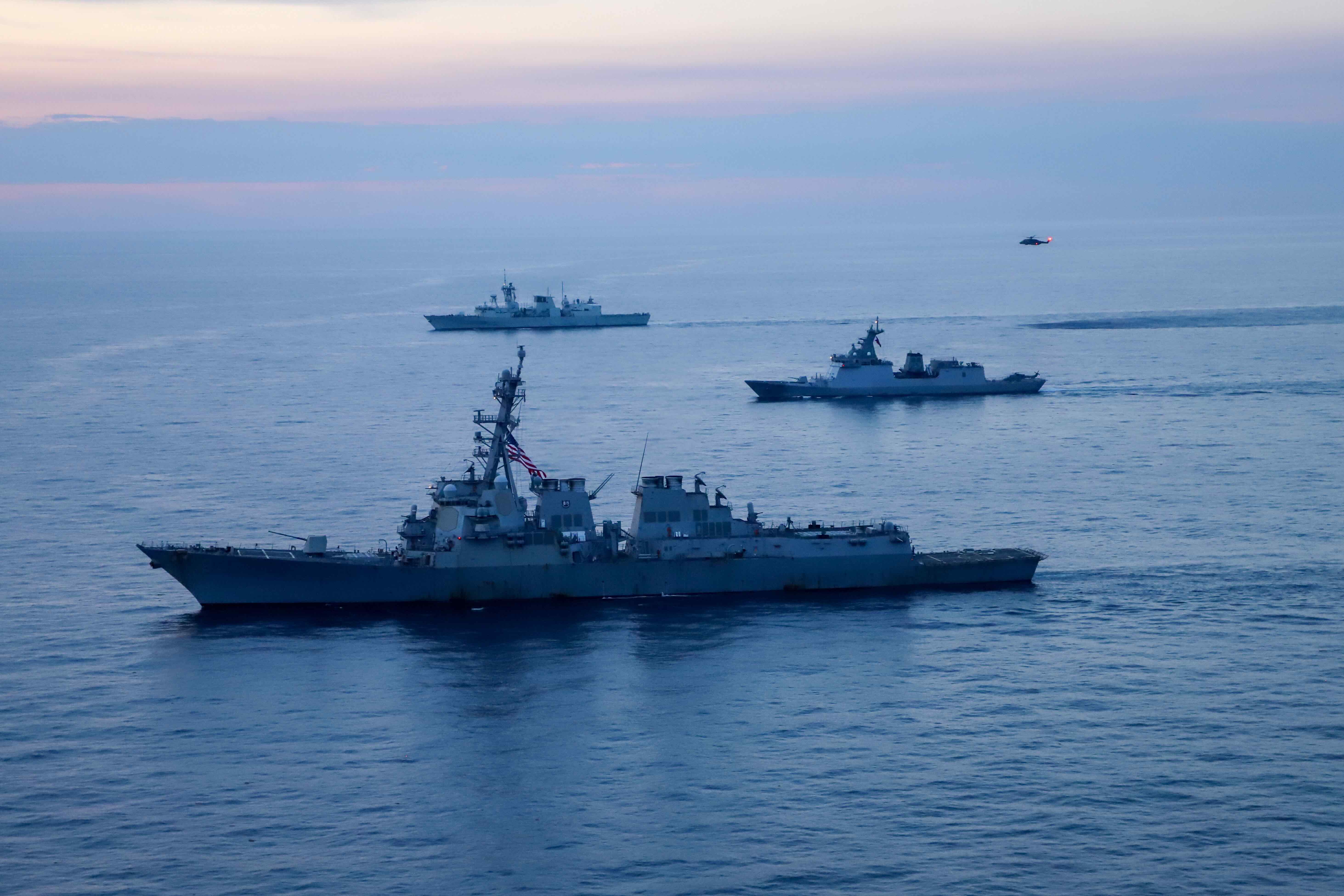
The Pentagon is weighing whether to turn to foreign partners for warship design and construction as it seeks to address constraints in the U.S. shipbuilding industry that have limited the Navy’s surface fleet capacity.
The fiscal 2027 budget proposal includes $1.85 billion in research and development funding to study future frigate programs and larger surface combatant classes built abroad.
The funds “will be used to investigate a full spectrum of procurement options to attract more shipbuilding capacity into domestic shipyards and bring additional ships into the fleet – including studies of the ability of allied shipbuilding companies to build ships or components,” reads the budget language. “This funding will be split into two separate study and procurement efforts targeting the fleet’s future [cruiser/destroyer] and frigate inventories.”
As part of the study, officials are expected to review Japanese and South Korean shipyards, along with frigate designs currently in service in those countries, including Japan’s Mogami-class and South Korea’s Daegu-class.
The Mogami-class, built by Mitsubishi Heavy Industries, features a 5,500-ton stealth hull and heavy automation and has been designed for faster production timelines than many Western equivalents.
The Daegu-class frigate is smaller at about 3,600 tons and uses a quiet propulsion system geared toward anti-submarine warfare. Both classes are compatible with U.S.-standard systems, including the MK-41 vertical launching system.
The proposal comes amid U.S. officials’ push for faster delivery of naval vessels, which have suffered persistent delays, and growing concerns over China’s rapid naval expansion.
Last week, the Pentagon announced the departure of Navy Secretary John Phelan over concerns that he was moving too slowly on shipbuilding reforms. The decision reportedly followed a Wednesday meeting between President Donald Trump and War Secretary Pete Hegseth focused on shipbuilding, during which Trump agreed that “new leadership at the Navy is needed.”
The initiative, if implemented, could mark the first time since World War II that the U.S. has acquired a major surface combatant with foreign design.
Current U.S. federal law requires naval vessels to be built in domestic shipyards, a policy intended to safeguard national security and support local jobs. Any foreign participation would require a high-level presidential waiver.