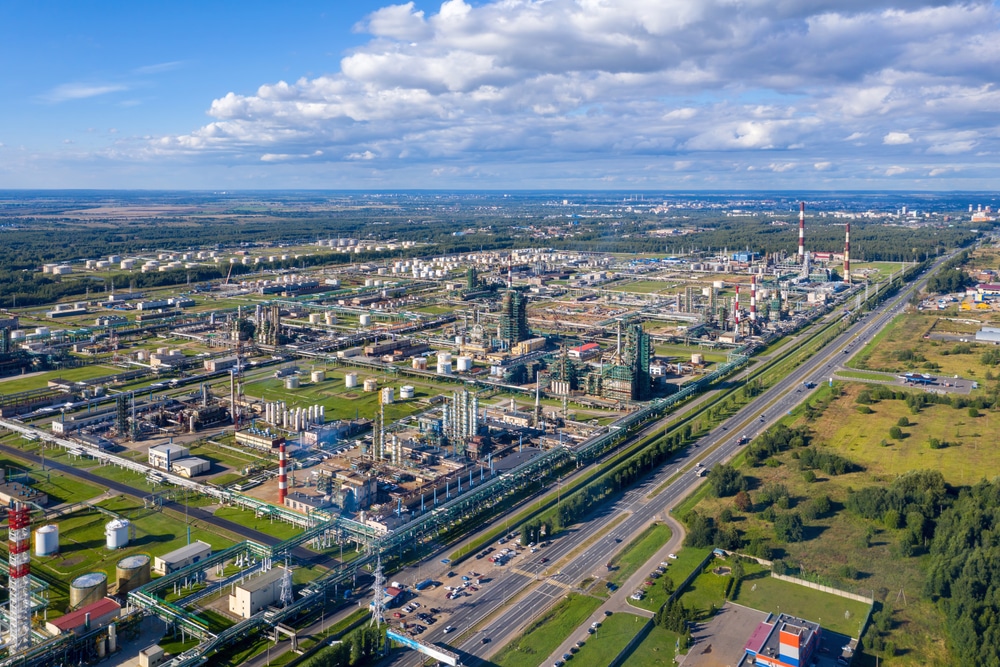
Ukrainian drones struck the Slavneft-YANOS oil refinery in Yaroslavl overnight on April 25-26, igniting a fire at one of Russia’s five largest refineries by processing volume, as satellite imagery released April 26 confirmed that more than half of the Tuapse refinery’s fuel storage tanks on the Black Sea coast have been fully destroyed.
Ukraine’s General Staff confirmed the strike, stating the Yaroslavl refinery is “a strategically important enterprise and one of the key facilities in the Russian oil refining industry,” with an annual processing capacity of approximately 15 million tons.
Ukrainian drones hit the Yaroslavl Refinery according to the General Staff, in the latest mass attack inside Russia. pic.twitter.com/E3SuFNoBW0
— Shaun Pinner (@ShaunPinnerUA) April 26, 2026
Yaroslavl Oblast Governor Mikhail Yevrayev said Russian air defense and electronic warfare forces repelled a massive attack by Ukrainian drones with no casualties in the region.
NASA fire monitoring data confirmed an active hotspot at the facility. Exilenova+ and unconfirmed local reports indicated drones hit a vacuum distillation unit inside the plant.
During the drone attack last night at the Yaroslavl refinery, several fires were recorded. These fires were significantly large and were visible on NASA FIRMS. The flare towers that also give off a heat signature are located south (in yellow) pic.twitter.com/T3UdBVqU48
— raging545 (@raging545) April 26, 2026
Aftermath of the Ukrainian drone strike on the Tuapse oil export terminal, where several fuel storage tanks remain ablaze as of this morning. https://t.co/2N2bfVNfmV pic.twitter.com/jsU7khhsJC
— OSINTWarfare (@OSINTWarfare) April 20, 2026
At Tuapse, OSINT channel Oko Hora’s satellite imagery analysis found that 24 of the refinery’s 47 storage tanks, with a combined capacity of roughly 159,140 cubic meters, were fully destroyed in strikes on April 16 and April 20, with four more damaged.
The April 16 attack hit the ELOU-AVT-12 primary oil processing unit, triggering firefighting operations that lasted more than 42 hours. Available satellite imagery suggests the facility’s core refining units were not visibly struck directly, though OSINT assessments indicate pumping stations, rail loading racks, and pipeline systems were also affected.
Reuters reported April 21 that the Tuapse facility, operated by Rosneft with an annual capacity of 12 million tons, had halted all operations.
Tank farm destruction can halt refinery operations even when core distillation units survive, as storage buffers are essential to crude intake, processing, and product dispatch.
Russia’s Defense Ministry said it intercepted 203 Ukrainian drones across multiple regions overnight. In Vologda Oblast, a drone strike burst a high-pressure sulfuric acid pipeline at JSC Apatit’s Ammonia-3 complex in Cherepovets, injuring five people with acid burns, one seriously, Oblast Governor Georgy Filimonov confirmed.
Russian state media RIA Novosti later reported the total injured reached 10. Belgorod Oblast Governor Vyacheslav Gladkov said one person was killed and five others injured in strikes on Alekseyevka, and four more were injured in the village of Rzhevka after a car was struck. Those details have not been independently verified.