
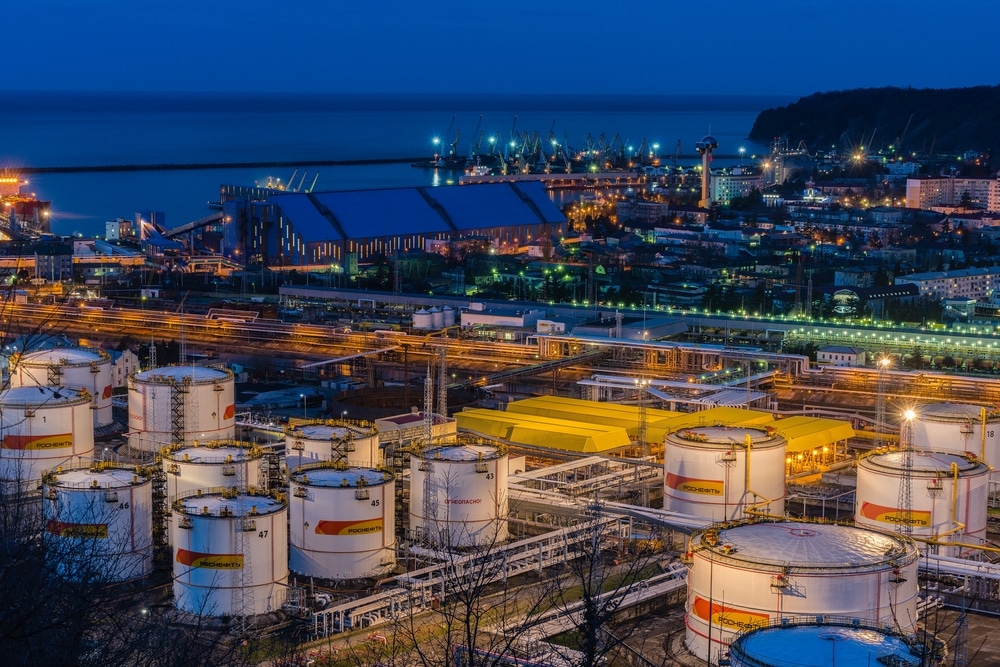
Ukrainian drones struck the Rosneft-owned Tuapse oil refinery in Krasnodar Krai for the third time in 12 days on April 28, igniting a large fire and triggering evacuations in the surrounding residential areas, regional authorities said.
The Tuapse refinery in Russia is burning at least at three different points.
This is the third Ukrainian strike on Russia’s oil infrastructure in Tuapse in the last 12 days.
Fuel storage tanks are on fire across the refinery grounds. pic.twitter.com/KM3VFbvKsF
— GMan | GMan’s Chronicle (@FAB87F) April 28, 2026
Krasnodar Krai Governor Veniamin Kondratyev said more than 160 firefighters were working in “extremely difficult conditions” at the site and described their efforts as “true heroism.” No casualties were reported in the latest strike. The Krasnodar Krai Emergency Response Headquarters attributed the fire to the “fall of drone debris.”
Ukraine’s General Staff confirmed the strike, stating the facility “is involved in supplying the Russian Federation’s occupation army on Ukrainian territory.”
Robert Brovdi, commander of Ukraine’s unmanned systems forces, described it sardonically on Facebook as “Tuapse 3.0. Groundhog Day remake. Regular thermal disposal of black gold, caused, of course, by spontaneous combustion.”
The April 28 attack is the third in a sequence that began April 16. The April 20 strike alone destroyed 24 storage tanks and damaged four more, according to Ukraine’s General Staff. The refinery, which processes roughly 12 million metric tons of oil per year and is the only major Rosneft facility on Russia’s Black Sea coast, has been offline since April 16.
A Ukrainian drone attack on Russia’s Black Sea port of Tuapse sparked a fire and killed at least one person, Russian officials said on Monday, April 20, only hours after a blaze was extinguished following a similar attack on April 16.
Ukraine’s military said on Monday that an… pic.twitter.com/qqkU9VceRG
— GMA News (@gmanews) April 20, 2026
The Tuapse strikes landed as the refinery was absorbing diverted oil supplies from the Black Sea port of Novorossiysk, which handles approximately 14% of Russia’s total crude exports and was itself knocked offline after a Ukrainian drone attack earlier this month. With both nodes out of operation simultaneously, Russia has no functioning major oil export point on the Black Sea.
Environmental damage from the combined strikes has expanded well beyond the refinery perimeter. An oil slick originating from the April 16 attack has stretched approximately 48 miles along the Black Sea coastline, approaching the Gelendzhik region, according to satellite monitoring data from the Transparent World project.
Official monitors recorded benzene, xylene, and soot concentrations at up to twice safe limits in surrounding areas. Residents reported “oil rain” leaving a black residue on surfaces. Dead dolphins have washed ashore near Sochi.
Kremlin spokesman Dmitry Peskov said the Tuapse facility stored oil intended solely for export and accused Kyiv of “further increasing the oil shortage in global energy markets and provoking further destabilisation.”
Russia’s Defense Ministry said air defenses intercepted 186 Ukrainian drones across several southern Russian regions and occupied Crimea on April 28.
Ukrainian President Volodymyr Zelenskyy has previously said Kyiv must maintain pressure on Russian refineries to cut the Kremlin’s primary war funding source.
The General Staff also reported strikes April 28 on additional targets, including the radar station of the Ai-Petri radio engineering battalion in occupied Crimea and command posts in occupied parts of Zaporizhzhia and Donetsk oblasts. Those claims have not been independently verified.