Russia’s forces recorded a net territorial loss in April, marking their first monthly setback in Ukraine since 2024, according to new analysis.
The Institute for the Study of War (ISW) said Moscow’s troops lost a net 116 square kilometers (about 44.8 sq miles) of occupied territory in April 2026, the first such decline since Ukraine’s cross-border operation in Russia’s Kursk region in August 2024.
The report said the shift was driven by Ukrainian ground counterattacks, continued medium-range strikes on logistics and command infrastructure, and disruptions to Russian communications systems.
Russian forces have reportedly faced coordination issues linked to Kremlin-imposed restrictions on Telegram and reported disruptions to Starlink access in occupied areas. These problems have compounded structural weaknesses in Russia’s military, making it harder to carry out coordinated offensives, ISW said.
Environmental conditions have also played a role. A colder, wetter winter followed by seasonal mud has limited the movement of mechanized units, slowing operations along the front. While such conditions typically ease in May, ISW noted that Russian forces have struggled to regain momentum.
Infiltration Tactics
According to ISW, the pace of Russian advances has slowed in 2026 compared with 2025. In the first four months of 2026, Russian forces captured an average of 2.9 square kilometers per day, compared with 9.76 square kilometers per day in the same period in 2025.
Between November 2025 and April 2026, Russian forces captured about 1,443 square kilometers, down from 2,368 square kilometers during the same period a year earlier.
ISW said the Kremlin has used infiltration tactics in part to exaggerate Russian control of territory.
“Russian forces use infiltration tactics in part to create the perception of continued Russian advances along the frontline and to support Kremlin cognitive warfare efforts aimed at exaggerating Russian successes,” ISW said, adding that these areas are often not under stable Russian control.
Meanwhile, Ukrainian military officials have reported gains over the past two months, particularly around Oleksandrivka, a settlement in eastern Donetsk where Ukraine launched a counteroffensive in January.
Last month, Ukraine’s Commander-in-Chief, Oleksandr Syrskyi said that his forces had liberated more than 185 square miles in the Oleksandrivka direction alone.
According to ISW’s Geospatial Intelligence team, Ukrainian forces had made net gains of more than 38 square miles in specific assessed sectors between Dec. 1 and March 25.
That figure, the team said, “reflects isolated smaller operational areas of the frontline that Ukraine has counterattacked and made gains in within the time period, most significantly in the Dnipropetrovsk Oblast area.”
Maturation of Command
George Barros, a conflict analyst at ISW, told Business Insider that Ukraine’s gains reflect its “maturing in their operational planning.”
He said Ukraine was now “demonstrating a more sophisticated and a deeper capability for operational planning and for preparing the battlefield to set the condition for exploits and then executing those exploits.”
He attributed the success to Ukraine’s Delta system, an online battlespace management platform that allows forces to view and share real-time battlefield data and make decisions.
Barros said the system has contributed to a “maturation of command” that allows Ukraine to think beyond directly engaging Russian forces. “These reforms are what are slowly but surely enabling some of these Ukrainian successes that we’re seeing reported out on the day-to-day now,” Barros said.
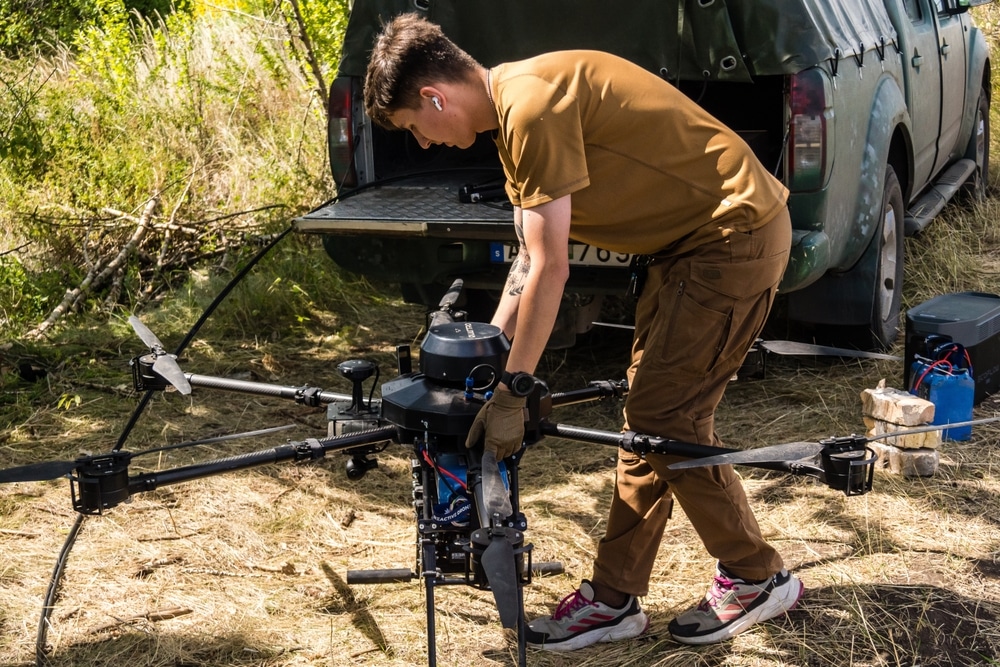
Mapper Clément Molin said the figures suggest Ukraine’s drone campaign is having an impact. “It seems Ukraine wants to use strategic drones as a game-changer,” he explained.
Molin mapped 440 drone strikes in April alone, including 330 mid-range strikes inside occupied Ukraine and 110 long-range strikes inside Russia.
This month of April alone, Ukraine 🇺🇦 launched 450 (!) successful strikes on Russia 🇷🇺 and occupied territories.
Among those are part of the nearly 600 mid-range strikes with FP-1 and FP-2 drones into occupied territories since the year started.
🧵THREAD🧵1/7 ⬇️ pic.twitter.com/3OPpesMvNB
— Clément Molin (@clement_molin) April 29, 2026