
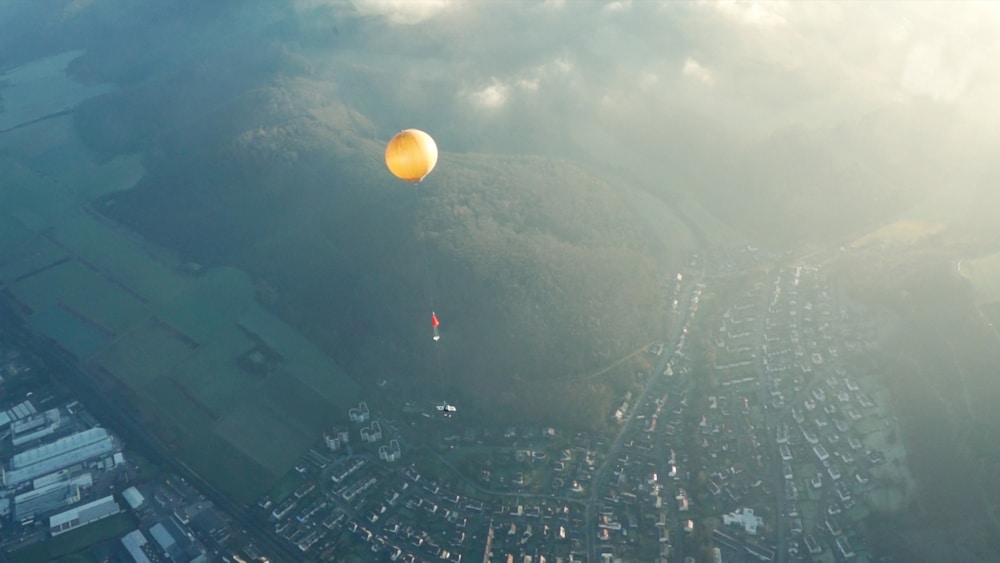
Russia is developing a new balloon-borne system that could provide high-speed data communications on the battlefield amid tightened Starlink restrictions in occupied Ukrainian territories.
Both Russia and Ukraine rely heavily on Starlink for daily wartime operations. Recent reports stated that Elon Musk’s move to block Russian forces from using his Starlink satellite internet service has disrupted Moscow’s advance, caused confusion among Russian troops, and provided Ukrainian forces with a notable advantage.
Ukrainian military communications expert Serhiy “Flash” Beskrestnov, who serves as an adviser to Ukraine’s defense minister in a Telegram post said that Russia recently tested the Barrazh-1 stratospheric balloon.
Uutinen Venäjältä:
“Stratosfäärinen 5G-alusta Starlinkin kapasiteettivajeen kompensoimiseksi: testit käynnistetty Barrazh-1-projektin puitteissa”Venäjällä on onnistuneesti toteutettu ensimmäinen miehittämättömän stratosfäärialustan ”Barrazh-1” -laukaisu. Alustan on kehittänyt… pic.twitter.com/09JhbWUpjE
— Uutisia itärintamalta (@Itarintama) February 20, 2026
The report states that Barrazh-1, developed by the Novgorod-based company Aerodrommash in collaboration with Bauman Moscow State Technical University, can carry up to 100 kg of payload to an altitude of 20 km and uses a pneumatic ballast system to adjust its flight height and take advantage of wind currents.
Russian developers reportedly claim that the system, which is “almost entirely composed of Russian components and materials” could serve as a lower-cost alternative to low Earth orbit satellites.
According to Defense Express, although Russia may pursue stratospheric relays as a temporary solution, geographic and atmospheric factors make it difficult to rely on them as a long-term communications network over Ukraine.
“The forces of nature act as a natural obstacle to Russian plans to deploy a balloon-based communications network over Ukraine. The key factor is the so-called westerly transfer—the normal west-to-east movement of air masses at high altitudes,” the outlet notes. “In most cases, this means the wind blows in the opposite direction for Russian balloons, drifting them further into Russian territory rather than over Ukraine.”
The use of high-altitude balloons is not new. The U.S. Army operates Thunderhead stratospheric balloons for surveillance, reconnaissance, and telecommunications functions.
Attached is a marketing video for Thunderhead Balloon Systems stratospheric platforms–that look like the spy balloons observed/shot down.
But it could be a false flag the media is puffing up ala the Russian hackers DNC email Wikileaks FF. But why blame China & not Russia? pic.twitter.com/IZ8aPwusLc— Banjo Pope 🇺🇸⭐️ ⭐️ ⭐️ (@BanjoPope) February 5, 2023