
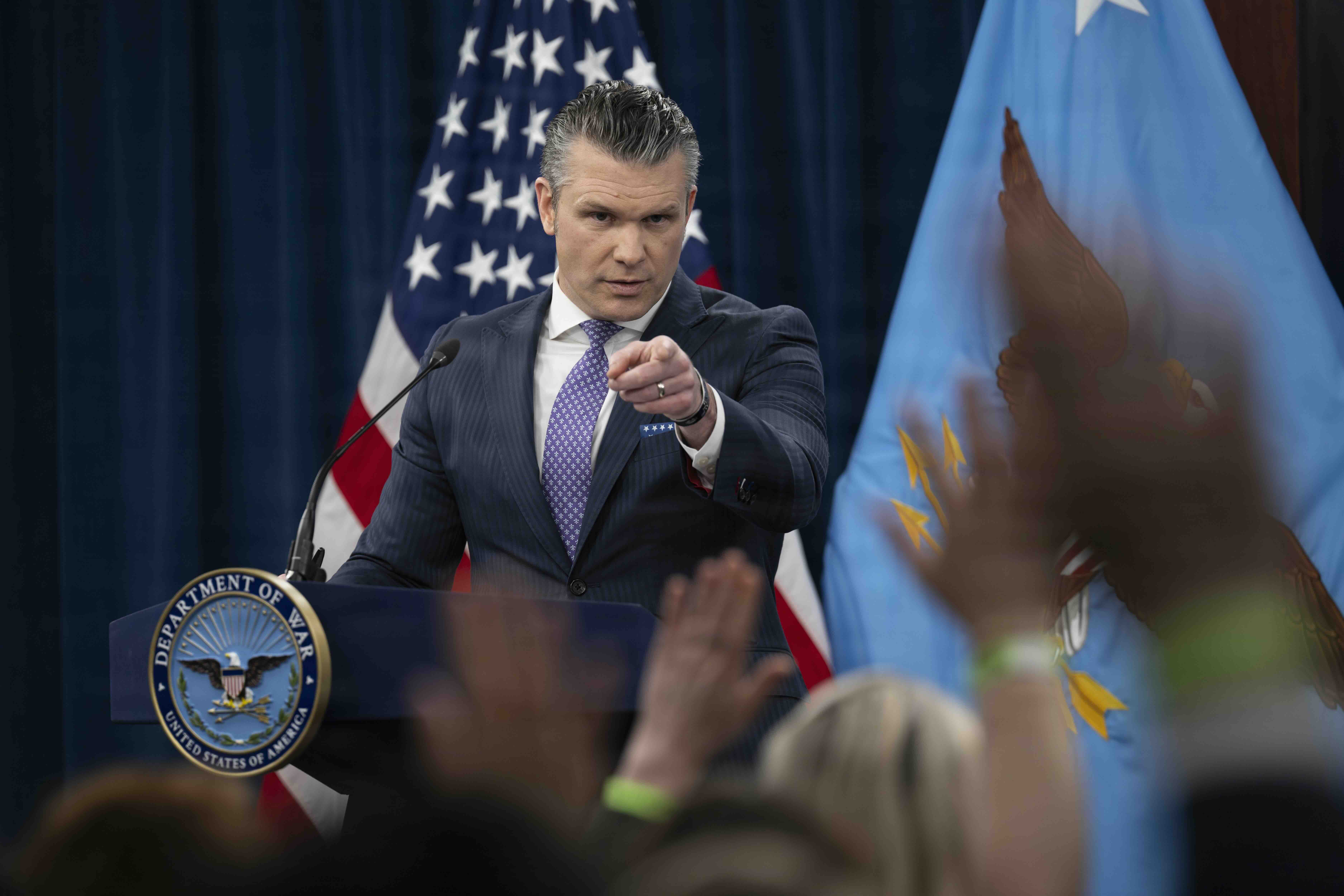
President Donald Trump said Saturday the United States will significantly reduce its troop presence in Germany.
The move comes after German Chancellor Friedrich Merz criticized the U.S. approach to the Iran conflict.
The Pentagon announced Friday that it would begin pulling roughly 5,000 troops from Germany after a review of U.S. force posture in Europe. But Trump, speaking to reporters on Saturday suggested a much larger reduction was coming.
“We’re going to cut way down. And we’re cutting a lot further than 5,000,” Trump told reporters in Florida.
About 80,000 U.S. service members are currently deployed in the European Theater, including roughly 38,000 permanent and rotational forces in Germany. Those troops are stationed across locations including Wiesbaden, Rhineland-Palatinate, Stuttgart and Bavaria.
Reports said the drawdown, expected to be completed over the next six to 12 months, would return U.S. troop levels in Europe to roughly pre-2022 levels.
German Defense Minister Boris Pistorius said in a statement Saturday that the reduction in U.S. troops was “anticipated.” He stressed that American forces play a key role in European security.
“The presence of American soldiers in Europe, and especially in Germany, is in our interest and in the interest of the U.S.,” Pistorius said.
Trump’s decision comes amid heightened tensions with European allies over their reluctance to join his campaign against Iran. He has earlier criticized European leaders including Merz, Spanish Prime Minister Pedro Sánchez and British Prime Minister Keir Starmer.
On Monday, Merz said that the U.S. was being “humiliated” by the Iranian leadership and criticized Washington’s lack of strategy in the war.
“The Iranians are clearly stronger than expected and the Americans clearly have no truly convincing strategy in the negotiations either,” Merz said.
Days after Merz made the remarks, Trump announced plans to raise tariffs on cars and trucks from the European Union to 25% next week, accusing the bloc of failing to comply with its U.S. trade deal. The move is expected to largely affect Germany, a major automobile producer.