
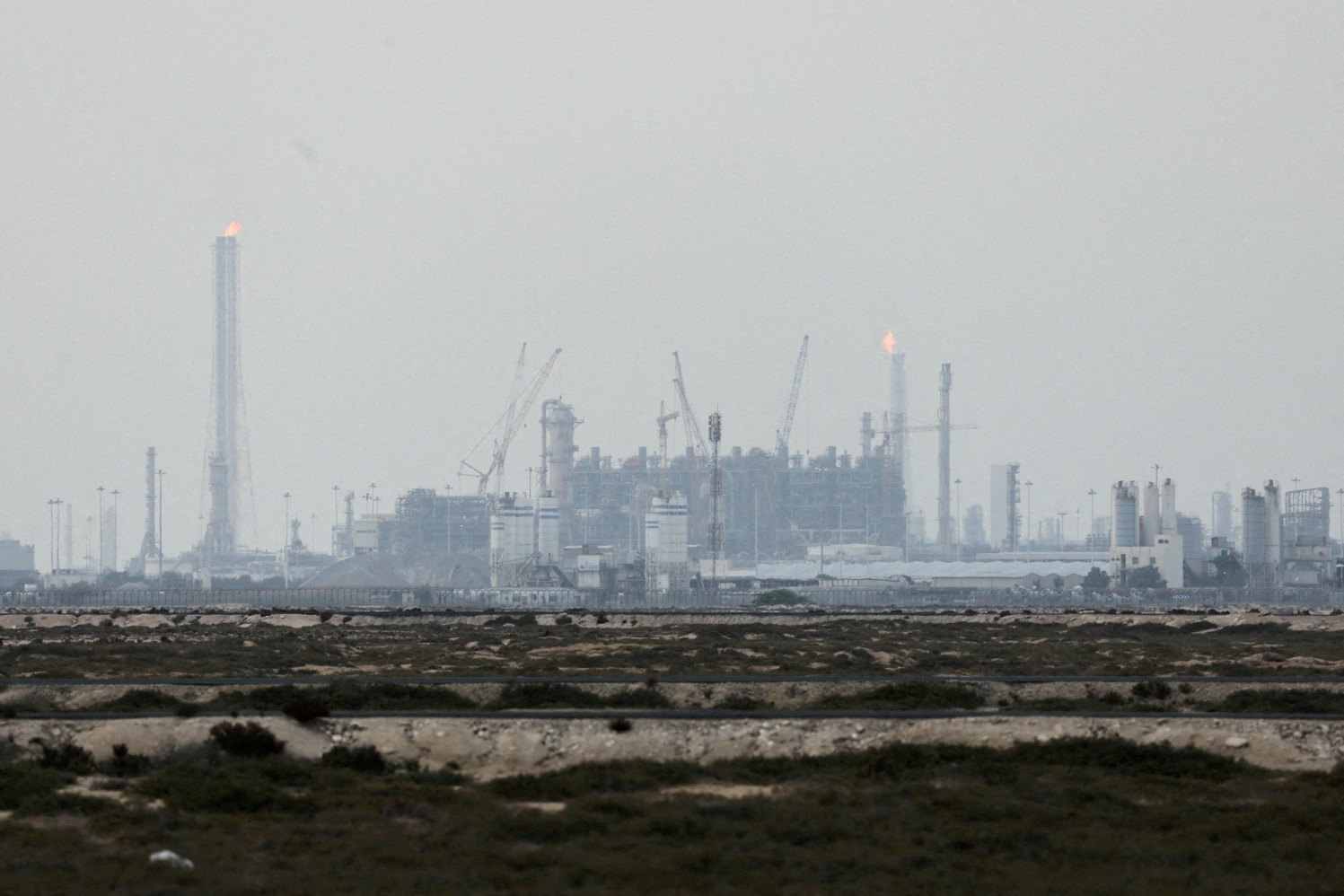
Iranian strikes on Qatar’s energy infrastructure have wiped out 17% of the country’s liquefied natural gas (LNG) production capacity for up to five years, threatening global supply to Europe and Asia.
QatarEnergy’s CEO and state minister for energy affairs, Saad al-Kaabi, told Reuters on Thursday that two of the country’s 14 LNG trains and one gas-to-liquids facility were damaged in Wednesday’s Iranian attack on Qatar’s Ras Laffan Industrial City, which houses the world’s largest LNG export complex.
Kaabi said repairs will sideline 12.8 million tons of LNG production for three to five years, resulting in about $20 billion in lost annual revenue. He added that QatarEnergy will have to declare force majeure on long-term LNG contracts for supplies bound for Italy, Belgium, South Korea and China due to the damage.
“I never in my wildest dreams would have thought that Qatar would be – Qatar and the region – in such an attack, especially from a brotherly Muslim country in the month of Ramadan, attacking us in this way,” Kaabi said.
Iran’s attacks on Qatar’s Ras Laffan Industrial City came after Israeli strikes on Iran’s South Pars gas field.
A U.S. defense official told Axios that the South Pars strike was coordinated with and approved by Washington. However, Israeli Prime Minister Benjamin Netanyahu said Israel acted alone in carrying out the operation.
On Thursday, Iran targeted additional oil refineries across the Middle East. In Israel, an Iranian missile hit oil refineries in Haifa. Fire crews worked to extinguish a blaze at the site, and officials said no injuries were reported.
#BREAKING: During the latest Iranian ballistic missile salvo a direct impact occurred at an oil refinery in #Haifa, Israel. Smoke can be seen rising from the site. This is a massive escalation in the war.
Bazan’s Haifa refinery is Israel’s largest refinery and a critical energy… pic.twitter.com/ROXI5XoN6O
— Aditya Raj Kaul (@AdityaRajKaul) March 19, 2026
In Saudi Arabia, a drone hit a Saudi Aramco refinery in Yanbu on the Red Sea, the Defense Ministry said, adding that damage was still being assessed. The facility is a joint venture with U.S.-based Exxon Mobil Corp.
Kuwait also said Thursday that drones hit its Mina Al-Ahmadi and Mina Abdullah refineries, operated by the state-owned National Petroleum Company. The Kuwait News Agency reported a “limited” fire at Mina Al-Ahmadi.
🚨 KUWAIT UNDER FIRE: Two Iranian drone strikes hit major oil refineries in quick succession.
•First: Drone impact at Mina al-Ahmadi refinery — Kuwait’s flagship facility, capacity 730,000 bpd, one of the largest and most sophisticated in the Middle East.
•Second: Follow-up… pic.twitter.com/BQscbyvKIb
— Trading Cartel (@Tradingcartel_X) March 19, 2026
Iranian attacks on major energy infrastructure and refineries across several Gulf countries pushed oil and gas prices higher in volatile trading Thursday.
Brent crude oil, a global benchmark, briefly surged above $119 a barrel, up more than 60% since the start of the war. European natural gas prices also rose sharply, roughly doubling over the past month.
U.S. President Donald Trump said Thursday he had told Israel not to repeat its attacks on Iranian natural gas infrastructure as reciprocal strikes on energy facilities sent fuel prices soaring.
Israeli Prime Minister Benjamin Netanyahu said late Thursday Israel will heed Trump’s call.