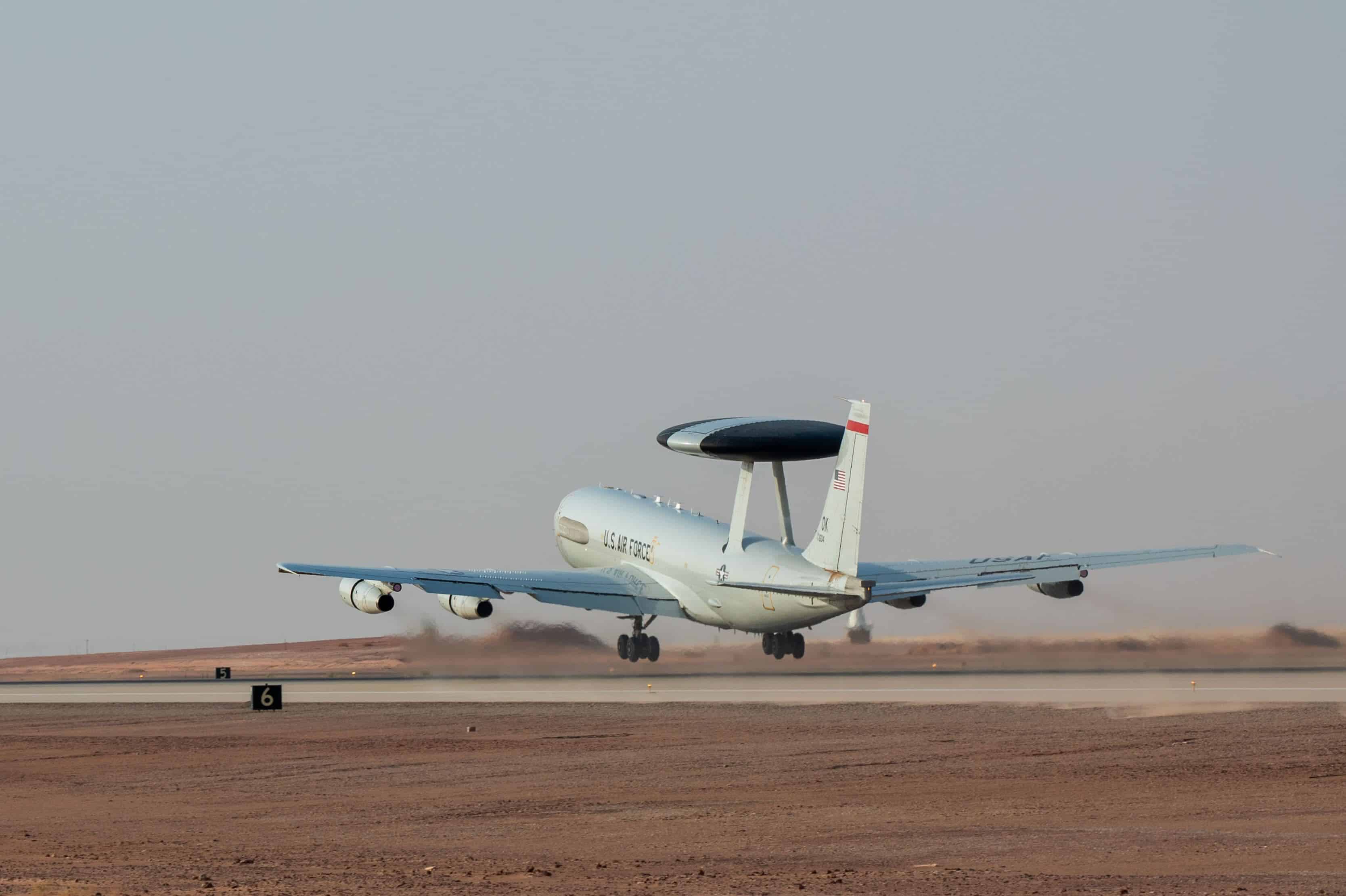
A U.S. Air Force E-3 Sentry Airborne Warning and Control System aircraft was heavily damaged in an Iranian missile and drone attack on Prince Sultan Air Base in Saudi Arabia on March 27, officials cited by The Wall Street Journal said.
According to reports, the strike injured more than 10 U.S. service members, including two who were seriously wounded, and also damaged aerial refueling tankers.
Photos posted by Iran’s state broadcaster, Islamic Republic of Iran Broadcasting, appeared to show the damaged E-3. U.S. Central Command has declined to comment on the report.
Iranian strikes at Saudi Arabia’s Prince Sultan Air Base damaged a U.S. E-3 Sentry AWACS aircraft along with multiple refueling aircraft.#SaudiArabia #NoKings pic.twitter.com/4KP4pIILip
— IRIB (Islamic Republic of Iran Broadcasting) (@iribnews_irib) March 29, 2026
The aircraft damaged in the attack was reportedly assigned to Tinker Air Force Base in Oklahoma and was on the ground at the time, though it was unclear whether any Oklahoma-based crew members were present during the strike.
🚨Iran shot down a $700 million spy plane at Prince Sultan Air Base in Saudi Arabia. The Iranian attack shows a US E-3 AWACS aircraft being hit in the footage. The E-3 AWACS is a flying radar and airborne command center that directs US air operations. pic.twitter.com/IHHi7cyySp
— Tevfik Barbaros Araf (@OkcularTepesi13) March 29, 2026
The E-3 Sentry, often described as a flying command center, uses advanced radar to track aircraft and missiles from hundreds of kilometers away, providing commanders with a real-time picture of the battlefield.
The aircraft has been a cornerstone of U.S. air operations since the late 1970s, supporting missions in conflicts ranging from Operation Desert Storm to the wars in Iraq and Afghanistan and the campaign against the Islamic State group. According to The War Zone, the U.S. deployed six E-3 aircraft to the Middle East before the war began.
The U.S. Air Force’s E-3 fleet has declined significantly over the years and now consists of about 16 operational aircraft, down from roughly 30 decades ago.
According to Army Recognition, the E‑3’s unit cost in 1998 was roughly $270 million to $300 million, which, when adjusted for inflation, would be about $537 million to $596 million in 2026 dollars.
The E-3’s successor, the E-7 Wedgetail, is expected to cost about $700 million per aircraft and remains years away from full deployment.
Prince Sultan Air Base, located outside Riyadh, has been targeted multiple times in the ongoing war between the U.S. and Iran. At least five other tankers at the base were also damaged in an earlier strike.