
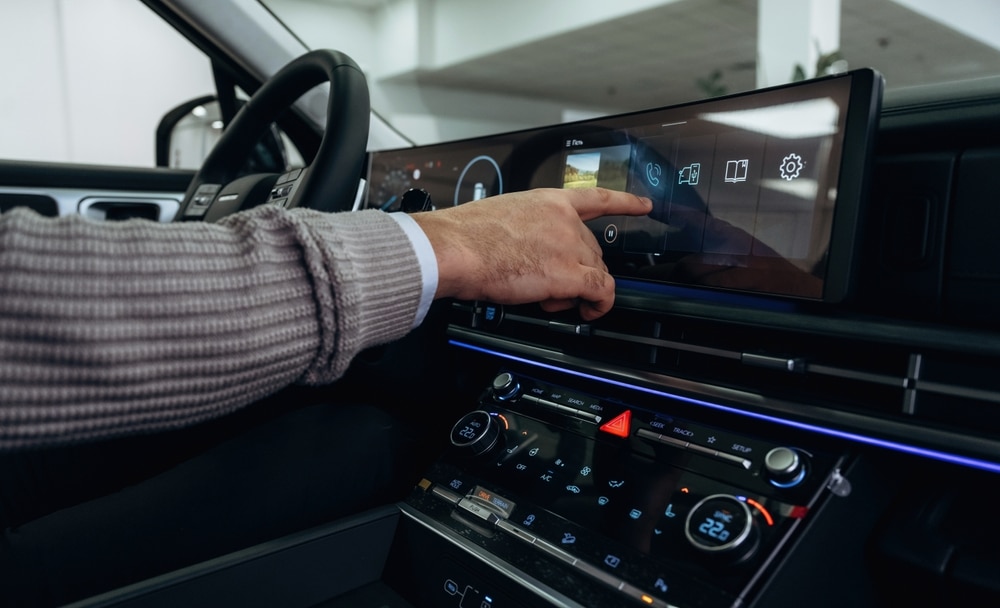
New passenger vehicles sold in the United States would soon be required to include in-cabin monitoring systems that assess whether a driver is fit to drive and, in some cases, shut off the engine via a so-called “kill switch.”
The requirement stems from a provision in the 2021 Infrastructure Investment and Jobs Act, which states that new vehicles from 2027 models onward must be “equipped with advanced drunk and impaired driving prevention technology.”
Renewed concerns over the system have grown after viral social media posts claimed that new vehicles could invade drivers’ privacy.
2027 MANDATORY KILL SWITCH IN EVERY NEW VEHICLE:
They won. Your car is no longer yours.
Government-mandated sensors & cameras will spy on your face, biometrics, conversations — then DISABLE your ride if they deem you “unfit.”
Privacy? Dead.
Control? Total.
Freedom to… pic.twitter.com/tk08sRGIdj— Valerie Anne Smith (@ValerieAnne1970) May 1, 2026
“This is invading every driver’s privacy, taking information, deciding if you’re drunk” without having all the evidence. “Then you get in the car and can’t start it,” Lauren Fix, an automotive analyst and founder of Car Coach Reports, said.
Rep. Chip Roy, R-Texas, called the requirement “a direct threat to our Fourth Amendment rights,” arguing it could allow widespread monitoring of drivers.
“That’s why I introduced an amendment to FISA (Foreign Intelligence Surveillance Act) to eliminate the ‘kill switch’ and stop this Big Brother technology from being built into new vehicles,” Roy said.
Rep. Thomas Massie, R-Ky., also criticized the idea, warning of the potential consequences of algorithmic decision-making in vehicles.
“The car itself will monitor your driving, and if the car thinks that you’re not doing a good job driving, it will disable itself,” Massie said. “So, the car dashboard becomes your judge, your jury and your executioner.”
Federal regulators have not yet released final specifications for the vehicles and industry deployment timelines remain uncertain as testing continues.
Reports indicate some systems under consideration include steering-wheel sensors that detect perspiration, camera-based systems that assess gait as a driver approaches a vehicle and interior monitoring tools designed to continuously evaluate alertness.
General Motors has reportedly filed a patent for a system that uses cameras and sensors to assess whether a driver is impaired by analyzing how they approach the vehicle.
Ford is developing technology that would use cameras and “machine learning” to scan a driver’s irises, track facial expressions and monitor heart rate for signs of impairment. Toyota, meanwhile, is reportedly working on a system that could prevent a vehicle from starting if sensors in the steering wheel detect elevated alcohol levels through sweat.
The National Highway Traffic Safety Administration (NHTSA) was required to outline implementation rules for the system by 2024 but missed the deadline. The agency said that year it was “working diligently” on creating the rules.
As of February 2026, the agency said it “continues to evaluate and analyze the information contained in the more than 3,000 unique comments received in response and to conduct the research and other activities described.”







I don’t like this one bit. It’s understandable if COURT ORDERED by someone convicted of an alcohol offense like DUI/DWI, but this is way too intrusive.
Of course, it is bio-metric logging and tracing, what does anyone think datacenters are for? It is an invasion of the 4A and the damned government knows it and doesn’t give two fuks about your rights.
And what happens when a person gets out of a long day aching limping just washed their hands with alcohol germ wash? camera makes an assumption or the steering wheel senses alcohol on their hands, how does that work when their new POS vehicle won’t start and all they want to do is go home? Or when someone has to do an evasion maneuver to avoid a reckless driver does the car shut off leaving you stranded on the highway causing possibly another accident? A lot of questions for the nanny state that they aren’t answering!
Your government doesn’t give two eff’s about your privacy, says the NSA and all the companies that mine and sell your information and activities to that government. Welcome to the new world order.
There will be a hack to disable it. Watch.
I think Americans need a kill switch if Americans see officials are deemed unfit for office , especially if americans are owed money, justice to be done to offenders
If you have a limp, or a disability would you be having to call a cab because your car won’t let you? These Nanny State libs need to get a life, or a job in the real world. We don’t have drivers at our beck and call like these idiots do.