
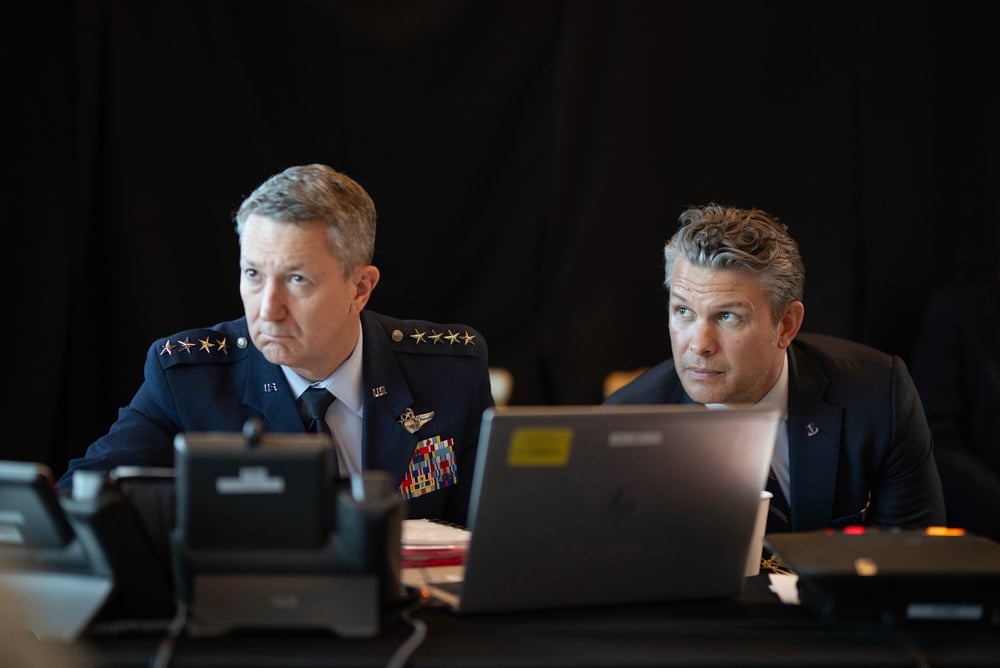
Defense Secretary Pete Hegseth announced a six-month review of U.S. force posture and basing in Europe on Thursday, but the more significant disclosure from Brussels was NATO Secretary General Mark Rutte’s confirmation that cuts to the alliance’s crisis readiness pool are already underway.
Hegseth told defense ministers the review, which he called “NATO 3.0,” would “ensure that NATO is moving fast and irreversibly toward Europe leading, stepping up to take primary responsibility for the defense of Europe.” He said some countries would “fail” the assessment while others would “pass with flying colors.”
SecDef Hegseth takes ‘family photo’ with NATO member states after telling Europe they need to ‘take the lead’
Welcome to ‘NATO 3.0’https://t.co/XXq6z9ALAC pic.twitter.com/8rMX4O1bCl
— RT (@RT_com) June 18, 2026
Rutte confirmed reductions to the NATO Force Model (NFM), the pool of forces allies can draw on at short notice in a crisis, were already in effect. “It is immediate,” he told reporters.
A military source told Reuters the cuts include reducing the U.S. F-15 and F-15E fighter jets allocated to NATO by a third, to 99 aircraft, halving the MQ-4 and MQ-9 Reaper drone pool to 12, and removing all eight previously designated aerial refueling tankers from European operations.
Hegseth announced U.S. dues to the alliance would be “contingent on other countries meeting their defense spending targets” and criticized allies who blocked U.S. access to European bases and overflight corridors during the Iran war. “These allies put America’s sons and daughters at risk by denying them predictable access, basing, and overflight,” he said.
Belgian Defence Minister Theo Francken pledged F-16 fighters and MQ-9B SkyGuardian drones to offset the reductions. German Defence Minister Boris Pistorius warned of “dangerous capability gaps,” particularly in deep-strike capacity, and called for a synchronized transition process to prevent shortfalls.
The NATO summit convenes in Ankara, Turkey, on July 7-8. Rutte expects all 32 members to present “clear, concrete, and credible” plans to reach the alliance’s 5% GDP defense spending target.