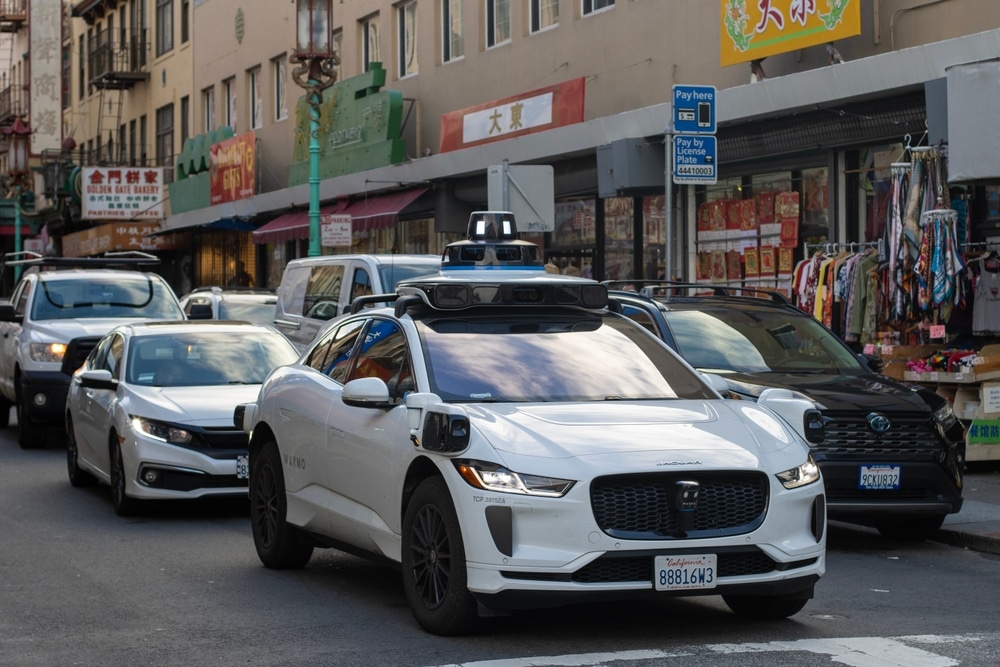
A Senate investigation published Tuesday found that Tesla is the only autonomous vehicle company to authorize its remote assistance operators (RAOs) to directly drive its robotaxis, a disclosure that Senator Edward Markey’s office said is “especially concerning” given the company’s documented history of overstating the autonomy of its vehicles.
My investigation into autonomous vehicle companies’ use remote assistance operators exposed a lack of transparency and serious safety gaps.
Now I’m calling on federal authorities to investigate. https://t.co/S7K7RywqMb
— Ed Markey (@SenMarkey) March 31, 2026
Markey, a Democrat from Massachusetts and a member of the Senate Commerce, Science, and Transportation Committee, released the report, titled Remote Backseat Operators, after sending letters to seven companies in February.
The seven firms, Aurora, May Mobility, Motional, Nuro, Tesla, Waymo, and Zoox, all refused to disclose how often their RAOs intervene with deployed vehicles. Waymo and May Mobility explicitly called the figure “confidential business information.” Tesla did not include the question in its response.
Karen Steakley, Tesla’s director of public policy and business development, wrote in the company’s letter that RAOs “are authorized to temporarily assume direct vehicle control as the final escalation maneuver after all other available intervention actions have been exhausted.” She wrote that this occurs only when a vehicle is traveling at 2 miles per hour or slower, and that remote operators may not exceed 10 miles per hour.
“This capability enables Tesla to promptly move a vehicle that may be in a compromising position,” Steakley wrote.
Markey’s report states that Tesla’s teleoperation authorization is “especially concerning” in light of the company’s branding record. The report cites Tesla’s marketing of “Full Self-Driving,” a driver-assistance system that requires continuous human supervision despite its name, as grounds for public skepticism about whether its robotaxis operate without RAO involvement.
The other six companies said they either do not permit or lack the technical capability for RAOs to perform the dynamic driving task, meaning the full act of operating a moving vehicle.
In a letter to Markey, Waymo’s vice president and global head of operations Ryan McNamara stated that approximately 70 remote assistance agents are on duty at any given time, with roughly half based in two cities in the Philippines.
Waymo’s chief safety officer Mauricio Peña first disclosed the Philippines-based workforce before the Senate Commerce Committee on February 4.
George Mason University professor of engineering Missy Cummings told Wired that companies are incentivized to keep RAO operations undisclosed “because then it would make it clear how not-capable these systems really are.”
Markey said Tuesday he is writing to the National Highway Traffic Safety Administration to open an investigation into each company’s RAO practices and is “working on legislation to impose strict guardrails on AV companies’ use of remote operators.”