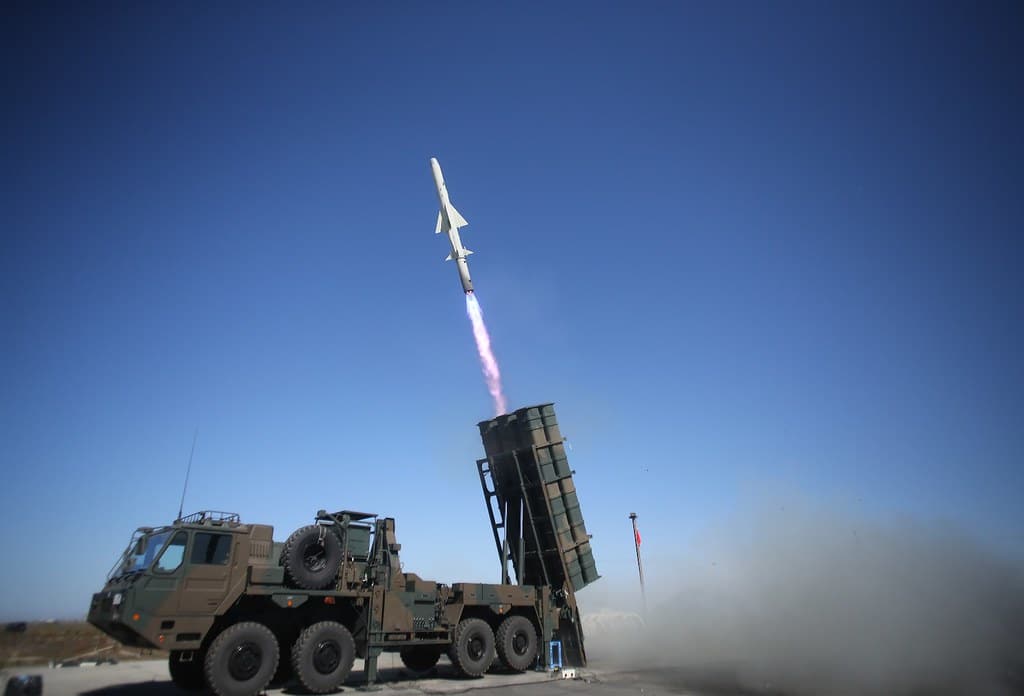
The Japan Ground Self-Defense Force (JGSDF) deployed two domestically developed long-range missile systems on March 31 and formally designated them as “Type 25” weapons, completing a strike-capability milestone that coincided with the Japan Maritime Self-Defense Force (JMSDF) Aegis destroyer JS Chōkai finalizing Tomahawk cruise missile integration at Naval Station San Diego the same week.
🚢DDG CHOKAI, currently deployed to 🇺🇸, has completed the ship modifications and crew training to acquire #Tomahawk launch capability☝️ By around this summer, through live-fire drills and other tests, CHOKAI will attain its full operational capability. pic.twitter.com/vUGYBAupQ1
— Japan Ministry of Defense/Self-Defense Forces (@ModJapan_en) March 30, 2026
#JMSDF, with support from @USNavy, has completed adding #Tomahawk launch capability to #JS_CHOKAI.
Our stand-off defense capabilities are steadily progressing as we strengthen ties with #USNavy, with a live-fire planned around this summer.@US3rdFleet #US3rdFleet #FOIP pic.twitter.com/sYrJV6Bb5L— 防衛省 海上自衛隊 (@JMSDF_PAO) March 27, 2026
The JGSDF stationed the Type 25 Surface-to-Ship Guided Missile (25SSM) at Camp Kengun in Kumamoto Prefecture and the Type 25 Hyper Velocity Gliding Projectile (25HGP) at Camp Fuji in Shizuoka Prefecture. The “25” designation follows Japan’s defense equipment naming convention, reflecting fiscal year 2025, which closed March 31.
“This is an initiative of paramount importance for strengthening Japan’s deterrence and response capabilities, as the country faces the most severe and complex security environment since the end of World War II,” Defense Minister Shinjiro Koizumi said Tuesday.
The 25SSM, produced by Mitsubishi Heavy Industries, carries a range of approximately 1,000 kilometers, placing China’s eastern coastline and nearly all of North Korea within reach from Kumamoto. The 25HGP travels at supersonic speeds along irregular trajectories from high altitude, making interception more difficult. Its initial variant has a range of several hundred kilometers.
Defense officials said operational challenges remain, including a shortage of ammunition storage depots, limited long-range live-fire training ranges, and gaps in targeting data integration with U.S. forces.
The JS Chōkai (DDG-176), a Kongō-class destroyer, completed Tomahawk modifications after arriving at San Diego in October 2025.
The vessel must still conduct live-fire testing in the United States before returning to Japan around September.
Japan has committed to equipping all eight of its Aegis destroyers with the RGM-109 Tomahawk, which carries a range of roughly a thousand miles.
The JGSDF plans to deploy 25HGPs to Camp Kamifurano in Hokkaido and Camp Ebino in Miyazaki Prefecture in fiscal year 2026. Ship-launched and aircraft-launched variants of the 25SSM are scheduled to enter service in fiscal year 2027, a year ahead of the original timeline.
Residents near Camp Kengun staged protests Tuesday, arguing the deployment increases the risk of the area becoming a retaliatory target. Koizumi said the ministry has no current plans for a public briefing but would consider the possibility.