U.S. European Command’s Gen. Alexus Grynkewich warned that Russia and China are expanding military patrols in the Arctic, conducting joint operations north of Alaska and near Canada.
“In the Arctic and the high north, we see a similar trend,” Grynkewich said. “Russian and Chinese vessels are conducting more and more joint patrols. Chinese icebreakers and research vessels are in Arctic waters, and their research is not for peaceful purposes. It’s to gain a military advantage.”
According to Grynkewich, their activities include bathymetric surveys to map the ocean floor and assess ways to counter NATO capabilities on and under the sea.
“They’re out there doing bathymetric surveys and trying to figure out how they can counter NATO capabilities on and under the sea. So that’s something that could grow very quickly, and we need to be mindful of it and ready for it.”
The top commander of the North American Aerospace Defense Command (NORAD), Gen. Gregory Guillot, also noted the increase in coordinated Russian and Chinese patrols in areas just outside North America in an interview with CBC News
“I’d say the most consequential difference in 2025 has been the volume, the simultaneous volume,” Gen. Gregory Guillot said. “Sometimes we’ll have, instead of a single ship, four or five ships operating at the same time in various parts of the Arctic Ocean down into the Bering area,” he added.
A few hours after the ship sightings, Guillot said air incursions will be reported in another part of the region.
As of late December 2025, NORAD had publicly reported at least eight separate instances of Russian military aircraft operating in the Alaskan Air Defense Identification Zone. All of the events occurred in international airspace, near, but not inside, North American airspace.
No sea incursions were publicly acknowledged. However, last summer, it was reported that the Canadian military monitored a Chinese research vessel in Arctic waters off Alaska for the second time in two years.
Despite the expanded presence, Grynkewich stressed that NATO territory is not under immediate threat, noting that Russia remains focused on Ukraine and recognizes the alliance’s significant military strength.
Grynkewich said NATO’s Joint Force Command in Norfolk, Virginia, recently consolidated all alliance operations in the Arctic under a single command, a move intended to bolster defense across Europe, the High North, and key approaches to North America.
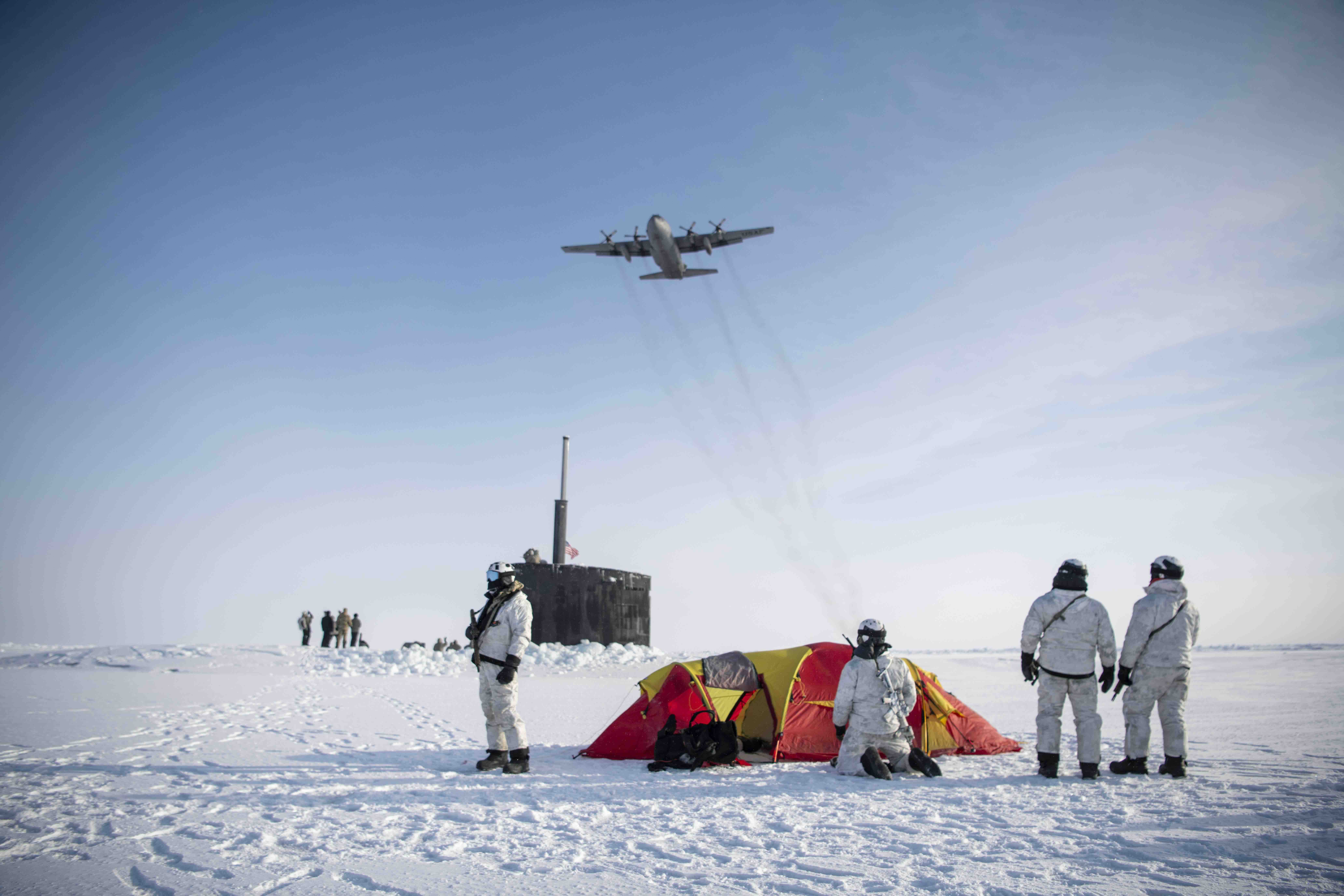
The alliance is also enhancing Arctic surveillance, upgrading infrastructure and logistics, and increasing the deployment of forces trained to operate in extreme conditions, including in Sweden.