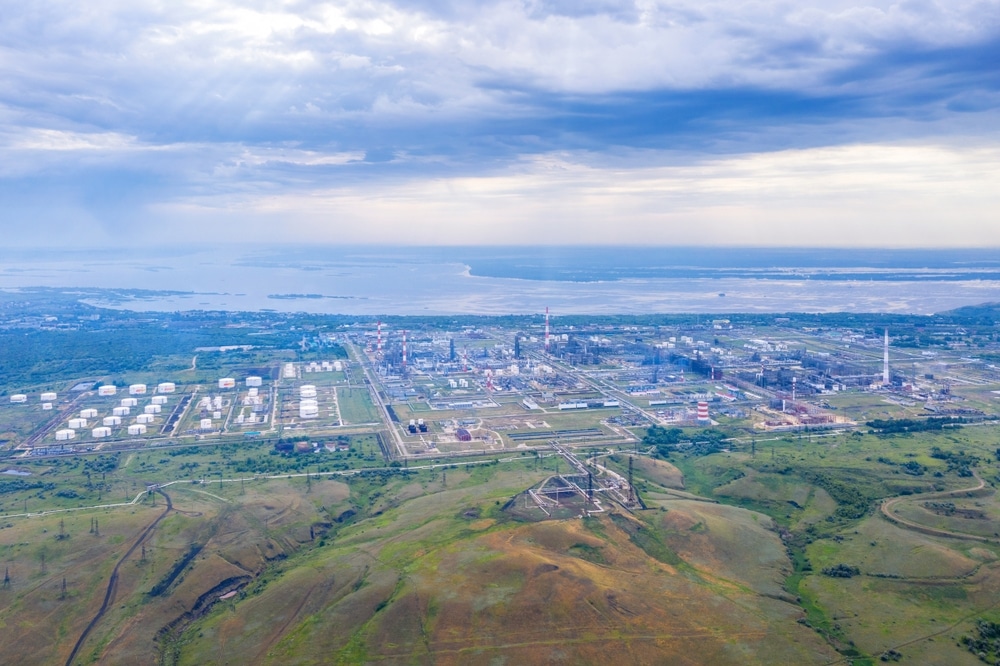
Ukrainian drones struck Rosneft’s Syzran oil refinery in Russia’s Samara region overnight on May 21, triggering a fire at the facility for the second time in five weeks as Ukraine’s long-range strike campaign against Russian energy infrastructure intensifies.
Ukrainian President Volodymyr Zelenskyy confirmed the strike Thursday, posting footage of flames and black smoke rising from the complex on X. “Another Ukrainian long-range sanction against Russian oil refining – and we are continuing this line of action,” Zelenskyy wrote. He thanked the Unmanned Systems Forces (USF) and Special Operations Forces (SOF), stating the mission was carried out jointly with the Security Service of Ukraine (SBU). Samara Governor Vyacheslav Fedorishchev confirmed two people were killed and several others injured.
Another Ukrainian long-range sanction against Russian oil refining – and we are continuing this line of action. This time around, it was the Syzran oil refinery – more than 800 kilometers away from our border. I thank the warriors of the Unmanned Systems Forces and the Special… pic.twitter.com/agLuhwrvQS
— Volodymyr Zelenskyy / Володимир Зеленський (@ZelenskyyUa) May 21, 2026
The strike is the second on the same facility since April 18, when Ukrainian drones damaged the plant’s AVT-6 primary refining unit, which handles more than 70% of the refinery’s processing capacity. The Syzran plant processes up to 8.5 million tons of oil annually.
The campaign’s cumulative pressure has validated an aggressive policy response from Moscow. Russia had previously banned gasoline exports through July 31 to protect domestic supply, a preventive measure that has become critical following a wave of drone attacks. According to USF Commander Major Robert “Madiar” Brovdi, kinetic strikes in May alone targeted ten Russian oil facilities, forcing six of them to halt operations entirely.
Reuters reported that the combined annual processing capacity of refineries now fully or partially offline exceeds 83 million tons, roughly a quarter of Russia’s total refining output. The affected plants previously accounted for more than 30% of Russia’s gasoline production and around 25% of its diesel fuel output.
The Institute for the Study of War (ISW) assessed Wednesday that Ukraine’s intensified midrange strike campaign since early 2026 “has also degraded Russian forces’ ability to conduct offensive operations across the theater.”