
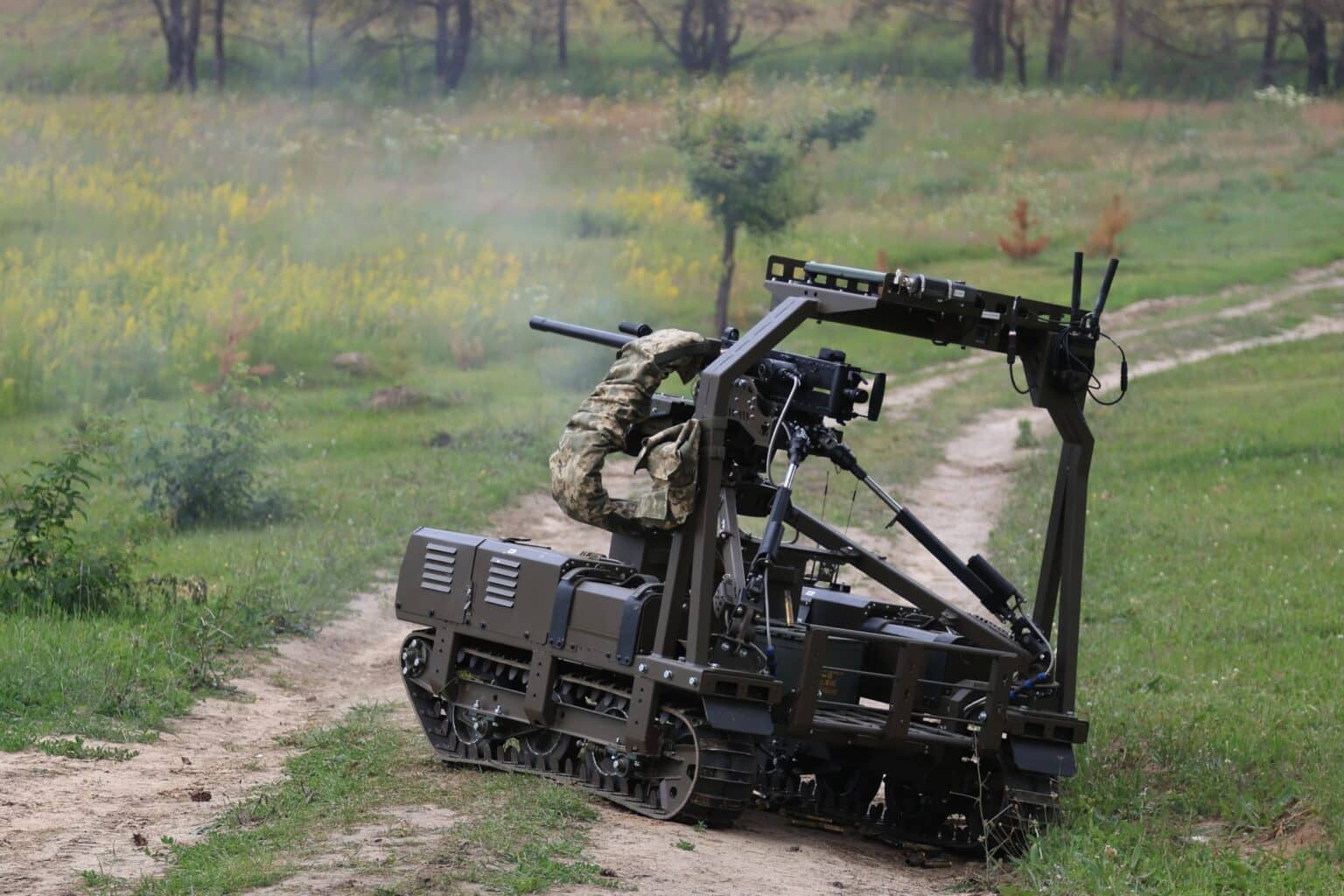
For the first time, Ukrainian forces have captured a Russian position using only drones and unmanned ground vehicles (UGVs), President Volodymyr Zelenskyy said, describing the operation as a milestone in the evolution of modern warfare.
“For the first time in the history of this war, an enemy position was taken exclusively by unmanned platforms—UGVs and drones. The occupiers surrendered, and this operation was carried out without the participation of infantry and without losses on our side,” Zelenskyy said in a statement released on Monday.
The president said various robotic systems, including the Ratel, Termit, Ardal, Lynx, Snake, Protector and Volya, have carried out more than 22,000 missions over the past three months, aimed at reducing risks to personnel in high-danger areas.
“Lives were saved more than 22,000 times—a robot went into the most dangerous areas instead of a soldier. This is about high technologies in defense of the highest value—human life,” he said.
Earlier this month, the Ministry of Defense reported a sharp increase in the use of ground robots on the front lines, with more than 9,000 missions completed in March alone.
This marks a sharp rise from roughly 2,900 operations in November 2025.
“In total, UGVs carried out roughly 24,500 missions in the first three months of this year,” the ministry of defense said. The number of units using UGVs has also increased to 167, up from 67 last year.
The announcement follows recent reports of unmanned systems being used in combat, including operations in which drones helped free captured Ukrainian soldiers.
In June 2025, Ukrainian soldiers used the Ardal unmanned ground vehicle, a robotic platform, to evacuate wounded personnel from the frontlines.
Ground robots have also been used in non-combat rescue efforts. In September 2025, Ukrainian troops used a robotic vehicle to evacuate a cat named “Prapor” from the frontline after it had lived with soldiers for months. The robot first delivered supplies to forward positions before returning with the animal, completing the mission safely.




well, here we finally are, “Skynet.”