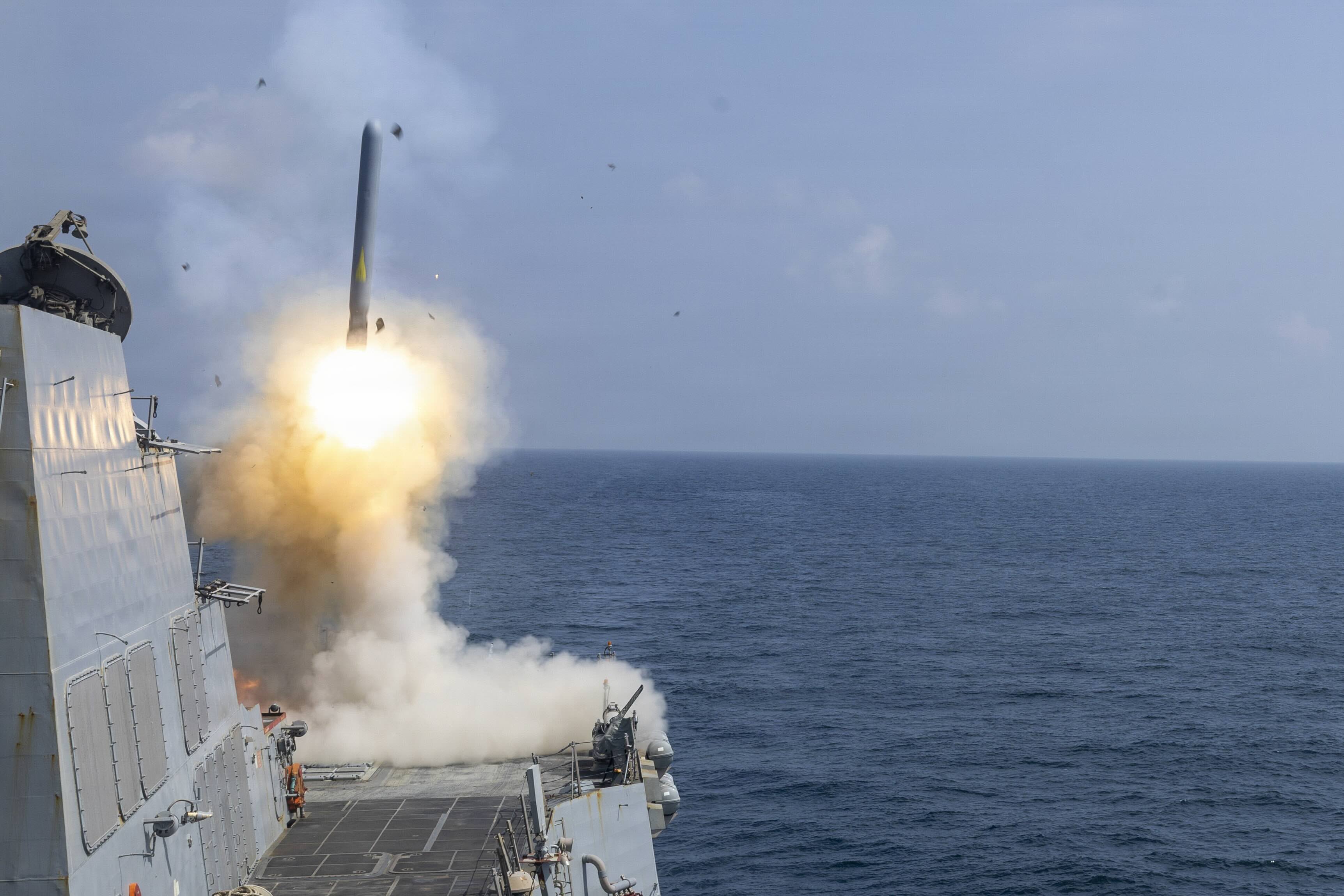
The U.S. Navy has requested $3 billion in its fiscal year 2027 budget to procure 785 Tomahawk Land Attack Cruise Missiles (TLAMs), a 1,200% increase over the 58 missiles funded in fiscal 2026, as stockpiles continue to draw down during Operation Epic Fury.
The service has expended at least 850 Tomahawks since the operation began on February 28, The Washington Post reported, surpassing the 802 missiles fired throughout Operation Iraqi Freedom and setting a record for any single campaign.
The Center for Strategic and International Studies (CSIS) estimates the U.S. retains close to 3,000 TLAMs but notes the replacement timeline is constrained by manufacturing capacity, not budget authorization.
RTX produced 100 new Tomahawks in all of 2025, Bloomberg reported. A contract signed with the Defense Department on February 4, 2026, targets a ramp to as many as 1,000 missiles per year over a potential seven-year period.
🚨 THE U.S. IS REARMING — FAST 🚨
The U.S. just approved multi-year deals to massively scale missile production.
On Feb 4, Raytheon (RTX) signed framework agreements with the DoD lasting up to 7 years.
What’s changing:
🟢 Tomahawk missile
• Output rising to 1,000+ per year… pic.twitter.com/t6ILhnnI8m— Decode Conflict (@miriti55453) February 10, 2026
At that ceiling, the Navy still expects only 110 deliveries in fiscal 2026, per the CSIS report.
“It would take two to three years to replace the 850 Tomahawks already expended,” Mark Cancian, a co-author of the CSIS report, told Military Times.
Japan’s order of roughly 400 Tomahawks faces potential delivery delays, Bloomberg reported, with a March 2028 target now at risk.
US stalls Japan’s $2.35B Tomahawk haul — 400 missiles due ’28 now iced by Iran war guzzling stocks.
Beijing squeeze meets Washington flake: Tokyo’s quick-strike shortcut derailed, forcing “go-domestic” pivot amid zero Asia hot wars imminent.
Type-12 upgrades (1K km punch) ramp… pic.twitter.com/N8fVfgJwni
— Rybar Pacific (@rybar_pacific) April 8, 2026
The FY2027 request separately covers 494 Advanced Medium-Range Air-to-Air Missiles (AMRAAMs) at roughly $800 million, up from 106 missiles at approximately $69 million in fiscal 2026.