China and Russia conducted their 11th Joint Strategic Air Patrol on June 27, sending at least 15 aircraft through the Sea of Japan, East China Sea, and western Pacific in a six-hour sortie intercepted by U.S. Air Force F-35A Lightning IIs and Japan Air Self-Defense Force (JASDF) F-15J Eagles.
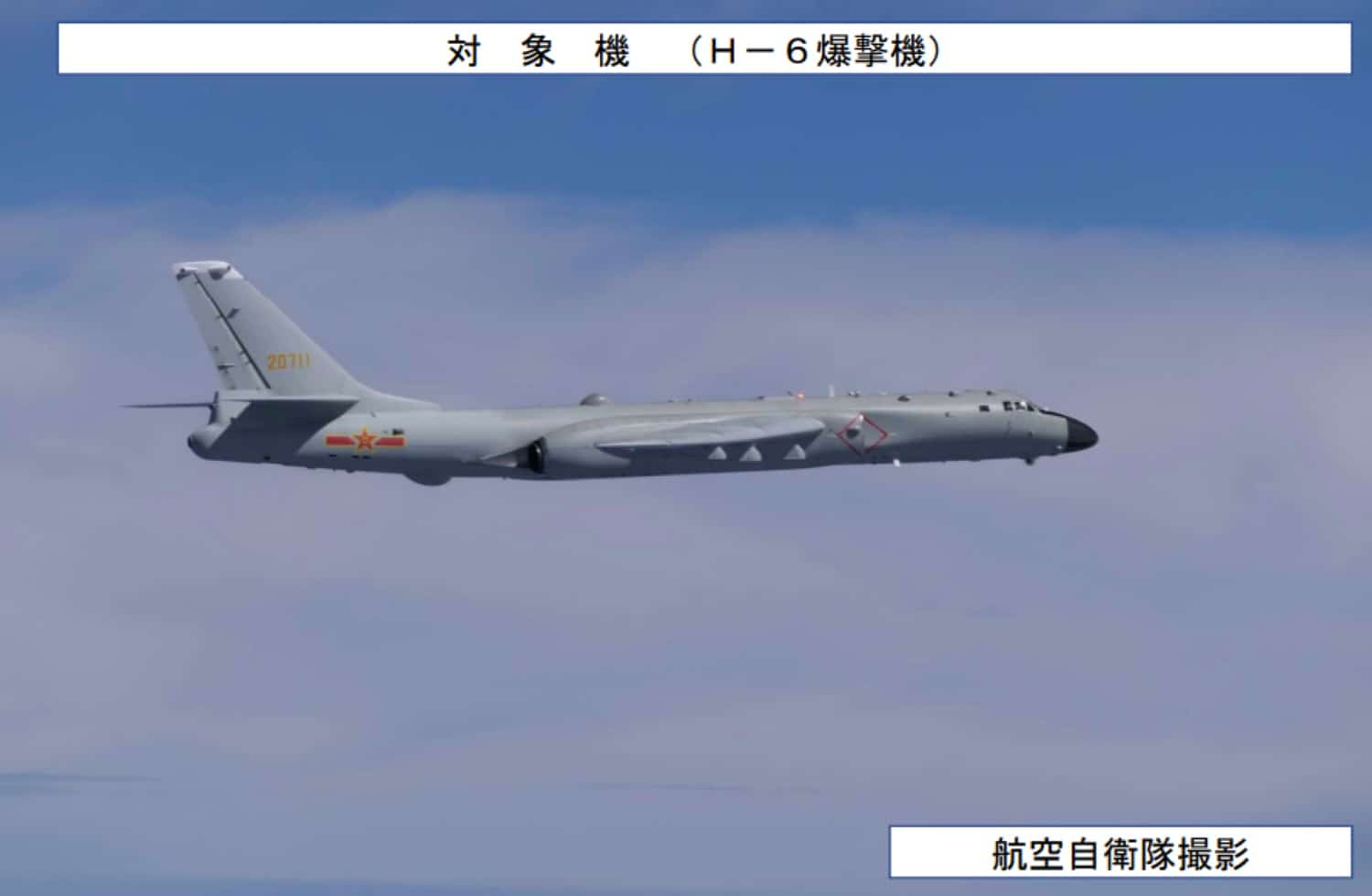
6月27日(土)午前から午後にかけて、東シナ海から日本海に進出した中国の爆撃機(H-6)×2機が、日本海においてロシアの爆撃機(Tu-95)×2機及びロシアの哨戒機(Tu-142)×2機と合流した後、東シナ海ま… pic.twitter.com/tgDIkApgHg
— 防衛省統合幕僚監部 (@jointstaffpa) June 27, 2026
Japan’s Ministry of Defense (MoD) confirmed the formation included four H-6 bombers, six J-16 fighters, two Tu-95MS strategic bombers, two Tu-142 maritime patrol aircraft, and one Su-30 fighter.
The Russian Defense Ministry said Su-30SM and Su-35S fighters, along with Chinese J-16s, “provided fighter cover along the entire joint patrol route.” Chinese military footage showed a YY-20A tanker refueling two J-16s simultaneously.
Yesterday, June 27, the Russian Aerospace Forces and the People’s Liberation Army Air Force conducted their 11th joint exercise over the Sea of Japan, the East China Sea, and the western Pacific Ocean.
Four Tu-95MS (one of which was RF-94186) between 03:15 and 05:15 UTC and two… pic.twitter.com/F0n50548ij
— AviVector (@avivector) June 28, 2026
The aircraft joined over waters between Japan and South Korea, tracked south toward Okinawa Prefecture, turned into the Pacific off Shikoku, then reversed course. South Korea’s Joint Chiefs of Staff (JCS) confirmed more than 10 of the aircraft entered the Korea Air Defense Identification Zone (KADIZ) and deployed fighters in response.
6月27日(土)午前から午後にかけて、東シナ海から日本海に進出した中国の爆撃機(H-6)×2機が、日本海においてロシアの爆撃機(Tu-95)×2機及びロシアの哨戒機(Tu-142)×2機と合流した後、東シナ海ま… pic.twitter.com/tgDIkApgHg
— 防衛省統合幕僚監部 (@jointstaffpa) June 27, 2026
Russian Defense Ministry footage captured two F-35As bearing the ‘HL’ tail code, a marking linked to Hill Air Force Base in Utah.
🇷🇺🇨🇳 Russia’s MoD released footage of a joint patrol with China over the Sea of Japan, East China Sea and Pacific
Tu-95MS strategic missile carriers took part in the six-hour mission, with no foreign airspace violations. pic.twitter.com/CF6KMyw5Zi
— Sputnik (@SputnikInt) June 27, 2026
Cross-referencing the footage with publicly available tail code records indicates the aircraft likely belong to Misawa Air Base’s 35th Fighter Wing, which received its first permanently based F-35As on March 28, 2026, transitioning from the F-16 Fighting Falcon.
If confirmed, the intercept would mark the first publicly documented operational sortie by a permanently stationed USAF F-35 in Japan. The U.S. Air Force has not confirmed the identification.
Speaking in Seoul on June 28, Japanese Defense Minister Shinjiro Koizumi said the repeated bomber flights represent “an expansion and intensification of activities around Japan” that he views as “a strong show of force against our country.”
China’s Ministry of National Defense said the patrol “demonstrated their determination and ability to jointly safeguard regional peace and stability.”