
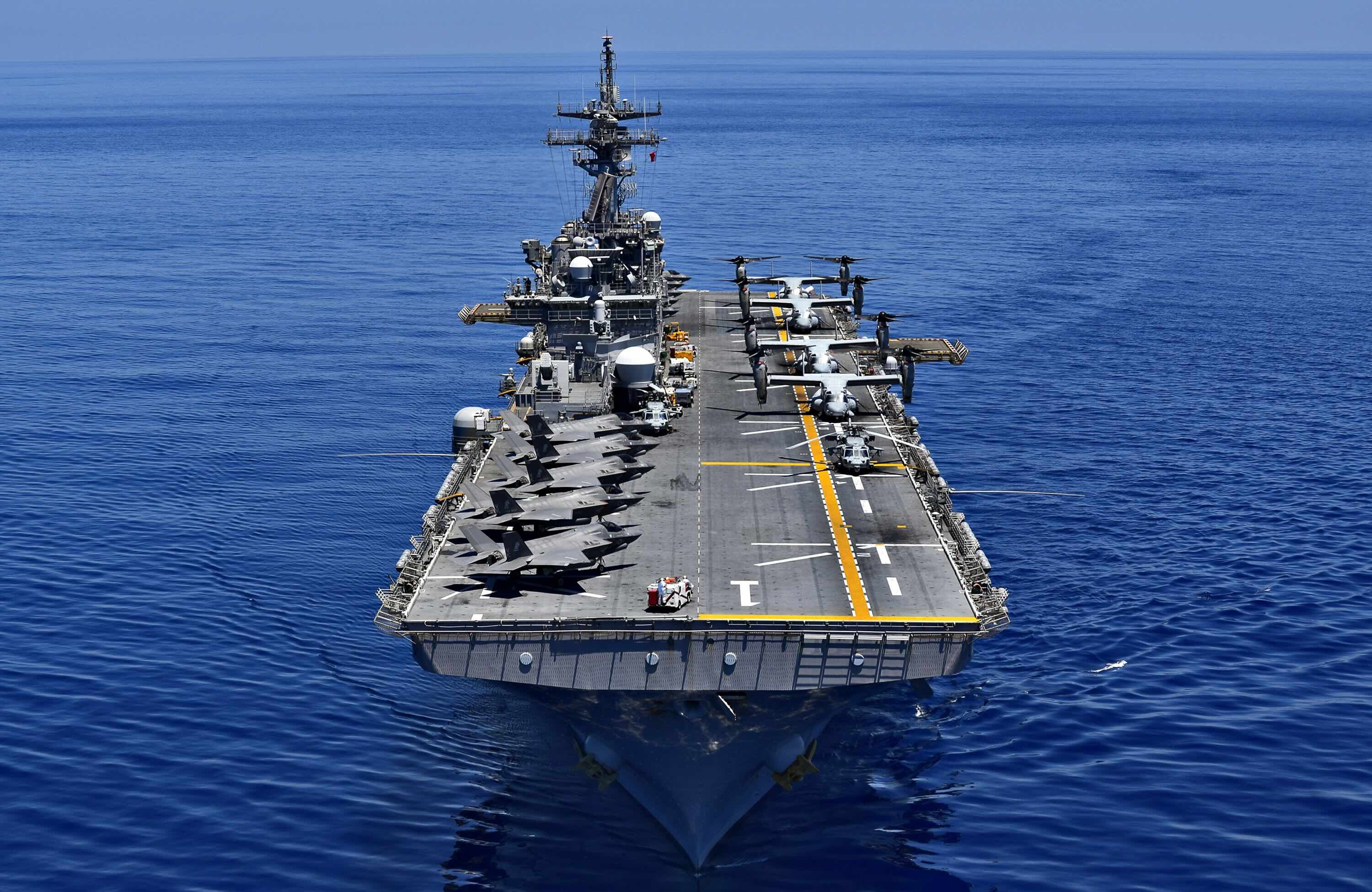
A new U.S. Navy memo says that only surface warfare officers can now command amphibious warships, ending a long-standing practice that allowed naval aviators to hold those roles.
Chief of Naval Operations Adm. Daryl Caudle ordered the change in an April 24 memorandum. The directive, set to take effect in fiscal year 2028, also applies to amphibious transport docks and dock landing ships.
The policy change comes after concerns over readiness in the amphibious fleet.
Navy Adm. James Kilby, vice chief of naval operations, told lawmakers on April 15 that only about 45 percent of amphibious ships were classified as “combat surge ready,” compared to approximately 63 percent of surface combatants and 65 percent of submarines.
Reports noted that these figures point to an ongoing shortfall in maintenance performance and operational availability.
Amphibious warships integrate aviation operations, amphibious assault capabilities, and large-scale embarkation and logistics roles into a single platform, making them some of the Navy’s most complex ships to operate.
In a statement to Task & Purpose, Caudle said the shift requiring surface warfare officers to lead amphibious vessels is intended to “leverage their specialized expertise and knowledge of complex maintenance and amphibious operations that have been developed over a career.”
“Further, this change enables Commanding Officers to stay in place longer in order to provide more command stability, focused oversight, and solution ownership required to drive measurable performance,” Caudle said in his statement.
The Navy currently operates 32 amphibious warfare ships, including nine large-deck amphibious assault ships that transport Marines and support vertical takeoff aircraft such as the MV-22B Osprey, helicopters, and F-35 fighters.









Odd since the future of warfare is aerial and ships are obsolete. Sounds like a wonderfully crippling move to place command entirely in the hands of the surface fleet.