The U.S. Air Force, Northrop Grumman, and construction partner Bechtel broke ground on March 27 on a full-scale prototype launch silo for the LGM-35A Sentinel intercontinental ballistic missile (ICBM) in Promontory, Utah, the first new nuclear missile silo constructed in the United States in decades.
🚀The LGM-35A Sentinel ICBM program is rapidly moving from digital design to tangible reality, marked by the recent groundbreaking for a full-scale launch silo prototype in Promontory, Utah. #Nuclear #readinesshttps://t.co/YUaMu3D26m pic.twitter.com/RcKy5UGRJJ
— U.S. Air Force Materiel Command ✈️ (@HQ_AFMC) April 1, 2026
The Sentinel is a three-stage solid-fuel rocket standing roughly 60 feet tall, carrying a liquid-fueled post-boost vehicle designed to precisely target its 475-kiloton warhead. It will replace the LGM-30G Minuteman III, the Cold War-era ICBM that has anchored the land-based leg of the U.S. nuclear triad since 1970.
Of the original 550 Minuteman IIIs, 400 remain on active alert across 450 silos in Wyoming, North Dakota, and Montana.
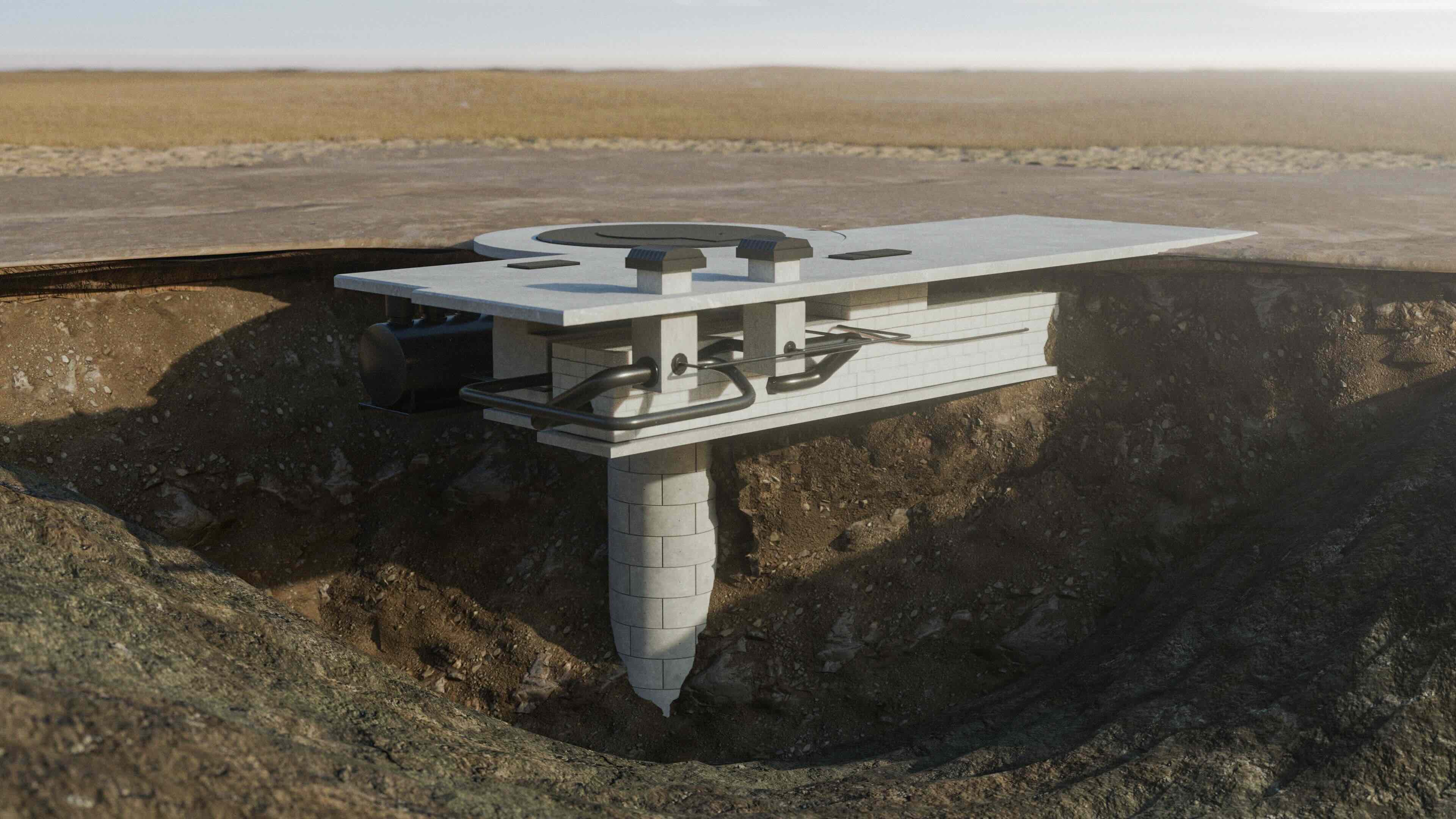
The prototype represents a fundamental departure from how nuclear silos have been built. Legacy installations used poured-in-place reinforced concrete, analog electronics, copper cabling, and cramped layouts that complicate maintenance.
The newer concept (Image 1) of LGM-35A Sentinel ICBM silos appears to adopt a different silo structure, including a possible shift from the traditional sliding blast door to a hinged or flip-type cover—more similar in appearance to some Russian silo designs
Earlier concepts… pic.twitter.com/vRVOuObdtg
— 笑脸男人 (@lfx160219) March 30, 2026
The new silo uses factory-manufactured precast concrete sections, assembled on location. All 450 future silos will follow the same standardized design, with individual components that can be swapped without structural overhauls. A digital twin tracks every component from manufacture through installation.
In May 2025, the Air Force determined that refurbishing existing Minuteman III silos for the larger Sentinel missile would cost too much and further delay the program. New silos built on Air Force-owned land allow the current Minuteman III force to remain on alert until the Sentinel infrastructure is ready.
“This prototype is a critical step in proving the design and reducing risk before production,” said Brig. Gen. William S. Rogers, the Air Force’s program executive officer for ICBMs. “We are executing a disciplined acquisition strategy to deliver a fully integrated, operational weapon system on schedule.”
“Sentinel is foundational to our no-fail mission,” said Gen. S.L. Davis, commander of Air Force Global Strike Command. “This modernization effort will provide uninterrupted deterrence and ensure the readiness of the ICBM force for decades to come.”
The program has cleared all propulsion milestones, including test fires of all three stages and a hot fire test of the post-boost propulsion system. Flight tests are scheduled for 2027. Construction of a new wing command center at F.E. Warren Air Force Base in Wyoming is also underway.
The Sentinel program was originally projected at $77.7 billion before costs grew to roughly $160 billion, triggering a Nunn-McCurdy Act review in January 2024.
The Pentagon concluded in July that cancellation was not an option and directed a program restructure. A preliminary revised estimate put the program at approximately $141 billion.
Initial operational capability remains on track for the early 2030s.