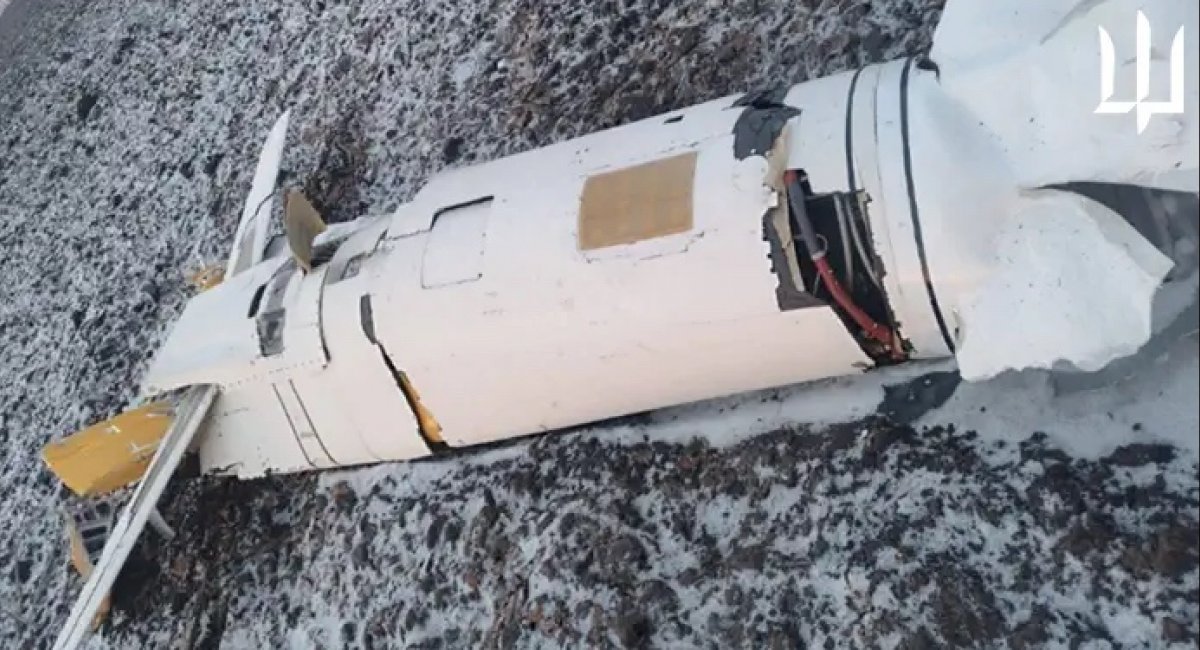
Russia has begun using a new air-launched cruise missile called the Izdeliye-30 against targets in Ukraine, according to Ukraine’s Defense Intelligence Directorate (DIU). The weapon carries roughly twice the explosive payload of the Kh-101 and is designed to be cheaper and faster to produce.
The Defence Intelligence of Ukraine has published an interactive 3D model, the main assemblies, and components of the enemy’s new cruise missile “izdeliye-30,” as well as data on 20 enterprises involved in its production cooperation chain.
🔗: https://t.co/shMagPCZHE pic.twitter.com/6XgEsxVatf
— Defence Intelligence of Ukraine (@DI_Ukraine) March 2, 2026
DIU published a detailed technical breakdown of the missile on March 2 through its War&Sanctions portal, including an interactive 3D model, component analysis, and data identifying 20 companies involved in its production. The agency stated that the first recorded combat use occurred at the end of 2025.
The Izdeliye-30 has a wingspan of approximately three meters, an 800-kilogram warhead, and a range of at least 1,500 kilometers, according to DIU. The warhead is nearly double the size of that fitted to the Kh-101, which carries approximately 400 kilograms.
DIU traced the missile to Zvezda Design Bureau, part of Russia’s Tactical Missiles Corporation, through analysis of recovered wreckage.
The pneumatic system uses components identical to those found in the Kh-35U anti-ship missile, while the aircraft ejector device is similar to systems used for Kh-101, Kh-55, and Kh-555 missiles launched from Tu-95MS and Tu-160 strategic bombers.
DIU noted that the navigation system relies on imported microelectronics from the United States, Switzerland, China, and the Netherlands. The system combines a jam-resistant Kometa-M12 satellite receiver produced by Russian manufacturer VNIIR-Progress with a receiver-computing unit from navigation specialist KB Navis. An interface unit from avionics producer ANPP Temp-Avia integrates the navigation and flight control systems using the same technology found in Russia’s guided aerial bombs.
The Moscow-based Center for Analysis of Strategy and Technologies (CAST) confirmed the missile’s existence and assessed that it was designed as a lower-cost alternative to the Kh-101. The new weapon allows Russia to field a harder-hitting cruise missile while conserving stocks of more expensive legacy weapons.
The Izdeliye-30 appears to be based on a scaled-up version of the Kh-35 anti-ship missile, a parallel to Ukraine’s own development of the land-attack Neptune, which also derives from the Soviet-era Kh-35 design.