Secretary of State Marco Rubio approved $8.6 billion in emergency arms transfers to Israel, Qatar, Kuwait, and the United Arab Emirates on May 1, bypassing the congressional review period under the Arms Export Control Act for the second time since the U.S.-Israeli campaign against Iran began in late February.
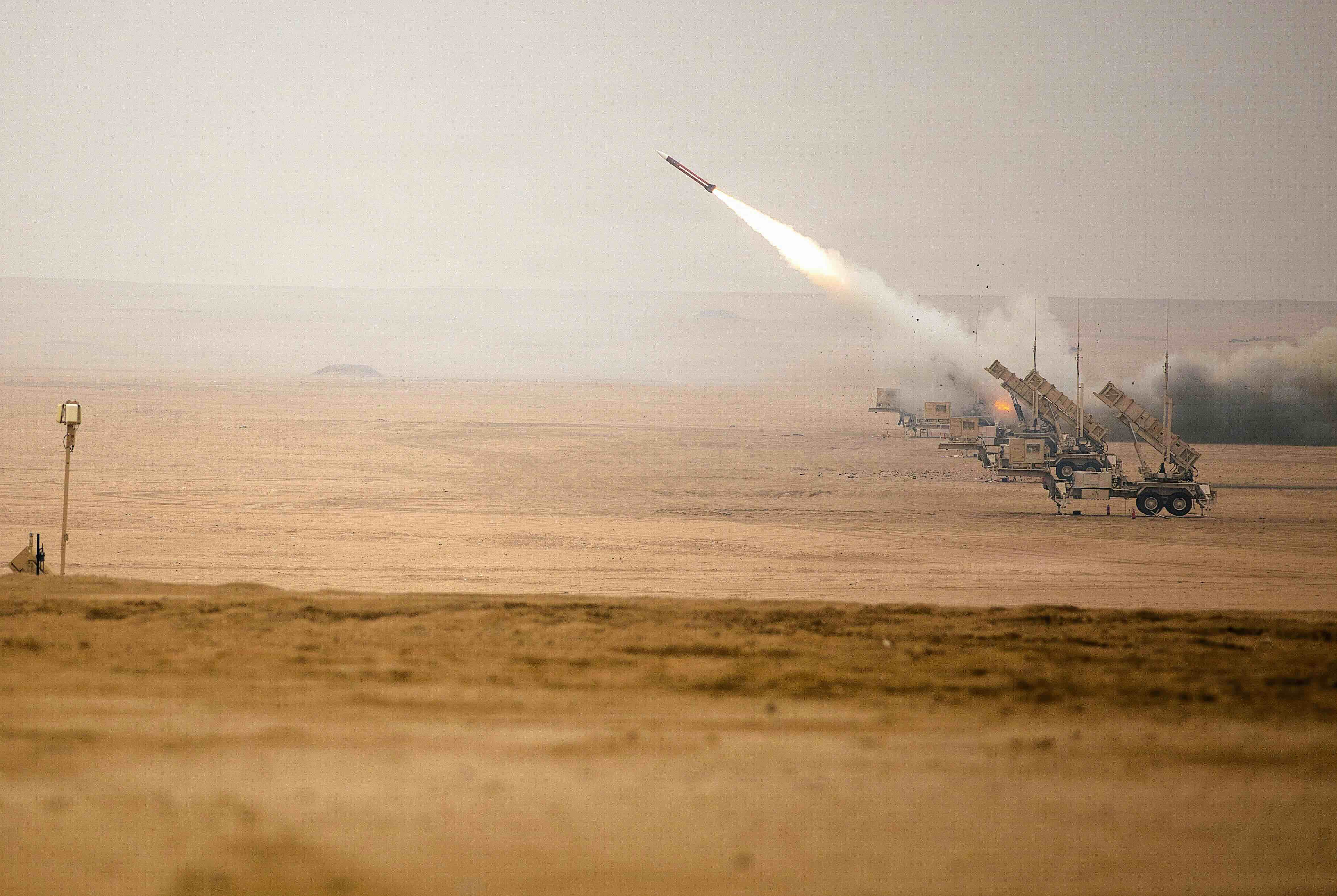
Qatar received the largest allocation at roughly $5 billion, covering 200 Patriot Advanced Capability-2 (PAC-2) Guidance Enhanced Missile-Tactical and 300 PAC-3 Missile Segment Enhancement interceptors for $4.01 billion, plus 10,000 Advanced Precision Kill Weapon System II (APKWS-II) all-up rounds at $992.4 million.
Rubio invokes emergency powers to fast-track arms sales to Mideast allies
State Dept notifies Congress of deals totaling over $8.6B
🇶🇦 Qatar: $5B (Patriots/Precision)
🇰🇼 Kuwait: $2.5B (Battle Systems)
🇮🇱 Israel: ~$1B (Precision)
🇦🇪 UAE: $147M (Precision)— Alex Raufoglu (@ralakbar) May 2, 2026
Kuwait was cleared to purchase an Integrated Battle Command System for $2.5 billion. Israel received 10,000 APKWS-II rounds for $992.4 million, while the UAE was approved for 1,500 APKWS-II guidance sections at $147.6 million.
The APKWS-II converts unguided 70mm rockets into precision-guided munitions. Patriot systems provide layered air and missile defense against ballistic missiles, cruise missiles, and aircraft. The State Department said Rubio “determined and provided detailed justification that an emergency exists that requires the immediate sale” to each partner, waiving standard legislative review.
The approvals arrive as the Center for Strategic and International Studies (CSIS) flagged, in a report published April 21, that U.S. munition stockpiles depleted through nine weeks of operations against Iran may leave Washington short in a future peer conflict. “Prewar inventories were already insufficient; the levels today will constrain U.S. operations should a future conflict arise,” the report stated.
NEW: In the 39-day campaign before the Iran ceasefire, U.S. forces heavily used the 7 munitions below. For 4 of them, the U.S. may have expended over 50% of its prewar inventory. Rebuilding to prewar levels will take up to 4 years.
More from @CSISDefense: https://t.co/YI0OuYmd5d pic.twitter.com/DUtmbGpwYe
— CSIS (@CSIS) April 22, 2026
Rubio issued a comparable emergency waiver in March, clearing $16.5 billion in sales to the UAE, Kuwait, and Jordan that included drones, missiles, radar systems, and F-16 aircraft, even as Gulf air defense stockpiles remained strained.
A fragile ceasefire has been held for more than three weeks, but the Strait of Hormuz remains closed and negotiations between Washington and Tehran are at a standstill.