
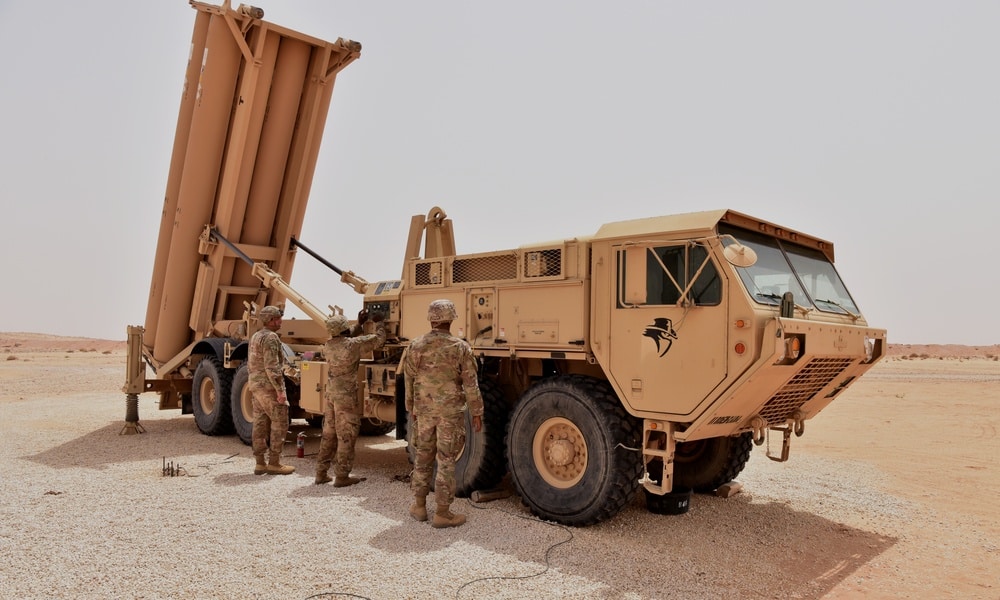
The United States is transferring components of a Terminal High Altitude Area Defense (THAAD) system from South Korea to the Middle East, two U.S. officials told The Washington Post. The move comes after Iranian strikes destroyed or damaged multiple THAAD radar systems across the Gulf region in the opening days of the current conflict.
South Korean President Lee Jae-myung confirmed the redeployment during a cabinet meeting on Tuesday. Lee said Seoul opposed the transfer but acknowledged the limits of its influence over U.S. military decisions.
“While we have expressed opposition, the reality is that we cannot fully push through our position,” Lee said. He added that the relocation would not significantly weaken South Korea’s deterrence posture against North Korea.
Photos have now confirmed the destruction of a AN/TPY-2 Forward Based X-band Transportable Radar operated by the U.S. Army, following an Iranian drone attack earlier this week targeting Muwaffaq Salti Air Base in Jordan. The AN/TPY-2 is the primary ground-based air surveillance… pic.twitter.com/54QyQCxNVW
— OSINTdefender (@sentdefender) March 7, 2026
Flight-tracking data from civilian aviation monitoring services showed two C-5 Galaxy strategic airlifters and at least 11 C-17 Globemaster III cargo aircraft departing Osan Air Base since February 28. Both aircraft are capable of transporting heavy missile defense equipment, including launchers and radar systems. According to Newsweek, U.S. Forces Korea declined to comment, citing operational security.
THAAD intercepts ballistic missiles during their terminal phase of flight at altitudes between 40 and 150 kilometers. The Pentagon is also drawing Patriot interceptor missiles from the Indo-Pacific region to bolster defenses against Iranian drone and missile attacks.
Iranian strikes destroyed an AN/TPY-2 radar, the THAAD system’s primary tracking sensor, at Muwaffaq Salti Air Base in Jordan during the first days of the war, a U.S. official confirmed to Bloomberg. Satellite imagery analyzed by CNN showed the $500 million radar was destroyed on March 1 or 2. Additional THAAD sites in the United Arab Emirates sustained damage between February 28 and March 1.
All THAAD Batteries assigned to U.S. Forces Korea (USFK) have been withdrawn from the Korean Peninsula and redeployed to the Middle East. https://t.co/2VGN2oFx4k
— OSINTdefender (@sentdefender) March 10, 2026
Mark Cancian, a researcher at the Center for Strategic and International Studies (CSIS), said the transfers carry risk. “The more THAAD and Patriot systems are consumed in the Middle East, the greater the risks the U.S. will have to bear in the Indo-Pacific,” Cancian said.








But the war is almost over. South Korea is probably getting ready to get its own nukes.