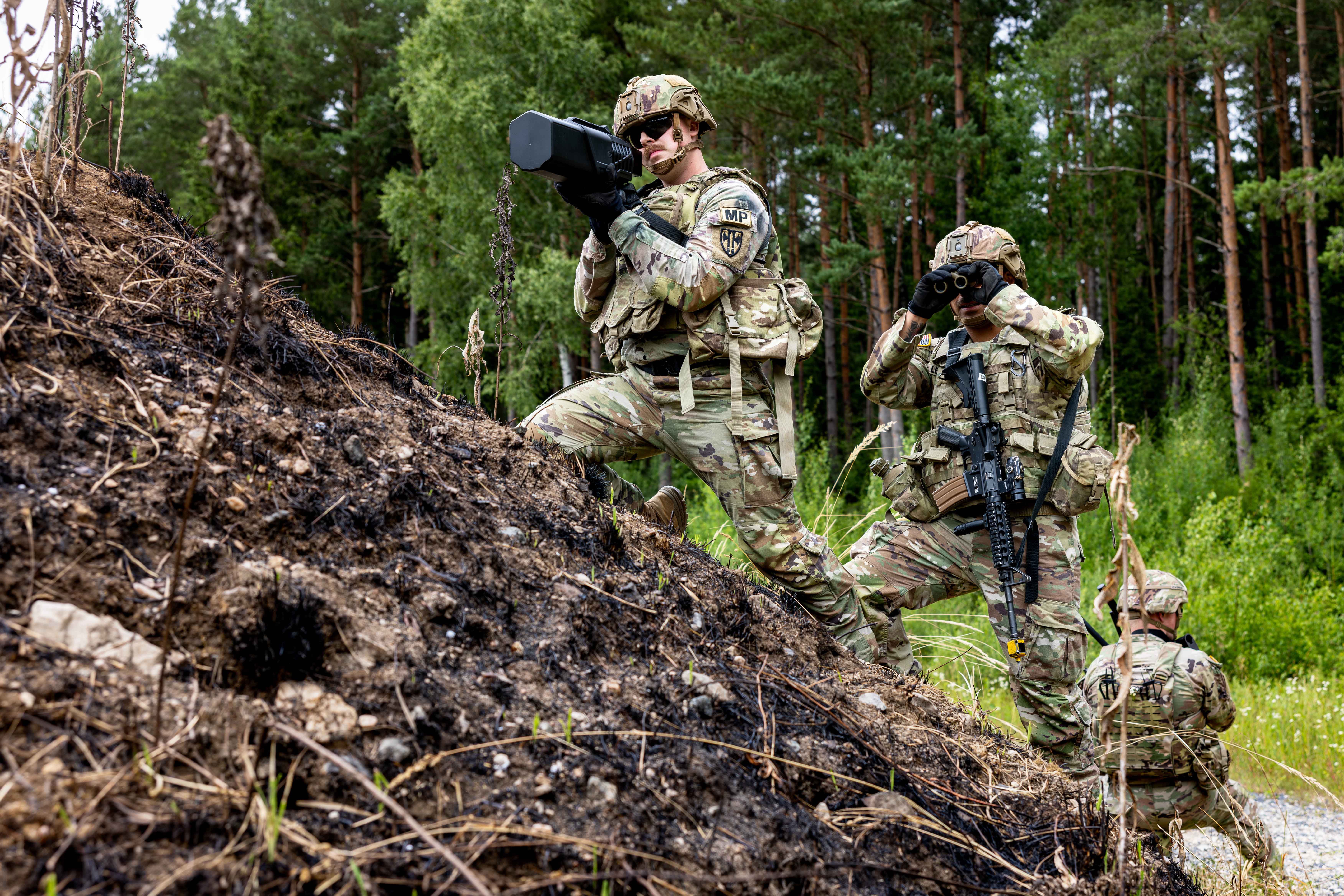
Defense Secretary Pete Hegseth announced Thursday the formation of a new interagency task force to accelerate development of anti-drone capabilities, replacing the Pentagon’s existing counter-drone organization.
The Joint Interagency Task Force 401 will consolidate resources and authorities to deliver systems faster to American forces, according to a Pentagon directive. Army Secretary Dan Driscoll will formally establish the task force, which will operate under Deputy Defense Secretary Stephen Feinberg
“Our job here at the Pentagon is to prepare for the threats of the future and build a force to match them, and defeat them, and outpace them,” Hegseth said in a video message. “And there’s no doubt that the threats we face today from hostile drones grow by the day.”
Hostile drones are growing by the day.
That’s why I’ve directed @SecArmy to establish the Joint Interagency Task Force 401 to secure our skies. pic.twitter.com/0ZbLYpDLaG
— Secretary of Defense Pete Hegseth (@SecDef) August 28, 2025
The new organization will replace the Joint Counter-small Unmanned Aircraft Systems Office, created in 2019 under Army leadership. The JCO will be dissolved once JIATF 401 becomes operational.
The task force director will have authority to approve up to $50 million per counter-drone initiative and hire technical experts outside normal federal hiring processes. The organization will also consolidate Pentagon-wide research, development and testing efforts for anti-drone systems, except for service-specific programs and Special Operations Command initiatives.
Hegseth cited drone threats against U.S. forces overseas and challenges to American airspace sovereignty. “Emerging technologies — we see it in battlefields in far flung places, and we see it on our own border in small unmanned aerial systems,” he said.
Driscoll must deliver an implementation plan within 30 days outlining required resources and organizational structure. Pentagon Chief Technology Officer Emil Michael will recommend establishment of a dedicated testing facility within 30 days.
The task force will incorporate drone forensics programs and connect to the Defense Innovation Unit’s Replicator 2 initiative on autonomous systems. Resources from existing Pentagon counter-drone efforts will be consolidated under the new organization.
“We’re moving fast — cutting through bureaucracy, consolidating resources, and empowering this task force with the utmost authority to outpace our adversaries,” Hegseth said.
The reorganization aims to compress development timelines from years to months as the military faces increasingly sophisticated drone swarms. Cheap systems have proven capable of destroying armored vehicles at a fraction of traditional military costs.
The fiscal 2027 budget request will include dedicated funding for the task force’s accelerated timeline, according to Hegseth’s directive.
“It’s going to put the right tools in the hands of our warfighters, defend that sovereignty and send a clear message to the world that the United States will never be outmatched,” Hegseth said.