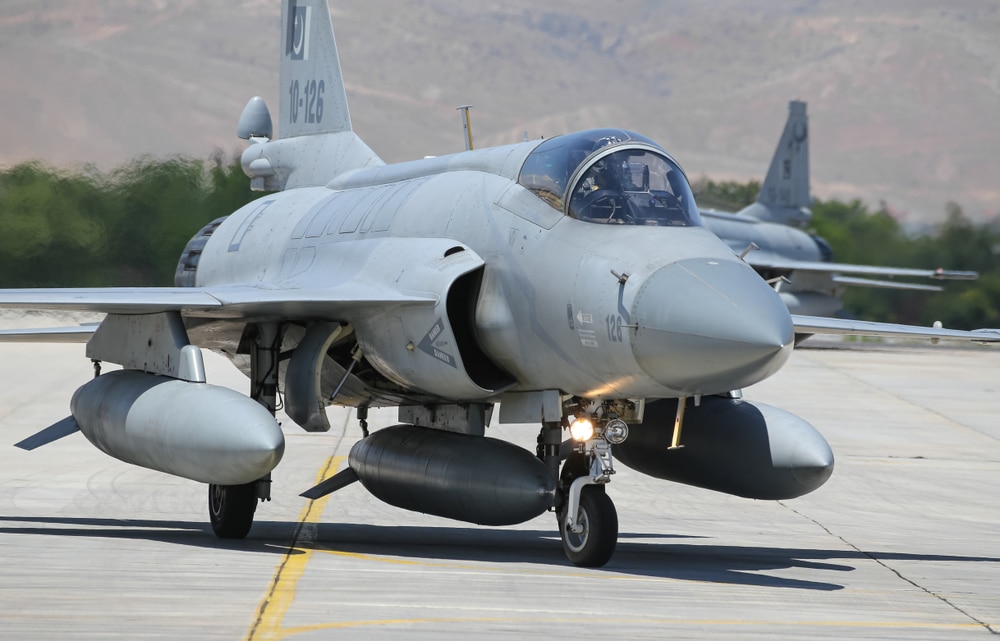
Pakistan has deployed 8,000 troops, a full squadron of JF-17 Thunder fighter jets, two drone squadrons, and a Chinese-built HQ-9 surface-to-air missile system to Saudi Arabia under a mutual defence pact, Reuters reported May 18, as Islamabad simultaneously serves as the principal mediator between Washington and Tehran.
Three security officials and two government sources confirmed to Reuters that the force is combat-capable and positioned to support Riyadh if the kingdom comes under further attack. Saudi Arabia is financing the deployment, and Pakistani personnel operate all assets. Pakistan’s military and foreign office and Saudi Arabia’s government media office did not respond to requests for comment.
The inclusion of the HQ-9, a Chinese-built long-range surface-to-air missile system, places Beijing-origin air defense hardware inside the U.S. Central Command (CENTCOM) area of responsibility, operated by Pakistani personnel and financed by a U.S. partner.
Speaking on GeoTV last year, Defence Minister Khawaja Asif said Pakistan’s nuclear weapons capabilities “will be made available” to Saudi Arabia under the agreement.
One government source who reviewed the confidential pact told Reuters it provides for the possibility of up to 80,000 Pakistani troops deploying alongside Saudi forces to secure the kingdom’s borders.
Pakistan brokered a ceasefire between the United States and Iran that has held for six weeks and hosted the only round of direct U.S.-Iranian peace talks.
The strategic vulnerability of the kingdom was underscored on May 17, when Saudi Arabia’s Ministry of Defence spokesman Maj. Gen. Turki al-Maliki confirmed the kingdom intercepted and destroyed three drones that had entered from Iraqi airspace, stating the ministry “reserves the right to respond at the appropriate time and place.”
The new deployment adds to thousands of Pakistani troops already stationed in the kingdom under previous agreements, Reuters reported.