
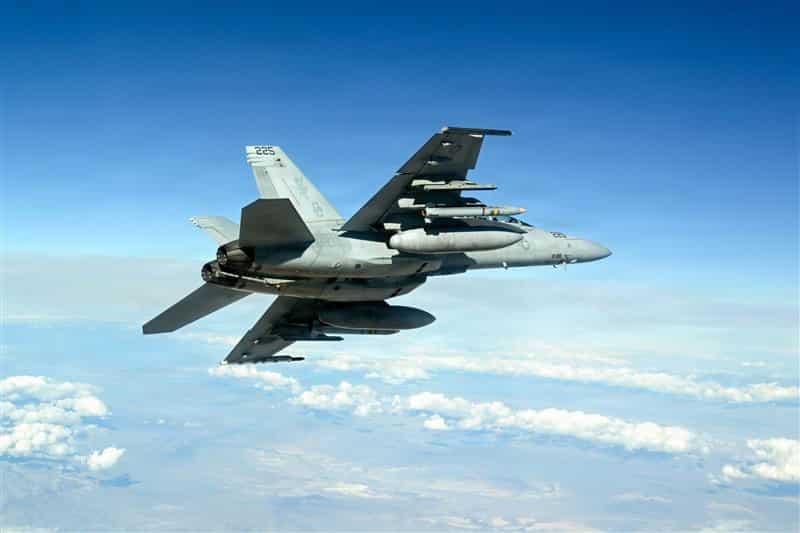
The U.S. Navy is seeking an alternative supplier for its still-in-development AGM-88G Advanced Anti-Radiation Guided Missile-Extended Range (AARGM-ER) as it looks to expand production capacity to as many as 600 missiles annually.
The AGM-88G AARGM-ER is the next-generation successor to the AGM-88E Advanced Anti-Radiation Guided Missile (AARGM). Developed by Northrop Grumman, it is designed to destroy enemy air defense systems by targeting the radars that guide surface-to-air missiles.
The solicitation raises fresh questions about the future of the AARGM-ER program. Although the Navy told The War Zone in April that the AGM-88G remains on track to enter service later this year, it also announced a strategic pause in procuring the missile during fiscal year 2027.
The AARGM-ER only entered live-fire testing this year, about two years behind schedule.
According to a Request for Information (RFI) issued by Naval Air Systems Command on July 1, the Navy is seeking a missile with extended range, advanced targeting, counter-countermeasures, and compatibility with existing and future platforms.
This RFI includes an explicit request for prospective vendors to detail their proposed missile’s “ability to engage air-to-air and air-to-ground targets.” Previously, there had been no indication that the AGM-88G was intended to have an air-to-air engagement capability.
The service also wants a lower-cost design capable of producing up to 600 missiles annually, double the production rate envisioned previously.
The Navy is looking for a weapon with a Technology Readiness Level (TRL) of at least 6, meaning a representative prototype has already been demonstrated in a relevant operational environment.
“The purpose of this RFI is to conduct market research to identify potential sources capable of providing a mature design missile system which consists of the All-Up-Round (AUR) missile to include hardware and software, as well as any unique logistics elements, trainers, flyout model, and all system verification elements,” the notice states. “This AUR must be compatible with existing launch platforms.”
The Navy’s requirements call for a missile compatible with the F-35, F/A-18E/F Super Hornet, and EA-18G Growler. It must use an open-systems architecture that supports future upgrades and reduces reliance on a single supplier.
The weapon must also be capable of carrier operations, have a 15-year service life, support foreign military sales, and meet stringent cybersecurity and military interface standards.
The RFI does not indicate whether the missile will also be integrated with the Navy’s future sixth-generation F/A-XX fighter.
Companies interested in participating have until July 31 to submit capability statements in response to the RFI.