
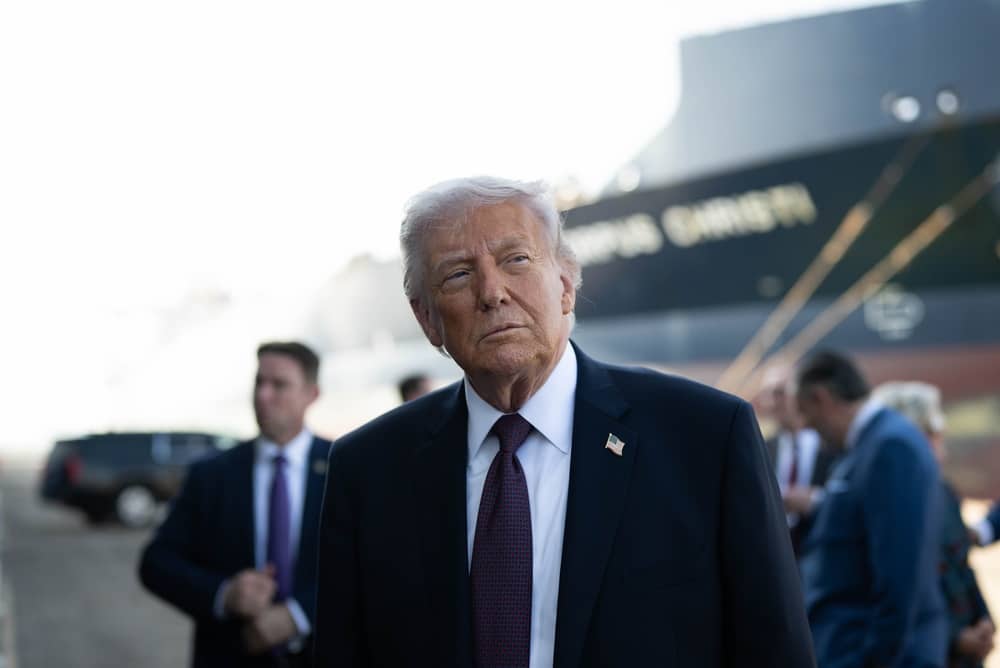
President Donald Trump said Tuesday that most NATO members have refused to join a U.S.-led coalition to reopen the Strait of Hormuz, the narrow Persian Gulf chokepoint through which roughly 20% of the world’s daily oil and liquefied natural gas (LNG) supply passes.
Speaking in the Oval Office alongside Irish Prime Minister Micheál Martin, Trump called the alliance’s refusal “a very foolish mistake” and warned, “We are going to remember.” He wrote on Truth Social that NATO has always been “a one way street — We will protect them, but they will do nothing for us,” and that he “never did” need or want allied assistance. “WE DO NOT NEED THE HELP OF ANYONE!” he wrote.
Germany, Italy, France, Australia, Japan, and South Korea all declined to send naval vessels.
“This is not our war, we have not started it,” German Defense Minister Boris Pistorius said. German Chancellor Friedrich Merz ruled out any military contribution. “We will not do so,” Merz said.
U.K. Prime Minister Keir Starmer said Britain would “not be drawn into the wider war” but is working with partners on “a viable plan.”
At a meeting of EU foreign ministers Monday, European Union foreign policy chief Kaja Kallas said member states showed “no appetite” to expand Operation Aspides, the bloc’s existing Red Sea maritime security mission, into the strait.
Diplomatic talks to build a coalition have stalled. The U.K. has drafted a multinational task force plan and shared it with the U.S. and several potential partners, but it has not been distributed to all countries under consideration, and no consensus on structure or command has formed, according to sources familiar with the discussions.
Iran has carried out 21 confirmed attacks on merchant ships since closing the strait following joint U.S.-Israeli strikes on February 28. Oil prices have risen 40 to 50% since the blockade began. Trump said Israel and Gulf states would instead help reopen the waterway and predicted it “won’t be too long.”
Trump also said his planned summit with Chinese President Xi Jinping had been pushed to “about five or six weeks” away.