The U.S. State Department approved a possible $1.98 billion Foreign Military Sale (FMS) of counter-unmanned aerial systems (c-UAS) to Kuwait on June 5, days after an Iranian drone and missile strike killed one person and injured 63 at Kuwait International Airport.
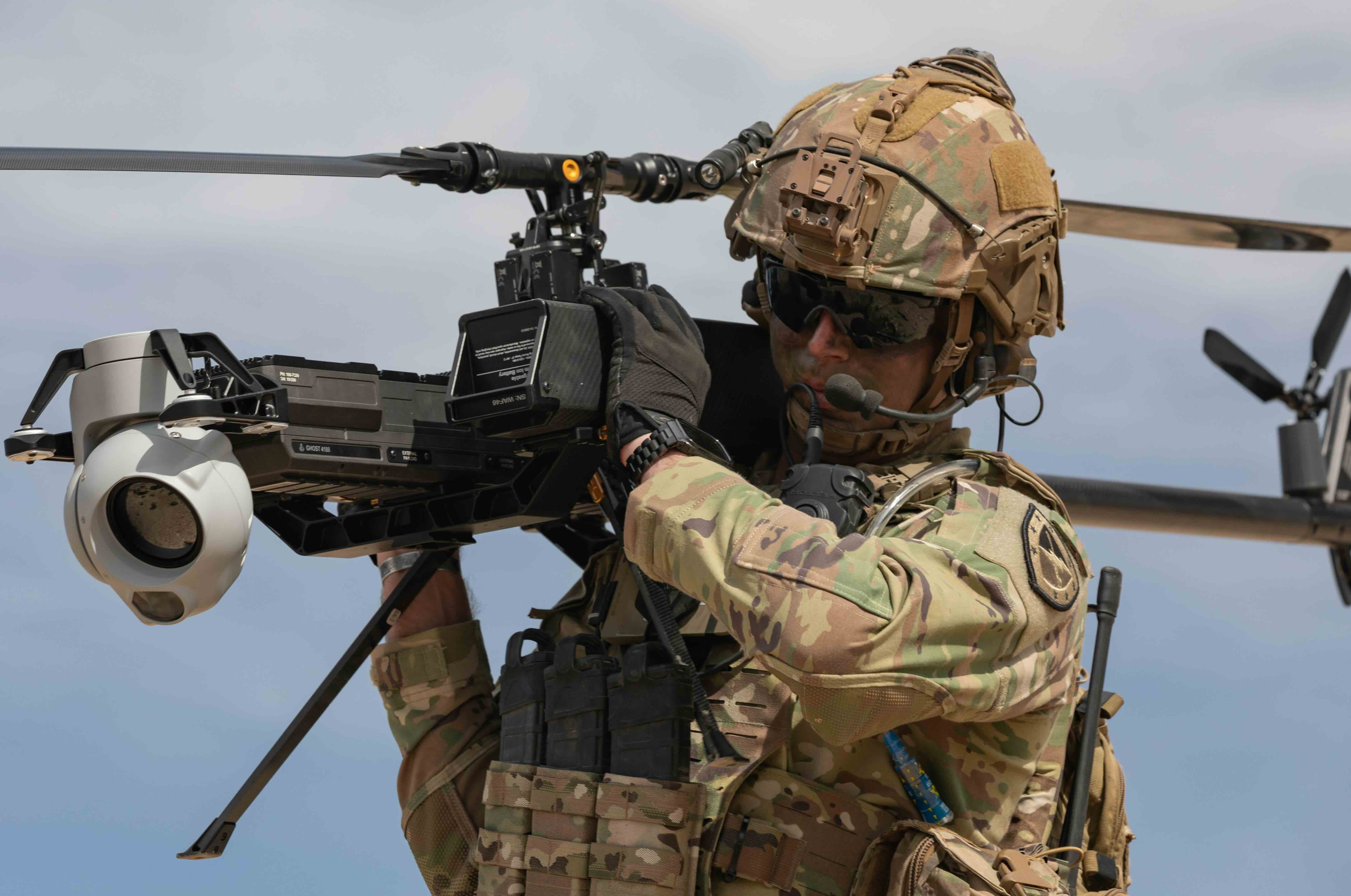
The suite centers on Anduril’s Roadrunner-Munition (Roadrunner-M), an autonomous vertical take-off and landing interceptor drone, and the Anvil-Kinetic intercept system. Additional equipment includes Pulsar electronic warfare systems, the Lattice command-and-control platform, Menace tactical operations centers, and long-range, mobile, and maritime variants of the Sentry surveillance tower. The principal contractor is Anduril, based in Costa Mesa, California.
U.S. company Anduril is reportedly set to provide counter-UAS systems to Kuwait under a potential $1.98 billion foreign military sale approved by the U.S. State Department. #USA #Anduril #CUA pic.twitter.com/wvpPG6BQCD
— Drone Wars (@Drone_Wars_) June 8, 2026
“The proposed sale will improve Kuwait’s capability to meet current and future threats by providing electronic and kinetic defeat capabilities against unmanned aerial systems,” the State Department said.
The June 3 attack sent 30 Shahed-136 loitering munitions and missiles at Kuwait, breaching Patriot batteries designed to intercept ballistic missiles rather than low-altitude drone swarms.
Kuwait’s capital sits roughly 56 miles from Iran, leaving defenders as little as 45 seconds to spot and engage an incoming threat, The National reported. Analysts say linking radars, sensors, and command systems tightly enough to react in time is the core challenge.
Retired Kuwaiti air force Col. Zafer Al Ajami told Breaking Defense the attack “exploited a vulnerability,” with low-cost Shahed drones overwhelming Patriot batteries. He said the deal marks a strategic pivot toward a “layered, integrated counter-drone network” specifically designed to counter saturation tactics.
Three days after the airport strike, Iran’s Islamic Revolutionary Guard Corps (IRGC) targeted U.S. military bases in Kuwait and Bahrain. However, U.S. Central Command (CENTCOM) and Kuwaiti authorities confirmed that six of the seven ballistic missiles were intercepted and no material damage or casualties occurred.
Congress has 30 days to block the sale, though such an action is rare.