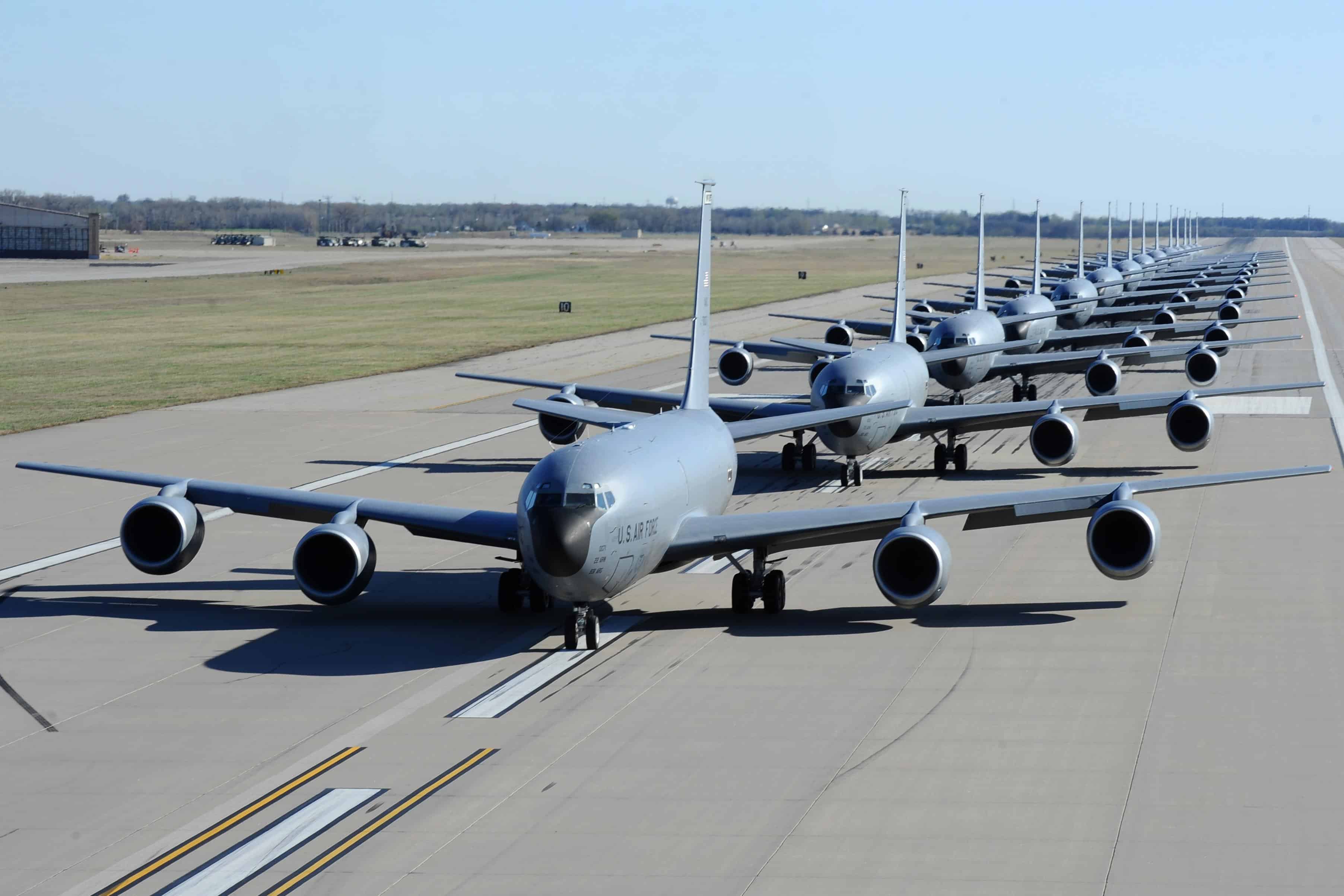
Iran struck Prince Sultan Air Base (PSAB) in Saudi Arabia for a second time, damaging five U.S. Air Force KC-135 Stratotanker aerial refueling aircraft on the ground, two U.S. officials told The Wall Street Journal. The base serves as a primary hub for U.S. aerial refueling operations supporting Operation Epic Fury, the joint U.S.-Israel campaign against Iran.
The aircraft were parked on the flight line when the strike occurred. They sustained damage but were not destroyed, and repairs are underway. No U.S. personnel were killed. U.S. Central Command did not respond to requests for comment on the report.
President Donald Trump disputed the extent of the damage in a Saturday Truth Social post. “The Base was hit a few days ago, but the planes were not ‘struck’ or ‘destroyed,'” Trump wrote. “Four of the five had virtually no damage, and are already back in service. One had slightly more damage, but will be in the air shortly. None were destroyed, or close to that.” Trump called The Wall Street Journal‘s reporting “the exact opposite of the actual facts.”
PSAB, located roughly 373 kilometers from the Iranian coast, first came under significant Iranian attack on March 1, when a strike mortally wounded Army Sgt. Benjamin N. Pennington, 26, of Glendale, Kentucky, assigned to the 1st Space Battalion, 1st Space Brigade, at Fort Carson, Colorado.
Pennington died March 8 and was the seventh U.S. service member killed during Operation Epic Fury, the Pentagon confirmed. The following day, the Saudi Ministry of Defense announced it intercepted five Iranian drones near the base.
المتحدث الرسمي لوزارة الدفاع : اعتراض وتدمير 5 مسيّرات معادية بالقرب من قاعدة الأمير سلطان الجوية. pic.twitter.com/ki4YlSChb4
— وزارة الدفاع (@modgovksa) March 2, 2026
The five tankers damaged in the latest strike bring the total number of KC-135s put out of action since the campaign began to six. A seventh was destroyed on March 12 after a mid-air incident over western Iraq involving tail number 62-3556, assigned to the 756th Air Refueling Squadron of the Air Force Reserve Command. All six crew members were killed.
CENTCOM confirmed the loss was not due to hostile or friendly fire, and the circumstances remain under investigation.
BREAKING: Unfortunately, as a result of a ballistic missile strike by the IRGC Aerospace Force at Prince Sultan Air Base in Saudi Arabia, five historic KC-135R/T Stratotankers of the U.S. Air Force and Air National Guard have either been damaged or destroyed. These historic… pic.twitter.com/RShCpt4fwk
— Babak Taghvaee – The Crisis Watch (@BabakTaghvaee1) March 14, 2026
Open-source analysis places more than 160 U.S. Air Force tankers across the CENTCOM and European Command areas of responsibility, including 62 KC-135s and 17 KC-46A Pegasus refuelers positioned at bases in the Middle East and at Diego Garcia.
Flight tracking data shows tankers continuing to operate from PSAB. Following the Wall Street Journal report, Iranian media circulated photographs of damaged KC-135s that open-source researchers quickly identified as dating to 1999.
The Air Force is replacing the KC-135 with the Boeing KC-46A Pegasus, which entered service in 2019.
In its fourth-quarter 2025 earnings release, Boeing reported a $565 million loss on the program, disclosed 14 deliveries in 2025, and projected 19 in 2026. Deliveries were halted for approximately three months in 2024 after cracks were found in the wing structures of multiple aircraft.