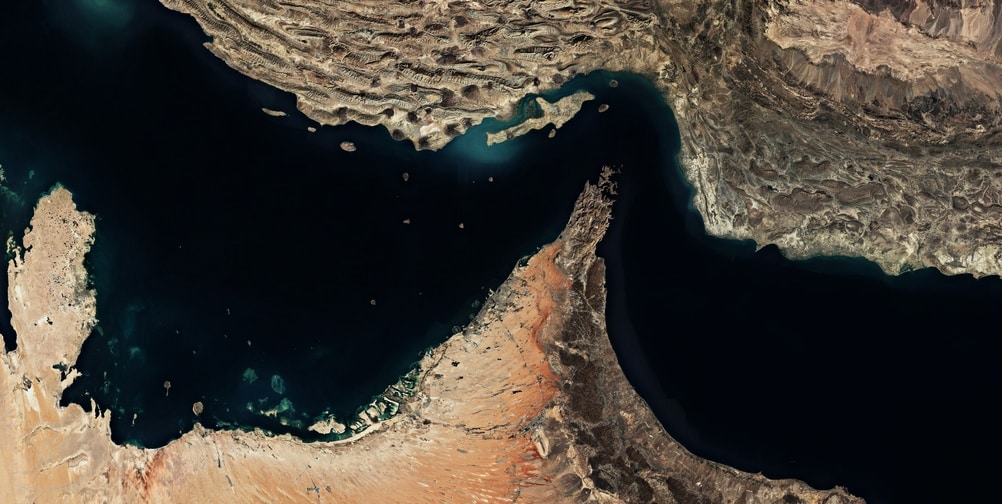
Iran is requiring oil tankers transiting the Strait of Hormuz to pay a cryptocurrency toll of $1 per barrel of oil on board, with officials directing vessels specifically toward bitcoin payments to prevent seizure under U.S. sanctions.
Iran taking toll payments in Bitcoin, USDT and….Trump-backed US denominated stablecoin USD1!!!! I mean I guess Trump did say that they would make a lot of money and it would be beautiful…… https://t.co/RpyTaQ0oCF
— Dr. Cinzia Bianco (@Cinzia_Bianco) April 9, 2026
🚨 IRAN HAS JUST BECOME THE LARGEST $BTC HOLDER!!
Iran just started charging ships passing through the Strait of Hormuz in $BTC.
So they take around 27.7 BTC per ship right now.
At a Bitcoin price of $72K, it costs $2M.
JUST IMAGINE. 2 MILLION US DOLLARS.
If you think there… pic.twitter.com/dtq3w9YPN2
— ᴛʀᴀᴄᴇʀ (@DeFiTracer) April 10, 2026
Hamid Hosseini, a spokesperson for Iran’s Oil, Gas and Petrochemical Products Exporters’ Union, told The Financial Times that tankers must email Iranian authorities with cargo details before passage.
Iranian officials then issue a payment instruction in digital currency.
“Once the email arrives and Iran completes its assessment, vessels are given a few seconds to pay in bitcoin, ensuring they can’t be traced or confiscated due to sanctions,” Hosseini said.
The operational choice of bitcoin over stablecoins carries a structural logic.
Earlier Bloomberg reporting, based on anonymous sources, indicated Iran had evaluated stablecoins including Tether’s USDT and USD1, a dollar-pegged token affiliated with the Trump family. Both USDT and Circle’s USDC grant their issuers authority to freeze or seize token balances at the request of law enforcement or regulators.
Bitcoin has no centralized issuer and no equivalent freeze mechanism.
Iran’s National Security Committee separately approved legislation formalizing yuan and stablecoin tolls as secondary payment options, but Hosseini’s public-facing instructions center on bitcoin. The Chinese yuan was also cited as an accepted currency.
President Donald Trump on Wednesday offered to form a “joint venture” with Iran to operate the toll system. “We’re thinking of doing it as a joint venture,” Trump told ABC News anchor Jonathan Karl. “It’s a way of securing it, also securing it from lots of other people. It’s a beautiful thing.”
This morning, I asked President Trump if he’s okay with the Iranians charging a toll for all ships that go through the Strait of Hormuz, he told me there may be a Joint US-Iran venture to charge tolls:
“We’re thinking of doing it as a joint venture. It’s a way of securing it —…
— Jonathan Karl (@jonkarl) April 8, 2026
Iran’s 10-point ceasefire plan sets the toll at $2 million per vessel.
Britain and the European Union both rejected the proposal Thursday. Foreign Secretary Yvette Cooper told the BBC the strait is governed by international freedom of navigation law.
“Countries cannot simply hijack those kinds of international transit routes and unilaterally apply tolls,” Cooper said.
“They cannot do that as part of the laws of the sea and the United Nations arrangements.” British Defence Secretary John Healey added that Gulf states agree the precedent would be “dangerous.”
Iran’s use of bitcoin in the toll system extends a documented sanctions-circumvention strategy.
Blockchain analytics firm Elliptic found in January 2026 that the Central Bank of Iran had acquired at least $507 million in USDT to prop up the Iranian rial, routing funds through domestic exchange Nobitex before shifting to cross-chain bridges following a hack of the exchange in June 2025.
🚨 New Elliptic research: We have identified wallets used by Iran’s Central Bank to acquire at least $507 million worth of cryptoassets.
The findings suggest that the Iranian regime used these cryptoassets to evade sanctions and support the plummeting value of Iran’s currency,… pic.twitter.com/I7NHGO0wtP
— Elliptic (@elliptic) January 21, 2026
U.S. and Iranian negotiators are expected in Islamabad on Saturday, April 11 for talks on a permanent ceasefire.
Iran halted vessel transit through the strait Thursday after an Israeli strike in Lebanon tested the two-week truce brokered by Trump.