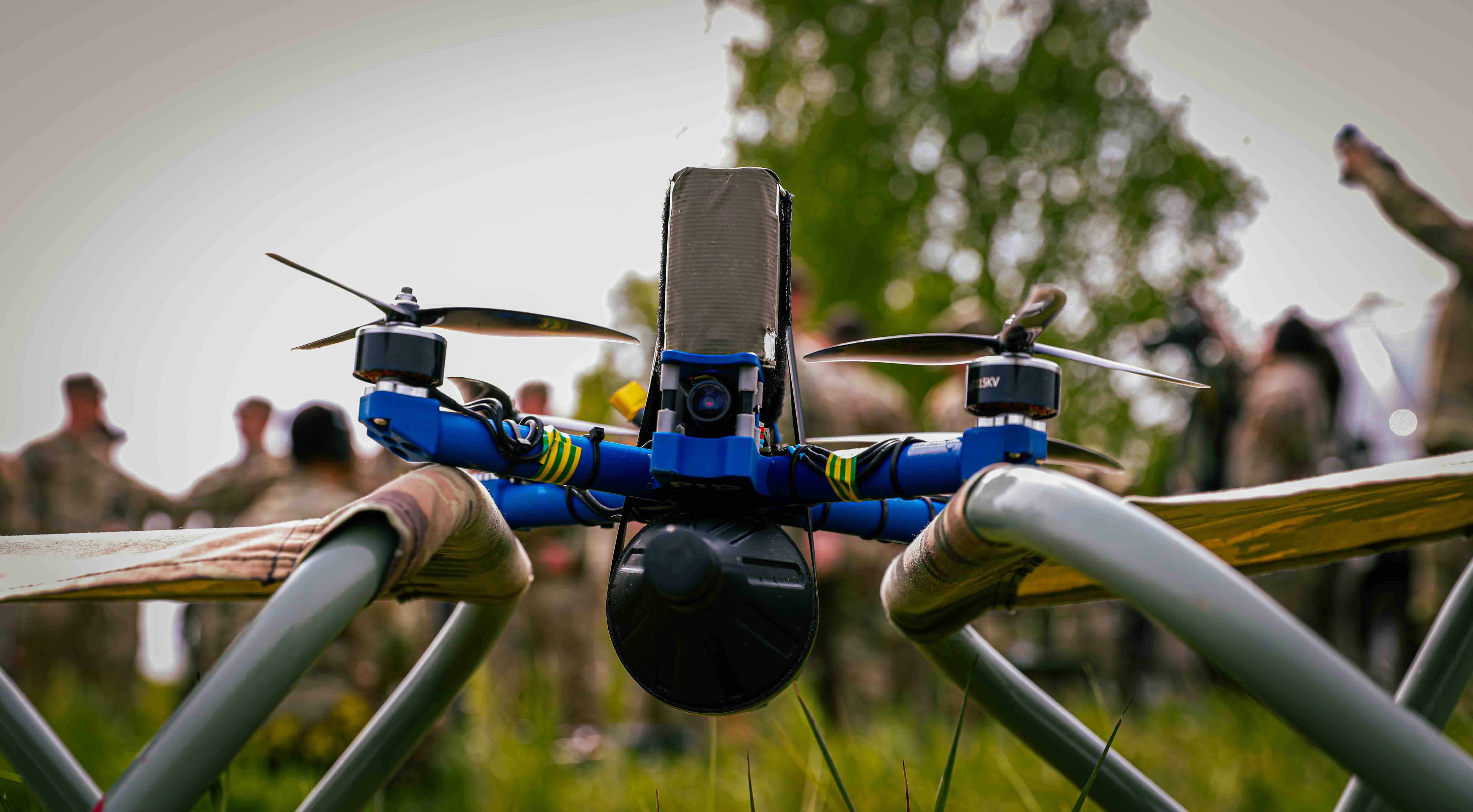
The Intelligence Advanced Research Projects Activity (IARPA) published a formal Request for Information on April 20 seeking bio-derived materials capable of controlled degradation in unmanned aerial vehicle (UAV) propulsion systems, pushing the concept of vanishing drones beyond the airframe and into the components that generate thrust.
The RFI, designated IARPA-RFI-26-01, targets turbines, electric motors, engine housings, and associated control elements. IARPA set specific performance thresholds respondents must address, including operational temperatures above 500°C and mechanical stress above 100 megapascals.
Responses are due May 15, 2026, and IARPA stated the document is issued for planning purposes only and does not constitute a formal solicitation for proposals.
The technical challenge separates this effort from prior transient-materials work. DARPA’s Inbound, Controlled, Air-Releasable, Unrecoverable Systems (ICARUS) program, launched in 2015, demonstrated that structural drone components could be built from ultraviolet-triggered photopolymers that degrade on command. Propulsion systems present a different problem.
Ultraviolet light does not penetrate enclosed engine assemblies, making the degradation trigger ICARUS relied on unworkable inside a motor housing or combustion chamber.
IARPA’s document asks specifically for triggers that function without reliance on ultraviolet or water exposure. The agency names enzymatic activity, microbial action, oxidation, and thermal cycling as preferred mechanisms.
Materials of interest listed in the RFI include structural proteins such as silk and keratin, polysaccharides including chitin and cellulose, mycelium-based composites, bio-acrylics, and bio-derived ceramics.
The operational logic is forensic denial. A downed drone in contested territory leaves recoverable hardware that adversaries can reverse-engineer or document. A propulsion system that degrades into organic residue within days eliminates that exposure.
IARPA also asks respondents to address scalable production and unit cost, signaling that laboratory demonstration alone will not satisfy the program’s requirements.