Houthi leader Abdulmalik al-Houthi warned Thursday that his movement will mount a “military response” if battlefield developments in the Iran-U.S.-Israeli war require it, placing the Bab al-Mandab Strait in the crosshairs at a moment when the Red Sea has become the world’s primary alternative corridor for Gulf oil exports.
“Any development in the battle that requires a military response, we will promptly undertake it, just as we did in previous rounds,” al-Houthi said in a televised statement on Al-Masirah television. “As the people of Yemen, we repay loyalty with loyalty.”
U.S. and Israeli strikes on Iran that began on February 28, 2026 effectively closed the Strait of Hormuz to commercial shipping after Iranian Revolutionary Guard Corps (IRGC) forces issued broadcasts barring vessel transits through the waterway.
New: The EU’s counter-Houthi military operation issues a warning for ships to be vigilant in the Red Sea and Gulf of Aden following the US/Israeli strikes against Iran and Tehran’s retaliation. pic.twitter.com/MrzSDepLLY
— Jake Epstein (@byjepstein) February 28, 2026
Saudi Aramco, the world’s largest oil producer, subsequently rerouted millions of barrels of crude via a pipeline to its Red Sea terminals, shifting the primary oil export burden onto that corridor.
A Houthi official who requested anonymity told Reuters the movement stood “fully militarily ready with all options,” and suggested the calculus for action was tied to Iran’s battlefield position. “Until now Iran is doing well and is defeating the enemy every day and the battle is going in its direction. If anything contrary to this happens then we can assess,” the official said.
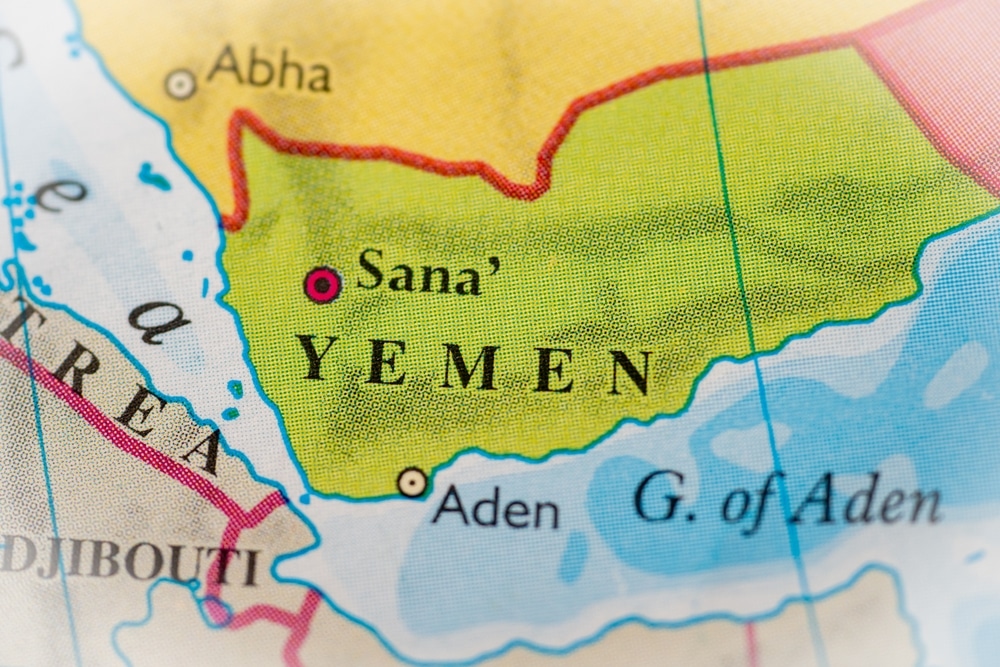
Bab al-Mandab, the southern outlet of the Red Sea located between Yemen and the Horn of Africa, is 18 miles wide at its narrowest point and funnels traffic through two channels
Iran’s semi-official Tasnim cited an unnamed Iranian military source Wednesday as saying Iran could open a Bab al-Mandab front if strikes hit Iranian territory or its islands.
“When they see Iran is needing them the most, then they will move,” said Amr Al-Bidh, a senior member of Yemen’s separatist Southern Transitional Council, speaking to Reuters in Geneva.
Lebanon and Iraq-based Iranian proxies have already entered the conflict. The Houthis, part of Iran’s so-called Axis of Resistance, a coalition of armed groups aligned with Tehran, halted their Red Sea campaign under a U.S.-brokered ceasefire in October 2025 and remain the last major member of that network yet to enter the current war.