
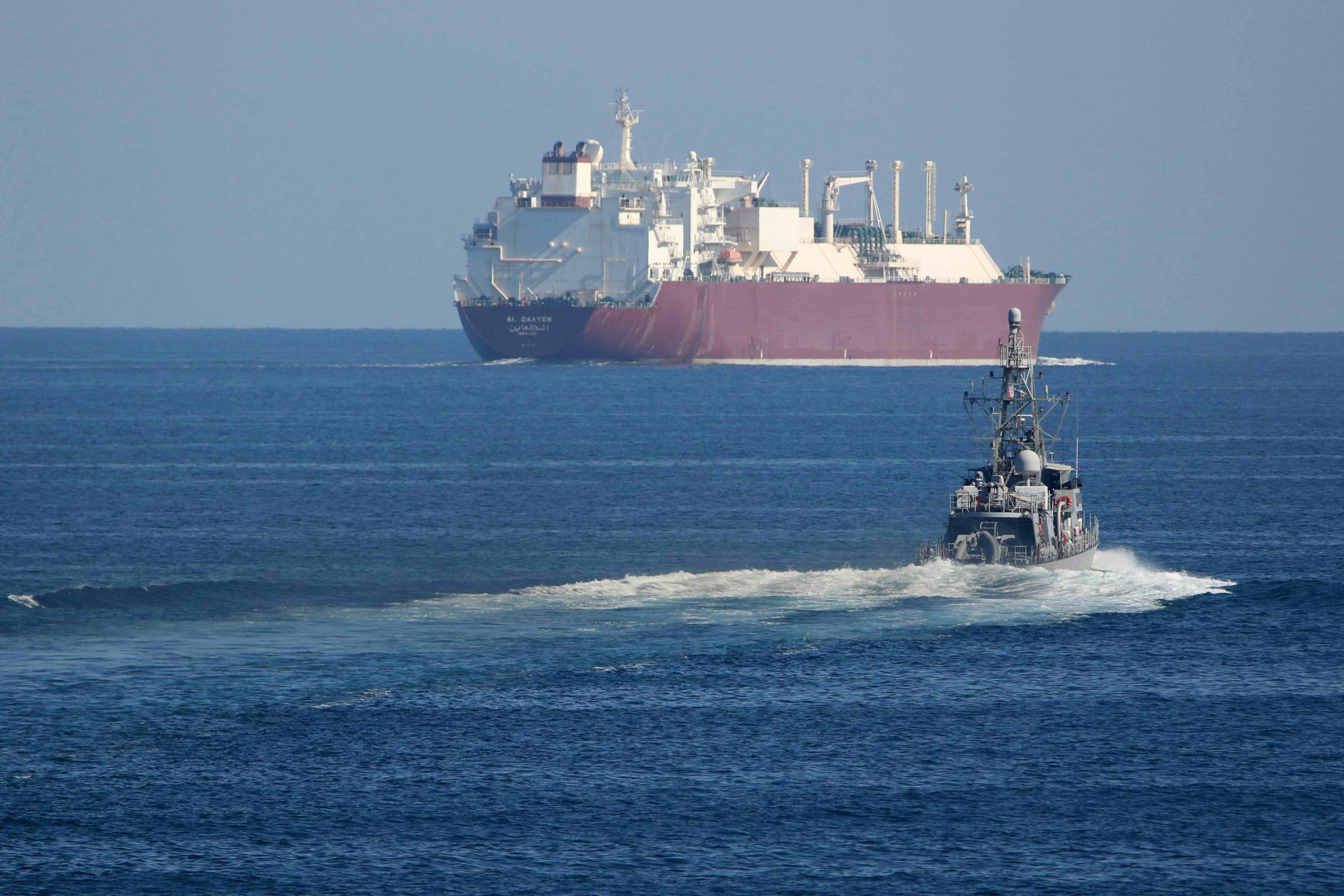
The International Maritime Organization (IMO) suspended its Strait of Hormuz evacuation operation Thursday after a cargo vessel transiting the Gulf of Oman was struck by a projectile, but a detail buried in the agency’s own statement signals a broader threat than the evacuation program itself.
IMO Secretary-General Arsenio Dominguez confirmed the attacked ship “did not transit” under the body’s evacuation framework. That distinction matters: the IRGC was not targeting a vessel on the IMO’s list. It struck a ship attempting to use the Oman-coordinated corridor independently, suggesting enforcement is not limited to the evacuation program’s registered participants.
The United Kingdom Maritime Trade Operations (UKMTO), the British naval agency that monitors commercial shipping in high-risk waterways, confirmed the vessel was hit on its starboard side approximately 7.5 miles southeast of Oman’s port of Dahit, sustaining bridge damage.
No casualties were reported, and the ship continued through the strait. Maritime risk management firm Vanguard identified the vessel as the Singapore-flagged container ship Ever Lovely. Two U.S. officials attributed the attack to Iran, speaking on condition of anonymity. These claims have not been independently verified.
Earlier Thursday, the IRGC Navy, also known as the Sepah Navy, broadcast radio warnings that the Strait of Hormuz remains closed and that only Iranian-designated channels are permissible transit routes. Martin Kelly, head of EOS Risk Group, confirmed ships reversed course following those broadcasts.
The IRGC objected that the Oman-coordinated corridor had been established “without prior notice or coordination with the Islamic Republic of Iran” and warned that “any violating vessels will be dealt with accordingly.”
Dominguez said he paused the operation “in order to reconfirm that the necessary safety guarantees continue to be in place for the ships on our evacuation list and all those in the region.”
Despite the suspension, Kpler transit data recorded 70 confirmed strait crossings Thursday, up 105% from Wednesday, with commercial vessels accounting for 53 of those transits. Brent crude traded near $72 per barrel Thursday, well below the $126 per barrel peak recorded in April.