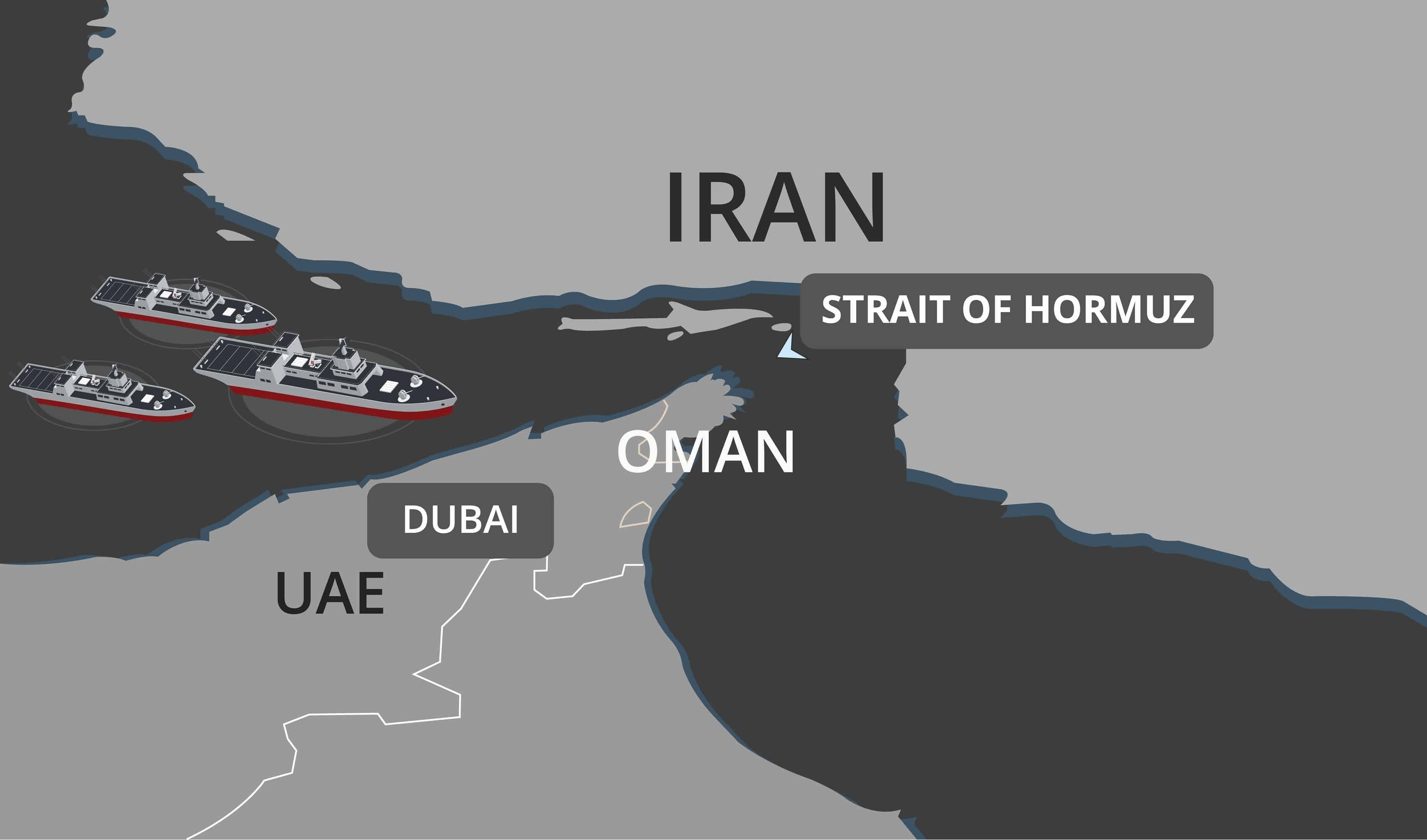
Shipping through the Strait of Hormuz fell to a near standstill on Monday as the U.S. and Iran continued to enforce separate blockade on the vital waterway.
Only one vessel exited the Gulf through the narrow waterway and two entered over a 12-hour period, a fraction of the roughly 130 ships that typically pass daily, according to ship-tracking data published Monday.
The vessel observed transiting the strait was the oil products tanker Nero, which is under British sanctions related to Russia.
Another US-sanctioned Oil Tanker “NERO” (allegedly Russian shadow fleet) crossing the strait of Hormuz. pic.twitter.com/n1E7DQPGJi
— MenchOsint (@MenchOsint) April 20, 2026
The chemical tanker Starway and Axon I, a liquefied petroleum gas tanker under U.S. sanctions for past trade with Iran, were also observed entering the Gulf.
The slowdown followed days of heightened tensions in the strait. The U.S. military seized an Iranian cargo ship over the weekend, while Iranian forces fired what shipping firms described as warning shots at vessels transiting the strait.
The incidents followed the U.S. imposition of a naval blockade on vessels entering and exiting Iranian ports last week after ceasefire talks with Tehran collapsed. On Saturday, Iran announced it was closing the Strait of Hormuz again, hours after briefly reopening the key shipping lane, in response to the U.S. blockade.
In a statement carried by Iran’s Student News Agency, the Islamic Revolutionary Guard Corps navy said the Strait of Hormuz would remain closed until the U.S. lifts its naval blockade on Iranian vessels and ports.
Data showed that more than 20 ships crossed on Saturday before Iran announced the closure of the strait.