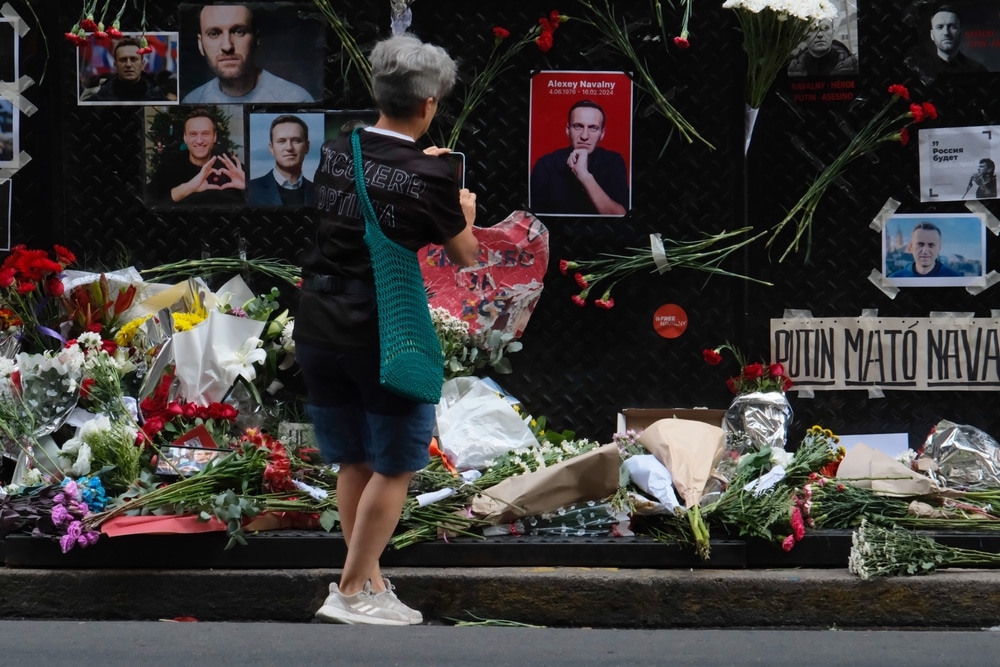
Kremlin critic Alexei Navalny was poisoned with epibatidine, a rare toxin found only in South American dart frogs, France, Germany, the Netherlands, Sweden, and the United Kingdom announced on Saturday.
The five countries made the statement at the Munich Security Conference, two years after the death of the pro-democracy activist in Siberia penal colony.
The countries said in a joint statement that analyses of samples from Navalny’s body “conclusively confirmed” the presence of epibatidine.
Moscow has previously maintained that Navalny died of natural causes, while his widow, Yulia Navalnaya, has repeatedly insisted that he was “murdered” through poisoning. At the time of his death, Navalny had been imprisoned for three years.
Russian reports say the 47-year-old went for a brief walk, complained of feeling unwell, then collapsed and never regained consciousness.
“Russia claimed that Navalny died of natural causes. But given the toxicity of epibatidine and reported symptoms, poisoning was highly likely the cause of his death. Navalny died while held in prison, meaning Russia had the means, motive and opportunity to administer this poison to him,” the statement read.
The five countries stated that the latest findings underscore the need to hold Russia accountable for its repeated breaches of the Chemical Weapons Convention and, in this case, the Biological and Toxin Weapons Convention.
“We and our partners will make use of all policy levers at our disposal to continue to hold Russia to account,” they added.
Russia dismissed the European claims. Russian state-run news agency Tass quoted Kremlin spokesperson Maria Zakharova saying: “All the talks and statements are an information campaign aimed at distracting attention from the West’s pressing problems.”
U.S. Secretary of State Marco Rubio said the findings that Navalny was killed with poison are “troubling.”
“We obviously are aware of the report. It’s a troubling report. We’re aware of that case of Mr. Navalny and certainly … we don’t have any reason to question it,” Rubio told reporters at a press conference in Slovakia on Sunday.
When asked why the U.S. did not join the five countries in issuing a statement, Rubio said: “Those countries came to that conclusion. They coordinated that. … Doesn’t mean we disagree with the outcome.”