
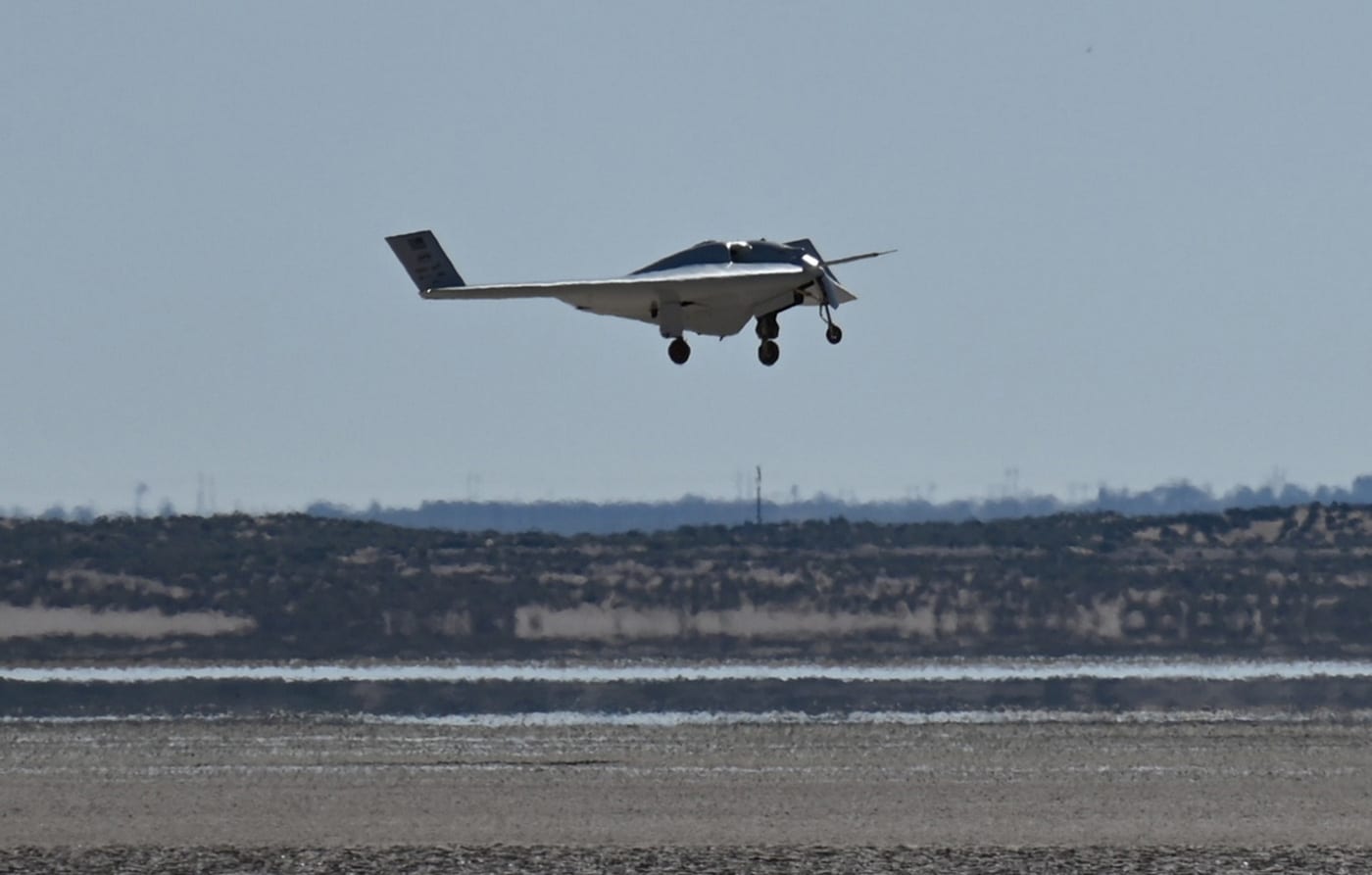
The Defense Advanced Research Projects Agency (DARPA) flew the XRQ-73, a hybrid-electric unmanned experimental aircraft, at Edwards Air Force Base, California, in April 2026 as part of the Series Hybrid Electric Propulsion AiRcraft Demonstration (SHEPARD) program. DARPA announced the milestone May 6.
We recently flew the XRQ-73 hybrid-electric unmanned aircraft in collaboration with @AFResearchLab and @northropgrumman at Edwards Air Force Base, Calif.
Part of the SHEPARD program, the flight proves the military utility of hybrid-electric propulsion. ✈️⚡️ pic.twitter.com/CEO4GD7CqL
— DARPA (@DARPA) May 6, 2026
DARPA conducted the flight in collaboration with the Air Force Research Laboratory (AFRL) and Northrop Grumman, which built the aircraft through its subsidiary Scaled Composites. The XRQ-73 is a tailless flying wing weighing approximately 1,250 pounds, classified as a Group 3 unmanned aircraft system (UAS) with an operating ceiling of 18,000 feet.
“This milestone is not just about a single flight,” said Lt. Col. Clark McGehee, SHEPARD program manager. “The architecture proven by the XRQ-73 paves the way for new types of mission systems and delivered effects.”
The aircraft uses a series hybrid-electric propulsion system in which a gas turbine generates electricity that powers electric motors, rather than linking a combustion engine mechanically to the aircraft’s propulsion.
The arrangement allows the generator to run at peak efficiency regardless of airspeed, while also reducing acoustic and infrared signatures that would make the drone detectable in denied areas.
Image metadata embedded in photographs released with the announcement, analyzed by The Aviationist, suggests the first flight occurred April 14, a date DARPA has not officially confirmed.
DARPA’s XRQ-73 SHEPARD Hybrid-Electric Flying Wing Prototype Takes Flight
Designed by Northrop Grumman and subsidiary Scaled Composites, the unmanned XRQ-73 features an ultra-quiet propulsion system powered by electricity from a gas turbine.
Story: https://t.co/5vL4ntZX4U
— The Aviationist (@TheAviationist) May 6, 2026
The XRQ-73 builds directly on the XRQ-72, produced under DARPA’s earlier Great Horned Owl (GHO) program. The drone’s RQ designation points toward a primary intelligence, surveillance, and reconnaissance (ISR) mission. Its low acoustic output, reduced infrared emissions, and low-observable flying wing planform position it for persistent surveillance in semi-contested environments where MQ-9 Reaper drones have grown increasingly vulnerable to air defenses.