
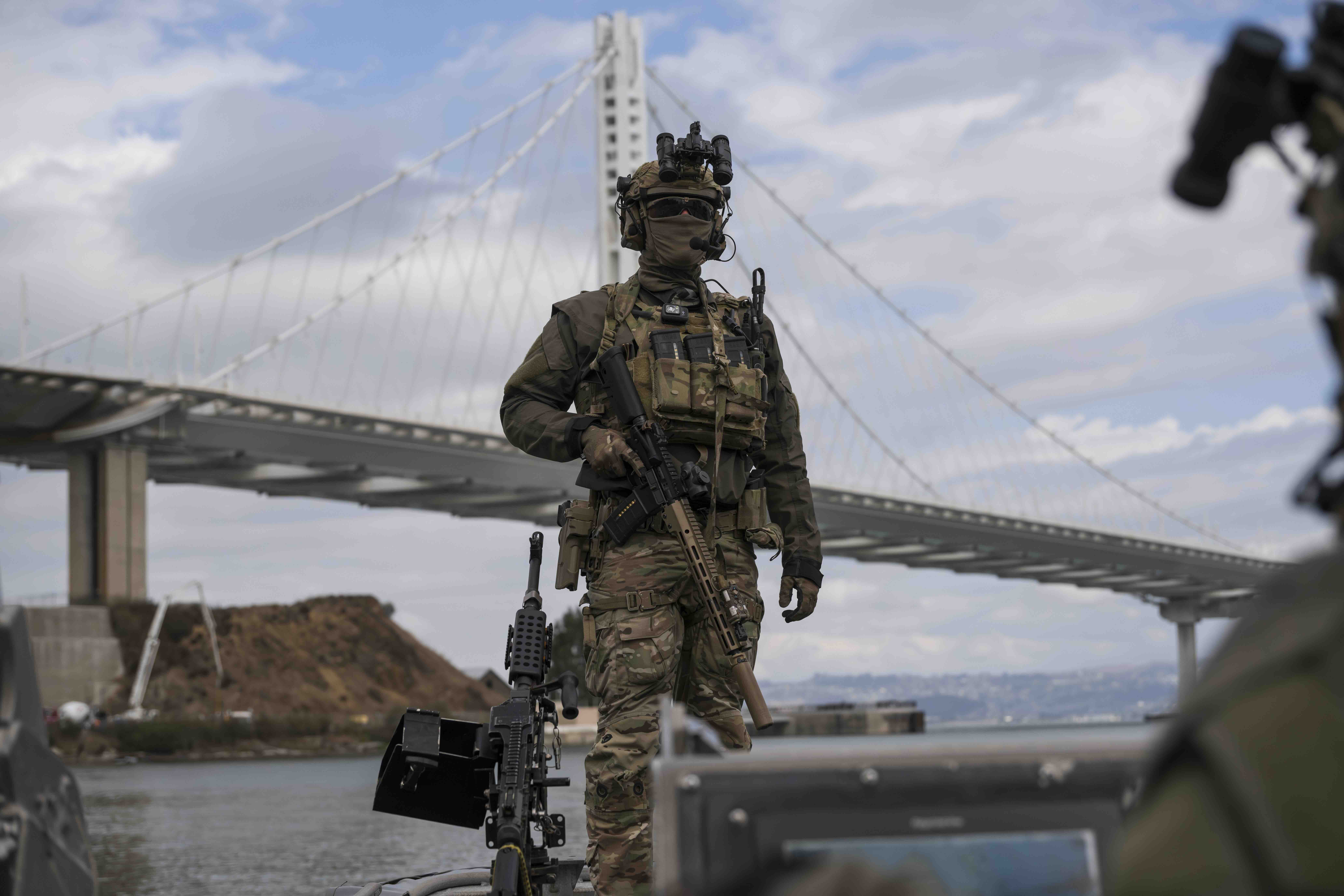
The U.S. Coast Guard announced the creation of a new Special Missions Command that will oversee its elite maritime response units as demand for specialized missions continues to grow worldwide.
The command, expected to be formally established around Oct. 1, 2026, will be headquartered at the Coast Guard C5I Service Center in Kearneysville, West Virginia.
The Special Missions Command will include Maritime Security Response Teams focused on counterterrorism and high-risk maritime operations; Tactical Law Enforcement Teams targeting trafficking and maritime criminal networks; and Maritime Safety and Security Teams responsible for rapid-response port and coastal security missions.
The command will also oversee Port Security Units that protect critical shipping infrastructure and high-value assets, Regional Dive Lockers that conduct underwater security and maintenance operations, and the National Strike Force, which responds to major disasters, oil spills, and chemical, biological, radiological and nuclear incidents.
Currently, administrative and operational control of the Coast Guard’s specialized forces is split between the service’s two area commanders. Officials said consolidating the units under one command is intended to improve readiness, coordination and interoperability with military and law enforcement partners.
“The creation of the Special Missions Command is a vital evolution for our service,” Adm. Kevin Lunday, commandant of the Coast Guard, said in a statement.
“We are forging our most elite operators into a single, razor-sharp instrument of national power. The Special Missions Command is not an administrative change; it is an investment ensuring these elite teams are the best trained, equipped, and organised force possible, ready to protect the Homeland and support the Joint Force,” Lunday added.
The move comes as the Trump administration expands the use of Coast Guard units for ship interdictions and counter-narcotics operations around the world.
Several deployable specialized units have recently supported high-profile maritime interdiction missions, including operations targeting Iranian-linked oil tankers in the Indian Ocean and the pursuit of a sanctioned Russian tanker from the Caribbean across the Atlantic earlier this year.
The Coast Guard said additional units and capabilities could be added to the command in the future.




Great!@