Israel launched its most intense strikes against Hezbollah in Lebanon since fighting with the Iran‑backed group escalated last month, killing more than 250 people.
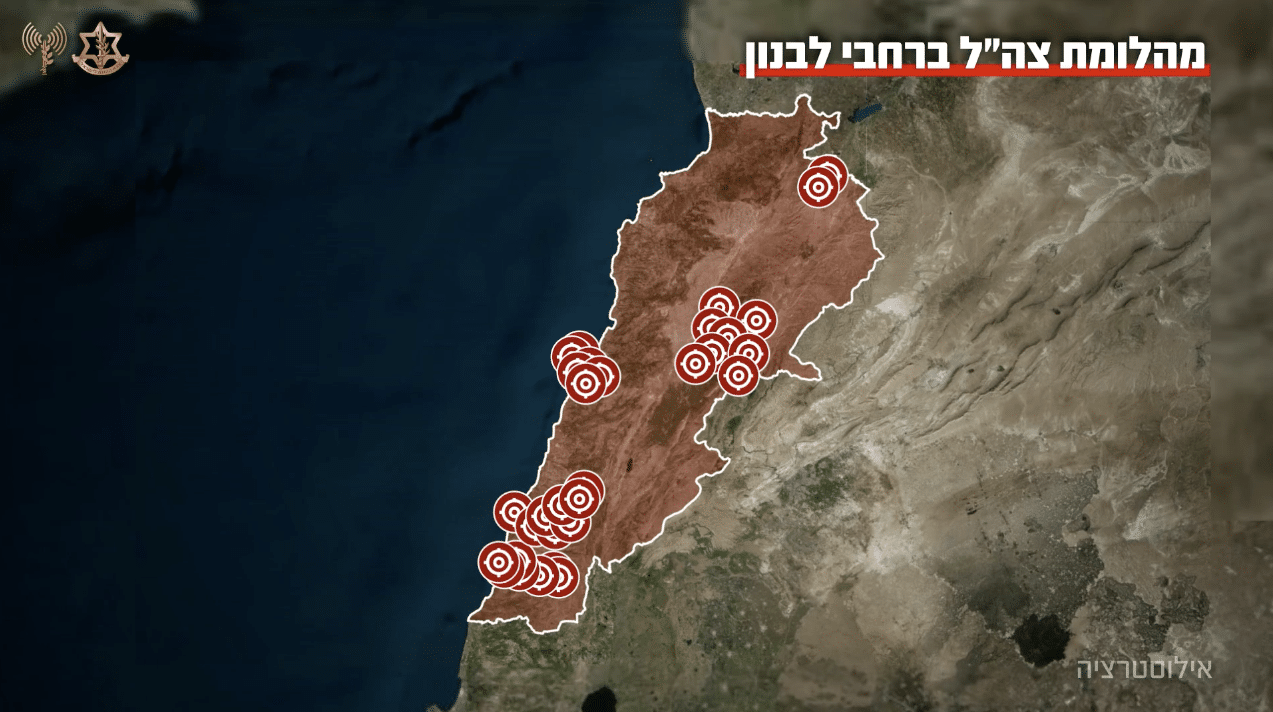
The attack on Wednesday afternoon came hours after the U.S. and Iran announced a two‑week ceasefire. According to the Israeli military, they struck more than 100 Hezbollah command centers and military sites in Beirut, the Bekaa Valley and southern Lebanon within about 10 minutes.
‼️ In 10 minutes, the IDF completed the largest coordinated strike across Lebanon since the start of Operation Roaring Lion.
The strike targeted 100+ Hezbollah headquarters, military arrays, & command-and-control centers in Beirut, Beqaa and southern Lebanon, including:
•…
— Israel Defense Forces (@IDF) April 8, 2026
Lebanon’s civil defense service said 254 people were killed and more than 1,100 were wounded across the country. The highest toll was recorded in Beirut, where 91 people were reported dead.
Chaos in Beirut as Israel carries out a wave of airstrikes across the country hitting what it said were more than 100 targets in ten minutes. pic.twitter.com/t0If72xogY
— Will Christou (@will_christou) April 8, 2026
Iran Condemns Israeli Strikes
Iranian officials criticized Israel’s attacks on Lebanon, saying they threaten the ceasefire between the U.S. and Iran. Iranian President Masoud Pezeshkian said a ceasefire in Lebanon was an essential condition of Tehran’s agreement with Washington.
Iranian Foreign Minister Abbas Araghchi warned that continued Israeli strikes could jeopardize the deal.
The Iran–U.S. Ceasefire terms are clear and explicit: the U.S. must choose—ceasefire or continued war via Israel. It cannot have both.
The world sees the massacres in Lebanon. The ball is in the U.S. court, and the world is watching whether it will act on its commitments. pic.twitter.com/2bzVlHFKgi
— Seyed Abbas Araghchi (@araghchi) April 8, 2026
“The Iran–U.S. Ceasefire terms are clear and explicit: the U.S. must choose— ceasefire or continued war via Israel. It cannot have both. The world sees the massacres in Lebanon. The ball is in the U.S. court, and the world is watching whether it will act on its commitments,” Araghchi wrote on X.
U.S. Vice President JD Vance said there was a “legitimate misunderstanding” over whether the ceasefire covered Lebanon.
“I think the Iranians thought that the ceasefire included Lebanon and it just didn’t. We never made that promise. We never indicated that would be the case. What we said is that the ceasefire will be focused on Iran and America’s allies both Israel and the Gulf Arab states,” he said.
“That said, the Israelis have actually offered to check themselves a little bit in Lebanon because they want to make sure that our negotiation is successful. That’s not because that is part of the ceasefire. I think that’s the Israelis trying to set us up for success.”
Meanwhile, Iranian state media reported that Iran again closed the Strait of Hormuz on Wednesday in response to Israeli strikes in Lebanon.
🚨 BREAKING
The Iranian Navy: We have closed the Strait of Hormuz, and currently only Iranian ships and ships coming from Iran are passing through it. pic.twitter.com/T2Xo9jyenX— Iran TV (@Iran_TVv) April 8, 2026
White House Press Secretary Karoline Leavitt disputed the report but said any effort by Iran to halt maritime traffic would be “completely unacceptable.”
A team of U.S. negotiators, led by Vice President JD Vance and including Trump’s son-in-law Jared Kushner and Middle East envoy Steve Witkoff, will meet with Iranian officials for peace talks in Islamabad, Pakistan, on Saturday, Leavitt said.
Iranian Attacks in the Gulf Continue
The strikes in Lebanon came as several Gulf countries reported missile and drone attacks from Iran hours after the ceasefire announcement.
The United Arab Emirates said its air defenses intercepted incoming missiles and drones, with explosions reported across parts of the country. Authorities added that debris from the interceptions sparked a fire at Abu Dhabi’s Habshan gas complex.
Bahrain reported that two people were injured and homes damaged by falling debris from intercepted drones, while Qatar said it successfully intercepted seven ballistic missiles and multiple drones.
Kuwait said its air defenses intercepted 28 drones targeting critical infrastructure, including oil facilities and power stations. Officials reported significant damage and fires at several sites.
Saudi Arabia also said it had intercepted nine drones in recent hours.
Iranian state television said the attacks were carried out in response to earlier strikes on Iranian oil facilities.
Strikes hit an Iranian oil refinery on Lavan Island today.
Iran is now retaliating with strikes on targets in Kuwait, Bahrain, and the UAE. pic.twitter.com/xOptoGRjbB
— Clash Report (@clashreport) April 8, 2026