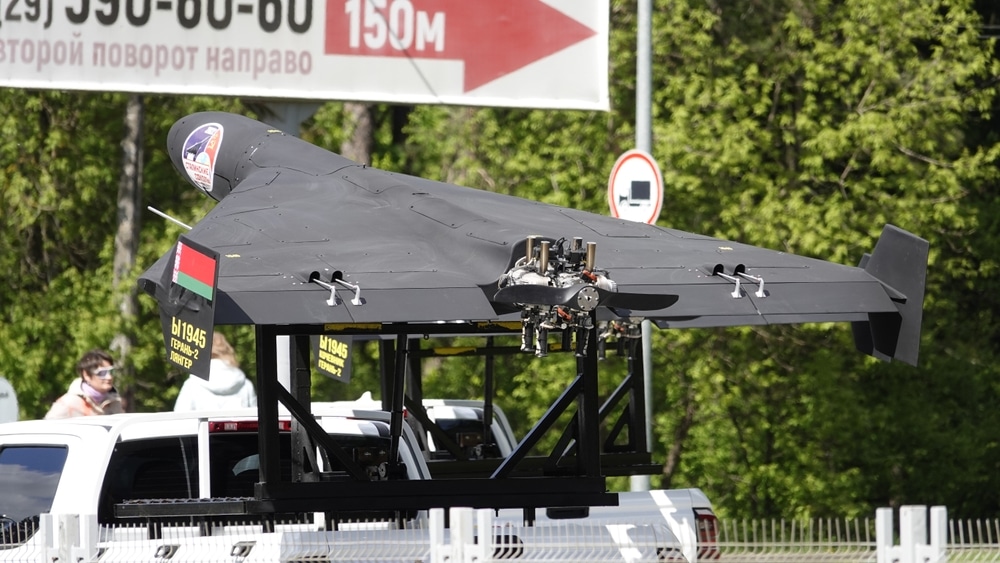
A Chinese drone seller confirmed to The Jerusalem Post that a product listed on Alibaba as a “model plane” was a functional copy of Iran’s Shahed-136 loitering munition, a one-way attack drone that strikes by crashing into its target, and could be armed with explosives and delivered to Russia. The disclosure came despite China’s UAV export restrictions, which took effect September 1, 2025, and Alibaba’s own prohibition on military hardware sales.
The investigation identified four active Shahed-136 copy listings on Alibaba after the platform removed earlier entries openly labeled “cruise missiles” and “suicide attack drones,” with prices ranging from approximately $6,000 to over $40,000.
Two of the active listings named the system as the Mosquito SM200G, a delta-wing airframe with a top speed of 150 km/h, a payload capacity of up to 10 kilograms, and onboard flight controls supporting swarm coordination of up to 100 aircraft.
Private PDF sales catalogs obtained by Australia’s ABC showed the same systems described as capable of “autonomous locking of targets (people, building, vehicles, ships, etc.)” using thermal imaging and AI guidance, while their Alibaba storefronts categorized them as pesticide sprayers or aerial survey platforms.
One supplier told ABC the export controls could be sidestepped by framing shipments as commercial goods. “After the customer makes a purchase, what they use it for has nothing to do with us,” a separate seller said.
Oleksandra Molloy, a senior aviation lecturer at the University of New South Wales (UNSW), said China supplies loitering munitions to both Russia and Ukraine. “We are now in a drone age where cheap, off-the-shelf commercial drones are being used militarily,” she said.
David Dunn, a professor at the University of Birmingham who specializes in lethal drone proliferation, described access to combat-drone technology as an “international free-for-all.”
Alibaba said it “strictly prohibits the sale of military weapons” and removed the flagged listings, but the seller who offered Russia delivery remained active on the platform at the time of the investigation’s publication by categorizing the system as a civilian hobby product.